








Details of Battery Wastewater Treatment
The Battery Wastewater Treatment is because there are many types of sulfate materials (nickel cobalt manganese sulfate) in the wastewater of lithium battery recycling. There are many types of waste batteries, mainly lithium-ion batteries, nickel-hydrogen batteries and nickel-cadmium batteries. The water quality of lithium battery recycling wastewater is complex and difficult to treat. ENCO uses evaporation and crystallization to treat lithium battery wastewater.
Main features and difficulties of wastewater treatment from waste battery recycling
Characteristics of lithium battery recycling wastewater: Due to the wide variety of waste batteries, they contain heavy metal materials, mainly lithium-ion batteries, nickel-hydrogen batteries and nickel-cadmium batteries.


The quality of lithium battery recycling wastewater is complex, and its main characteristics are
- High concentration of pollutants;
- High toxicity. In addition to containing a large number of pollutants and harmful heavy metal substances, waste battery recycling wastewater contains a large amount of pollutants and harmful heavy metal substances;
- The non-ferrous metals in the battery will pollute the environment, and some recyclable precious metals can be recycled.
Difficulties In Treating Lithium Battery Recycling Wastewater:
Since the lithium battery recycling industry is an emerging industry, the current treatment methods have more or less limitations. A reasonable, simple, low-cost, and high-efficiency water treatment process that meets the characteristics of wastewater in this industry has not yet been designed. In the recycling process, small and medium-sized enterprises are often deterred by the high cost and high operating cost of the treatment system. Large enterprises usually use ultrafiltration-reverse osmosis technology to further treat the primary filtered water, and the resulting water quality can reach the standard of domestic water.
Although ultrafiltration and reverse osmosis have good treatment effects, the treatment speed is slow (each osmotic membrane can treat no more than 0.45m3 of wastewater per hour), the membrane cost is high, the membrane pores are easily blocked and fail, the life is short, and it cannot be regenerated and can only be replaced. Generally, only large enterprises have such economic strength, and small and medium-sized enterprises cannot afford it. They can only discharge directly after pretreatment or only after primary filtration. This will not only introduce secondary pollution to the environment, but also cause the wastewater quality to not meet the industrial production water standards and be difficult to return for reuse, which greatly causes water resources waste.
Wastewater type: lithium battery recycling wastewater, because lithium battery recycling wastewater contains a wide variety of sulfate materials (nickel cobalt manganese sulfate), and there are many types of waste batteries at present, mainly lithium-ion batteries, nickel-hydrogen batteries and nickel-cadmium batteries. The water quality of waste battery recycling wastewater is complex and difficult to treat.
Wastewater hazards: The sulfate materials (nickel cobalt manganese sulfate) in lithium battery recycling wastewater treatment are complex, toxic, and harmful, and difficult to treat. These waste batteries contain a large amount of valuable metals, such as nickel, cobalt, copper, aluminum, iron, lithium, etc. Therefore, recycling waste batteries can not only generate huge economic benefits, but also reduce harmful substances in batteries.
Treatment methods: The main methods for treating lithium battery recycling wastewater are electrolysis, chemical precipitation, biological adsorption, ion exchange, etc. The four methods have their own advantages and disadvantages. The electrolysis method is not suitable for low-concentration heavy metal wastewater treatment and may require concentration facilities; the chemical precipitation method will produce a large amount of waste residue during the treatment of heavy metals. If it is not treated secondary, it is very likely to cause secondary pollution; the biological adsorption method is not suitable for high-concentration sewage environment, and the bacteria have strict requirements for environmental temperature and air pressure; the ion exchange method is suitable for low-concentration wastewater treatment, and the exchange zeolite and resin in the system need to be frequently cleaned and replaced regularly. The maintenance cost of the entire system is high and the operating cost is high.
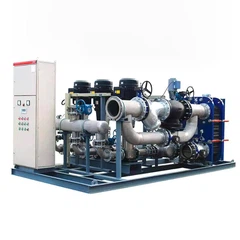
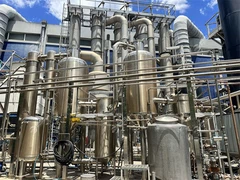
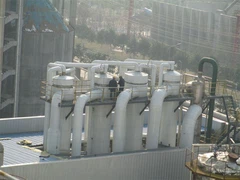
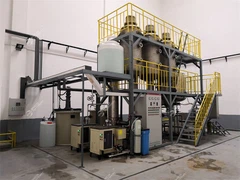
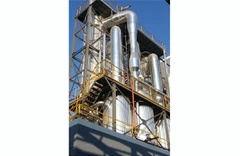
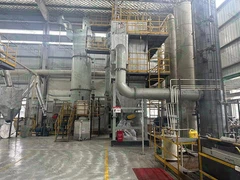
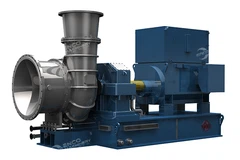
ENCO treatment process: ENCO believes that the effective treatment of wastewater from waste battery recycling should adopt a technically feasible and economically reasonable treatment plan based on the water quality, water volume and actual local environmental conditions of the specific wastewater. Try to separate and recover valuable resources from wastewater while treating it. According to the current wastewater situation of used batteries, ENCO recommends an evaporation crystallization system to treat this type of wastewater.
Compared With The Above Treatment Methods, The Evaporation Crystallization System Has The Following Four Advantages:
The evaporation crystallization system consumes almost no reagents
The evaporation system uses a physical evaporation method to increase the concentration of wastewater as much as possible, and finally obtains heavy metal salt crystals to achieve the effect of separating water from heavy metals. During the whole process, there is no consumption of drugs, no need for drug precipitation, and the separation effect can be achieved by evaporation alone.
01
The evaporation crystallization system has low energy consumption
According to the specific composition of the wastewater, various evaporation systems such as multi-effect, MVR or TVR can be designed. Combined with the wastewater quality and the price of on-site steam, electricity and other engineering conditions, a reasonable system can be designed to ensure efficient treatment of wastewater while reducing energy consumption and operating costs.
02
There are no frequently replaced wearing parts in the evaporation crystallization system
In the evaporation crystallization system, there are no resins, exchange membranes, or other parts that need to be frequently cleaned and replaced. The entire system is simple in structure and can adapt to most wastewater conditions with low maintenance costs.
03
The evaporation crystallization system has great operational flexibility
The system can handle influent concentrations of about 0.5% to 30%. At the same time, the system is equipped with a cleaning system, a flushing system, etc., combined with a reasonable evaporation process to ensure that the system is not afraid of crystal blockage, has great operational flexibility, and is highly adaptable.
04
ENCO treatment process for low-concentration lithium battery recycling industry wastewater
Recommended process: If the wastewater concentration is lower than about 0.5%, the concentration is too low. The wastewater can be treated by membrane treatment, first for concentration treatment, and then equipped with an evaporation crystallization system for sewage treatment.
ENCO treatment process for high-concentration lithium battery recycling wastewater
Recommended process: It can directly enter the evaporation crystallization system for sewage treatment.
Evaporator treatment of lithium battery recycling wastewater Process

