








Details of landfill leachate treatment solution
Characteristics of landfill leachate:
The water quality of landfill leachate is complex, with more than 100 kinds of organic components, including various refractory organic matter (such as various aromatic compounds and humus), inorganic salts (such as ammonium, carbonate and sulfate) and metal ions (such as chromium, lead and copper).
The concentrations of ammonia nitrogen and CODCr in landfill leachate are high and vary widely; and as the landfill age increases, the biodegradability of landfill leachate gradually decreases, and the ratio of ammonia nitrogen to CODCr and the ratio of nutrient elements will be seriously imbalanced, which will cause certain difficulties in the treatment of landfill leachate.
1. High concentration of organic matter, that is, high concentration of COD and BOD;
2. Complex pollutant composition and large fluctuations in water quality;
3. High concentration of ammonia nitrogen;
4. High concentration of heavy metal ions and salt content.
Difficulties in treating landfill leachate:
The water quality characteristics of landfill leachate make it more difficult to treat.
At present, the commonly used landfill leachate treatment methods mostly use biochemical treatment, land treatment, physical and chemical treatment or a combination of multiple processes.
Due to the complex composition of landfill leachate and high ammonia nitrogen content, the initial biodegradability is relatively good.
However, as the landfill time increases, not only the ammonia nitrogen content increases and the biodegradability decreases, but also it contains heavy metal ions and the color is darker.
The biochemical treatment method cannot meet the emission standards, and subsequent treatment methods must be adopted, such as low-energy evaporation, to achieve the ideal treatment effect.
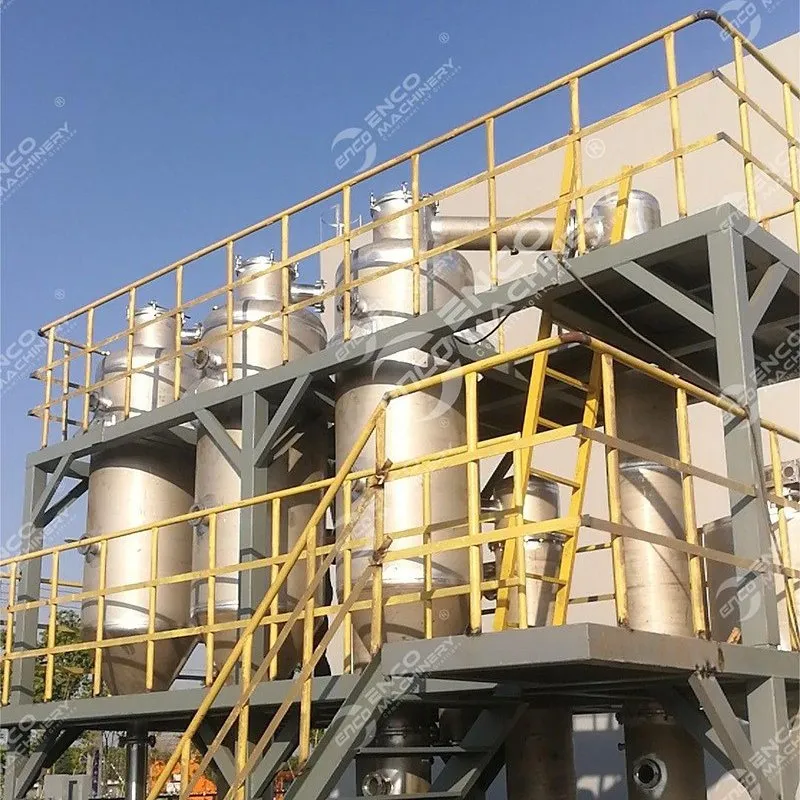
Limitations of the current leachate treatment process
From the current treatment of leachate from domestic landfills, it is found that landfills that only use biochemical treatment processes in the past can basically not meet the national leachate discharge standards.
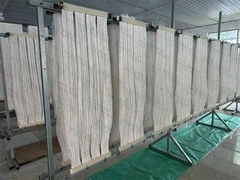
The combination of biochemical treatment + reverse osmosis membrane treatment can achieve better treatment effects, but the water output rate is often small, the treatment scale is limited, and the membrane process is blocked easily, which makes the membrane process unable to operate.
Repeated flushing frequency is too frequent and the system cannot work continuously. It also shortens the membrane replacement cycle and greatly increases the treatment cost. Therefore, a new leachate treatment process is needed to replace it.
ENCO leachate treatment process
ENCO believes that the effective treatment of leachate should fully consider the various pollutant components, water quality and water volume of the leachate, and at the same time consider the influence of local climate and the "age" of the landfill, and adopt a technically feasible and economically reasonable treatment plan.
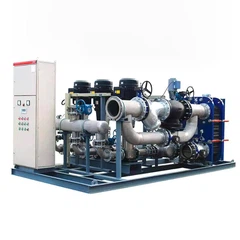
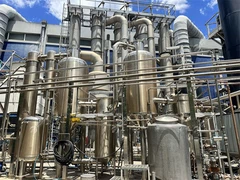
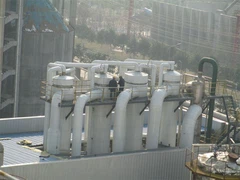
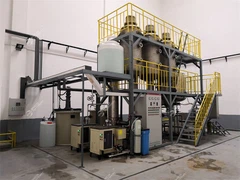
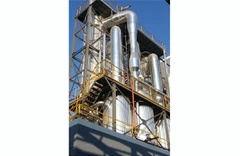
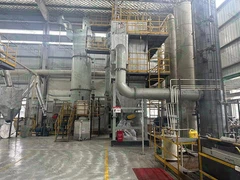
While ensuring that the system has strong impact load resistance, the treated leachate wastewater meets the discharge standards, and resources are reused, it also reduces energy consumption and operating costs as much as possible. Kang Jinghui recommends an evaporation and crystallization treatment system to treat landfill leachate.

ENCO leachate treatment process selection principles
1. The concentration of leachate in landfills is high. Therefore, when designing the leachate treatment process, try to choose a high-efficiency and low-consumption treatment process to ensure that the treatment effect can meet the requirements;
2. Due to the large fluctuation range of leachate water quality, the selected process must have strong adaptability, operational flexibility and compatibility. During leachate treatment, process adjustment and process transformation can be carried out more conveniently to adapt to the changes in leachate water quality;
3. The leachate treatment process used should make full use of the existing conditions of the landfill as much as possible, and design leachate treatment equipment that is simple to operate, easy to operate, stable effluent water quality, and meets the standards;
4. Under the condition of meeting the requirements of the leachate treatment process, try to reduce project investment, save electricity consumption and operating expenses, and reduce operating costs and labor costs.
