


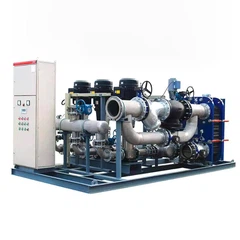
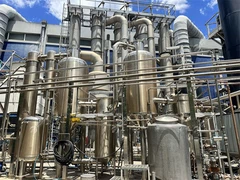
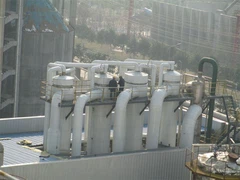
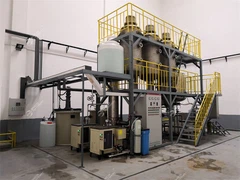
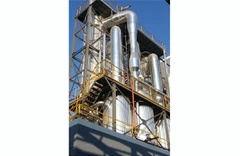
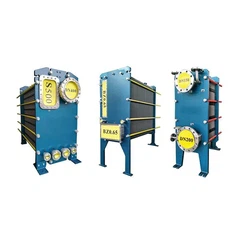


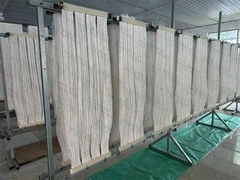


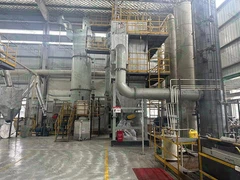


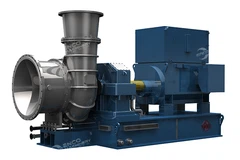
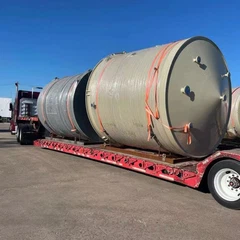
Multi Effect Evaporator
Definition of Multi Effect Evaporator
A Multi-Effect Evaporator (MEE) is a type of industrial equipment used for the concentration of solutions, typically liquids, by removing the solvent through evaporation. This process is particularly employed in various industries such as food and beverage, chemical processing, and wastewater treatment to increase the concentration of desired components in a liquid mixture.
The term "multi-effect" refers to the use of multiple evaporator vessels or stages, arranged in series, to efficiently utilize the heat generated during the evaporation process. In a multi-effect evaporator system, the vapor produced in one stage is used as a heat source for the subsequent stage, thereby maximizing energy efficiency.
The basic operation of a multi-effect evaporator involves passing the liquid feed through a series of evaporator vessels, where each vessel operates at progressively lower pressures. As the liquid passes through each stage, it undergoes partial evaporation, with the vapor produced transferring heat to the next stage with a lower boiling point. This cascading effect allows the overall process to achieve higher concentrations with reduced energy consumption compared to a single-effect evaporator.
Multi-effect evaporators are employed for concentrating various liquids, such as fruit juices, dairy products, chemicals, and industrial effluents. The design and configuration of a multi-effect evaporator system depend on the specific characteristics of the feed solution and the desired concentration outcomes. These systems are valued for their energy efficiency and cost-effectiveness in large-scale evaporation processes.


Working Principle of Multi-Effect Evaporator (MEE)
A multi-effect evaporator uses a series of interconnected evaporators (called "effects") to progressively concentrate a liquid by reusing vapor generated in one effect as the heating source for the next. This cascading design maximizes energy efficiency by recycling latent heat.
Step-by-Step Breakdown
The process liquid (e.g., wastewater, brine, or juice) is fed into the first evaporator effect. Subsequent effects receive partially concentrated liquid from the previous stage.
External steam (or another heat source) is introduced into the first effect’s heat exchanger. This heats the liquid, generating vapor (primary vapor) while leaving behind a more concentrated solution.
The vapor generated in the first effect is directed to the heat exchanger of the second effect. Here, it condenses, releasing latent heat to evaporate more liquid in the second effect. This process repeats in subsequent effects, with each effect operating at progressively lower pressures and temperatures.
Effects are maintained under decreasing pressure (e.g., via vacuum systems). This allows vapor from a higher-temperature effect to transfer heat to a lower-temperature effect, enabling continuous evaporation without additional steam input.
● The final concentrated liquid is discharged from the last effect.
● Condensate (pure water from condensed vapor) is collected from each effect’s heat exchanger and removed from the system.
● Multi-effect evaporators reduce steam consumption by 50–90% compared to single-effect systems.
● Each subsequent effect reuses the latent heat of vaporization from the previous effect, drastically lowering energy requirements.
● The number of effects determines efficiency: more effects = higher efficiency but higher capital costs.
Typical Multi-Effect Evaporator application: ELECTROPLATING WASTEWATER TREATMENT PROJECT

Key Advantages of ENCO Multi-Effect Evaporator
High Energy Efficiency
Reuses latent heat across multiple effects, cutting steam use by 50–90% versus single-effect systems.
Scalable Design
Modular setup adapts effects for flexible capacity and energy goals, scaling from small to industrial applications.
Flexible Heat Source Compatibility
Flexible Heat Source Compatibility
Uses external steam/waste heat in the first effect, with no added steam needed for subsequent stages.
Environmental Benefits
Reduces thermal pollution and water waste via latent heat recycling and condensate recovery.
Multi-Effect Evaporator design Considerations
Thermodynamic Efficiency
● Number of Effects: More effects = higher efficiency but higher capital costs (typically 3–6 effects in industrial systems).
● Pressure Gradient Design:
① Each subsequent effect operates at lower pressure and temperature (via vacuum systems) to enable heat transfer.
② Requires precise control of pressure differentials between effects.
● Boiling Point Elevation (BPE): Critical for high-salinity solutions; impacts temperature drop across effects.
Material Selection
● Corrosion Resistance:
① First effect (high-temperature): SS316L or duplex stainless steel.
② Later effects (lower temperature, higher concentration): Titanium, nickel alloys (e.g., Hastelloy) for aggressive media.
● Fouling Mitigation:
① Smooth tube surfaces, anti-scaling coatings.
② Integrated CIP (Clean-in-Place) systems for periodic maintenance.
Energy Optimization
● Feed Preheating: Uses condensate from vapor condensation to preheat incoming liquid.
● Inter-Effect Heat Exchangers: Maximizes latent heat recovery between effects.
● Vacuum Systems: Optimized to maintain pressure gradients with minimal energy (e.g., hybrid steam-jet + liquid ring pumps).
Control System
● Automation:
① PLC controls for pressure, temperature, and liquid level across all effects.
② Adaptive algorithms to handle feed concentration fluctuations.
● Safety:
① Vacuum failure alarms and pressure relief valves.
② Anti-flooding controls for condensate drainage.
Multi-Effect Evaporator Cost and other factors comparison
|
S/N |
Multi effect evaporator |
MVR Evaporator |
Falling Film Evaporator |
TVR evaporator |
|
Operation cost |
Medium-high (multiple-effect vessels and vacuum systems) |
High (compressor cost) |
Low (simple structure) |
Medium (steam ejector + vacuum system) |
|
Energy source |
Low (steam demand decreases with efficiency) |
Very low (only electricity cost) |
Medium-high (continuous external heat source) |
Medium (fresh steam is required) |
|
Maintenance complexity |
Medium (multi-effect coordination, vacuum system maintenance) |
High (compressor maintenance) |
Low (simple structure) |
Medium (Steam Ejector Maintenance) |
|
Typical application scenarios |
Seawater desalination, chemical concentration, food processing |
High-salt wastewater, pharmaceuticals, high-purity distilled water |
Dairy products, juice, heat-sensitive solution concentration |
Sugar making, paper making, medium concentration wastewater treatment |
MVR (Mechanical Vapor Recompression) Evaporator is a highly efficient and energy-saving technology widely applied in various industrial processes for the concentration of liquid solutions. This innovative evaporator utilizes mechanical energy to compress and recycle vapor, significantly reducing energy consumption compared to traditional evaporation methods.
The MVR Evaporator finds extensive applications in industries such as food and beverage, chemical processing, pharmaceuticals, and wastewater treatment. Its versatility allows for the concentration of a wide range of substances, including fruit juices, dairy products, acids, and other liquid solutions. The system operates by taking low-pressure steam generated during evaporation, compressing it, and then reusing it as a heat source for the evaporation process, leading to a closed-loop and energy-efficient system.
One notable advantage of MVR technology is its ability to handle heat-sensitive products without compromising their quality. This makes it particularly suitable for industries where precise temperature control is crucial. Additionally, the compact design and minimal environmental impact make MVR Evaporators a preferred choice for companies aiming to enhance sustainability in their operations.
MVR Evaporators represent a cutting-edge solution for concentration processes, offering energy efficiency, versatility, and environmental sustainability across diverse industrial sectors.


☆ Desalination
☆ Industrial wastewater treatment
☆ Zero liquid discharge (ZLD).
☆ Dairy concentration
☆ Juice/syrup concentration
☆ Alcohol purification
☆ Chemical concentration
☆ Pharmaceutical intermediates
☆ Solvent recovery
☆ Black liquor concentration
☆ Wastewater recycling
☆ Acidic wastewater treatment
☆ Metal salt recovery
☆ Lithium battery industry
☆ Biofuels


What are features of Multi Effect Evaporator?
A Multi-Effect Evaporator (MEE) is a type of industrial equipment used for the concentration of a liquid, typically a solution, by utilizing multiple stages of evaporation.
Multiple Evaporation Stages
The primary feature of a Multi-Effect Evaporator is the incorporation of multiple evaporation stages or effects. Each effect represents a separate evaporation unit.
01
Energy Efficiency
MEE is designed to achieve high energy efficiency by utilizing the vapor generated in one effect to drive the evaporation process in the subsequent effects.
02
Steam Economy
The system optimizes the use of steam, making it more economical. Steam generated in one effect is used as a heating medium in the next effect, thus reducing overall energy consumption.
03
Heat Exchangers
MEEs incorporate multiple heat exchangers to efficiently transfer heat between the vapor and the liquid feed. This helps in maintaining a continuous and efficient evaporation process.
04
Vacuum System
A vacuum system is often employed to lower the boiling point of the liquid, allowing for evaporation at lower temperatures. This helps in reducing energy consumption and minimizing product degradation.
05
Feed Distribution System
The liquid feed is evenly distributed across the different effects to ensure uniform concentration and efficient evaporation.
06
Condensate Recovery
Condensate from the vapor is typically recovered and reused, contributing to the overall efficiency of the system.
07
Control Systems
Advanced control systems are employed to monitor and control various parameters such as temperature, pressure, and flow rates in each effect, ensuring optimal performance and product quality.
08
Material of Construction
MEEs are often constructed with materials that are corrosion-resistant and suitable for the specific application, ensuring durability and long service life.
09
Applications
Multi-Effect Evaporators are commonly used in industries such as chemical processing, food and beverage, pharmaceuticals, and wastewater treatment for concentrating various liquid solutions.
10


About Us
ENCO Machinery is originally founded in 2003 in Hangzhou China.

Our factory
ENCO provided integrated solutions from in-house engineering, manufacturing, system modularization, installation, commissioning, and O&M services. ENCO's modularization solution is proven as cost and schedule saving especially for overseas projects.
With the rapid development of electrical vehicles and its related power battery recycling industries, ENCO is by far the only player who has track records in USA, China, South Korea and Vietnam.
Today, ENCO has successfully delivered more than 500 industrial projects globally.
To countries including USA, Australia, South Korea, Malaysia, Turkey, Jordan, Singapore Kuwait, Mexico and etc.
Our End-users includes worlds' industrial leaders including Tesla, BMW, Air Products, NTN, SpaceChina, PetroChina, Thyssenkrupp; BOE; AVIC and many others.
Our company value is: Commitment and Gratitude !

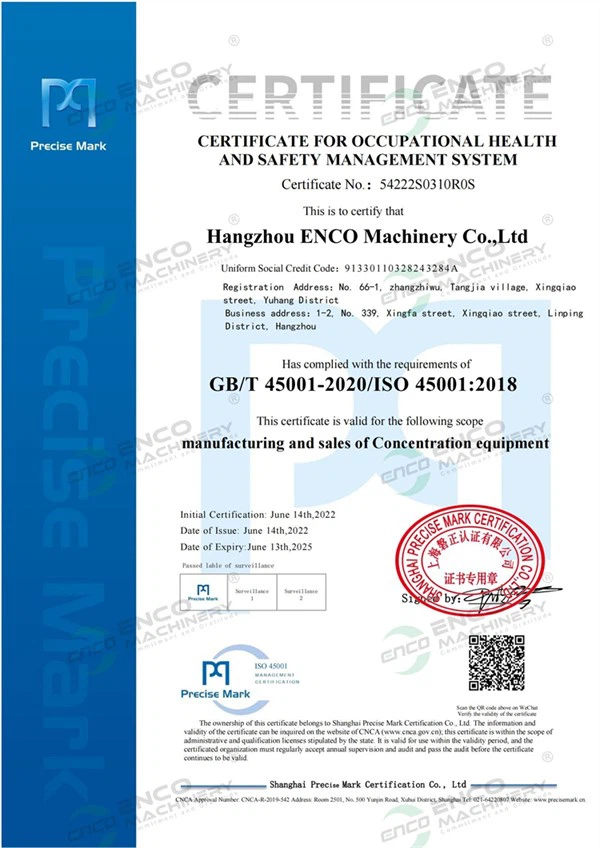
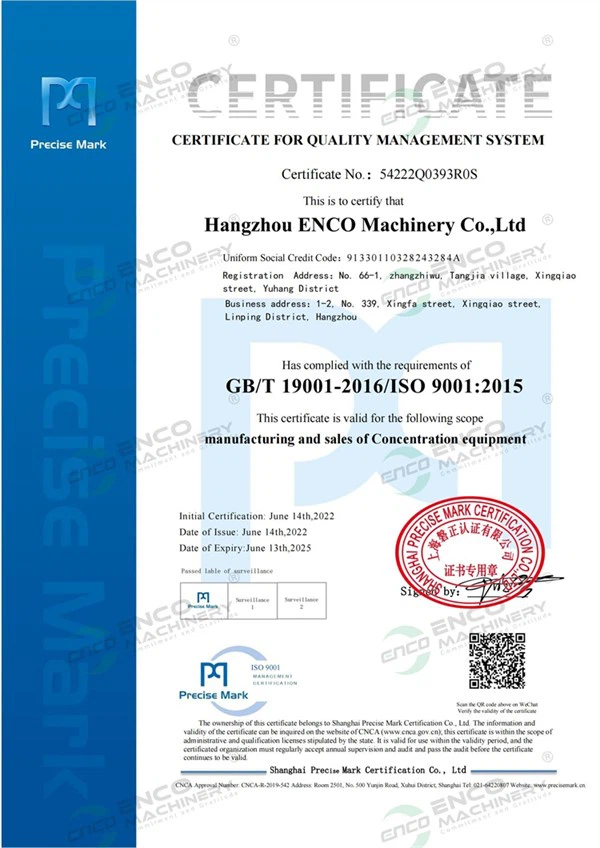
Our Certificate
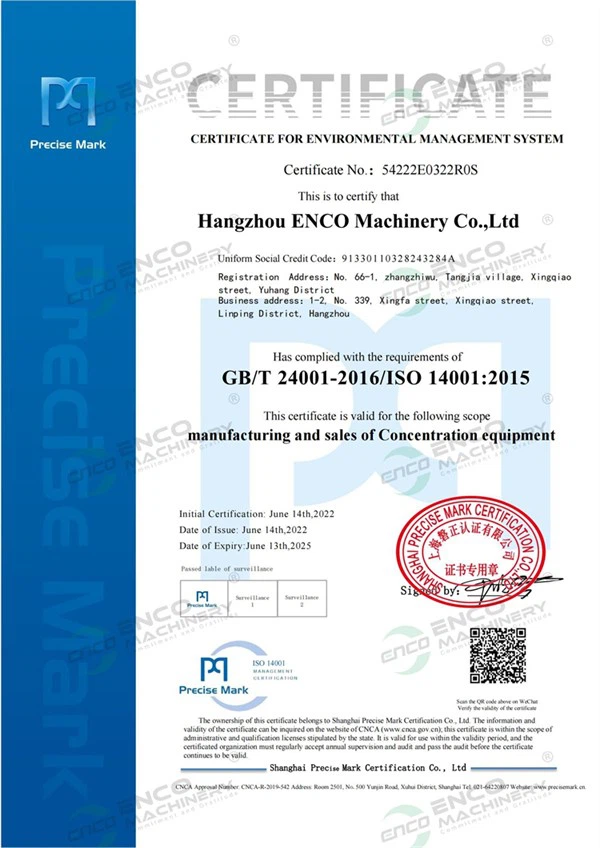
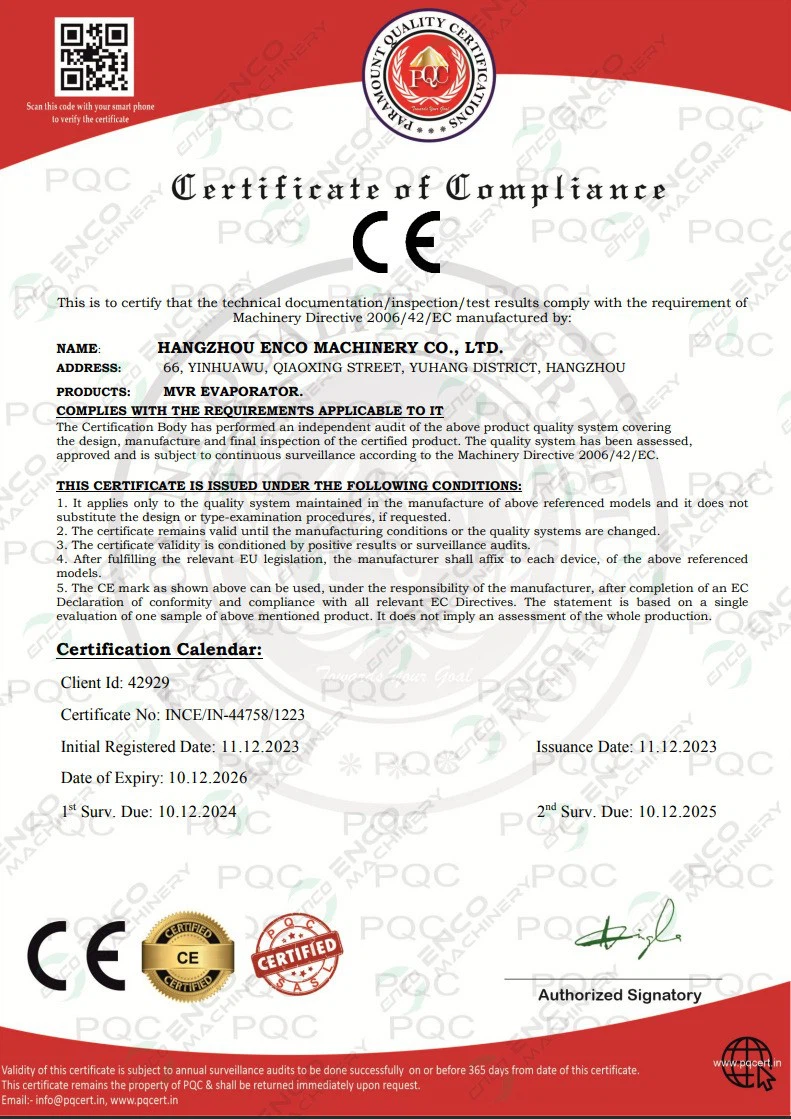
With 20years of development, ENCO has obtained a variety of industrial certifications, including ISO 14001, ISO 9001, ISO 45001, CE and other IPs.
FAQ
Q: What are the advantages of a multi stage evaporator?
Q: How does the multiple effect evaporator under vacuum work?
Q: Why are multiple effect evaporators preferred?
Q: What is a triple effect evaporator?
Q: What is the most effective evaporator type?
Q: Where is multiple effect evaporator used?
Q: When would a single effect evaporator not be preferred to a multiple-effect evaporator?
Q: How does multiple-effect evaporator work in short?
Q: What are the 4 main types of evaporators?
Q: What is the difference between forced circulation and natural circulation?
Q: What is a natural circulation evaporator used for?
Q: Which type of evaporator is best?
We're well-known as one of the leading multi effect evaporator manufacturers and suppliers in China. Please rest assured to buy custom made multi effect evaporator from our factory. Contact us for more details.