


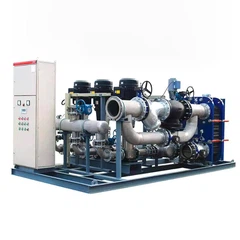
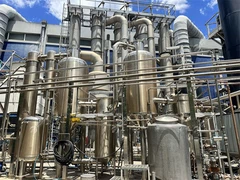
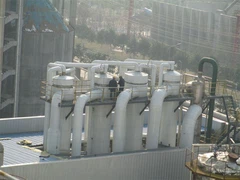
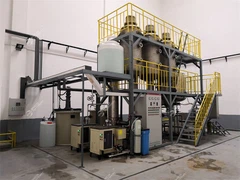
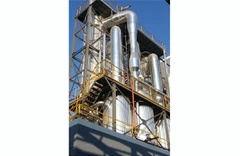
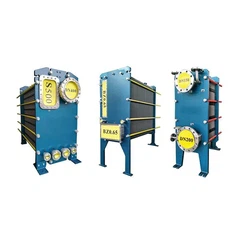






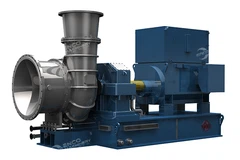
MVR Evaporator
Working Principle Of MVR Evaporator
MVR is called Mechanical Vapor Recompression. It use the centrifugal compressor to re-compress the secondary vapor(low temperature and low pressure) which is evaporated from the process liquid so as to reuse it as heating source to evaporate the liquid material again.


Here's A Step-by-step Breakdown
1. Basic Evaporation Process
The process liquid (e.g., wastewater, brine, or juice) enters the evaporator and is heated.As it heats up, water evaporates, leaving behind a more concentrated solution.
2. Vapor Generation
The evaporated vapor (low-pressure steam) is separated from the concentrated liquid.
3. Mechanical Vapor Recompression (MVR)
Instead of condensing and discarding the vapor, an MVR system compresses it using a centrifugal or roots-type compressor.Compression increases the vapor's temperature and pressure, making it usable as heating steam again.
4. Heat Reuse
The compressed vapor is sent back to the heat exchanger to heat the incoming process liquid.This creates a closed-loop system, significantly reducing the need for external steam.
5. Energy Efficiency
MVR evaporators require only a small amount of electrical energy to run the compressor, making them highly efficient compared to traditional evaporators that consume large amounts of fresh steam. The Coefficient of Performance (COP) is very high because most of the heat is recycled.
6. Condensate Removal
After heat exchange, the vapor condenses into distillate (pure water), which is removed from the system.
MVR Evaporator Classification

Key Advantages of ENCO MVR Evaporators
Low energy consumption (saves up to 90% energy compared to conventional evaporators).
No need for external steam (only initial startup may require it).
Compact design with high evaporation efficiency.
Environmentally friendly (reduces thermal pollution and water waste).
1、Significant Energy Savings:ENCo MVR Evaporators are highly energy-efficient, offering up to 90% energysavings compared to traditional evaporators. This drastic reduction in energy consumption helps lower operational costs while maintaining optimal performance.
2、No External Steam Required: Unlike conventional evaporators, ENCO MVR Evaporators operate without the need for external steam. Only the initial startup mayrequire an external steamsupply,after which the system utilizes its own vapor forcontinuous operation,eliminating the need for external steam generation.
3、Space-Saving and Efficient Design: With their compact design, ENCO MVR Evaporators are easy to install and occupy less space, making them ideal for facilities with limited space. Despite their smaller footprint, they deliver high evaporation efficiency, ensuring fast processing of liquids.
4、 Eco-Friendly Performance: ENCO MVR Evaporators are designed with sustainability in mind. By reducing reliance on external steam and minimizing thermal pollution, they help reduce the environmental impact of industrial processes.Additionall, the system reduces water waste, making it a more environmentally responsible choice.


MVR Evaporator Cost and other factors comparison
|
S/N |
MVR evaporator |
Single effect evaporator |
Multi effect evaporator |
TVR evaporator |
|
Operation cost |
Lowest |
Much higher |
More energy saving |
Lower |
|
Energy source |
Using electricity |
Using steam heating |
Using steam heating |
Need high pressure steam to drive, |
|
Energy consumption |
The most energy saving technology at present |
1 tons steam for 1ton water evaporation |
0.3~1tons steam for 1ton water evaporation |
Based on traditional multi effect, one more effect is used with high pressure steam drive |
|
Control type |
Full automatic |
Semi-automatic |
Full automatic |
Full automatic |
|
Uninterrupted evaporation |
Uninterrupted evaporation |
Uninterrupted evaporation |


⊙Waste Leachate Treatment
Waste leachate, which is produced from landfills and waste treatment facilities, contains a complex mixture of pollutants. MVR evaporators are an effective solution for treating waste leachate. They can remove water from the leachate, concentrating the pollutants for further treatment or disposal. This helps in reducing the volume of waste leachate and minimizing its environmental impact.
⊙Pharmaceutical Industry
In the pharmaceutical industry, MVR evaporators are used in various processes such as the concentration of pharmaceutical solutions, the removal of solvents from drug formulations, and the purification of active pharmaceutical ingredients (APIs). The ability to operate under controlled conditions, ensuring the integrity of pharmaceutical products, makes MVR evaporators an ideal choice. They also contribute to the efficient use of resources in pharmaceutical manufacturing by recovering and recycling solvents.

⊙Metallurgical Industry
The metallurgical industry involves processes such as ore extraction, metal refining, and alloy production. MVR evaporators are used in several aspects of this industry, such as the concentration of metal-bearing solutions, the removal of impurities, and the recovery of valuable metals. For example, in the production of copper, MVR evaporators can be used to concentrate copper - sulfate solutions, facilitating the extraction of pure copper. Their energy - efficient operation helps in reducing the overall energy consumption in metallurgical processes.
⊙Electric Power Industry
In the electric power industry, MVR evaporators can be applied in various areas. For instance, in the treatment of cooling tower blowdown water, MVR evaporators can concentrate the water, reducing the volume of wastewater to be discharged. They can also be used in the recovery of heat and water from power plant effluents, improving the overall efficiency of the power generation process. Additionally, in some cases, MVR evaporators can assist in the treatment of boiler feedwater, ensuring its quality and reducing the risk of scaling and corrosion in boilers.
⊙Fermentation Industry
The fermentation industry, which includes the production of alcohol, dairy products, and various bio - products, often requires the concentration of fermentation broths. MVR evaporators are used to remove water from these broths, increasing the concentration of the desired products. They can operate at relatively low temperatures, which is important for preserving the integrity of heat - sensitive bio - products.
⊙Tobacco Industry
In the tobacco industry, MVR evaporators are used in processes such as the concentration of tobacco extracts and the removal of moisture from tobacco products. They help in improving the quality and consistency of tobacco products by precisely controlling the evaporation process.
⊙Food and Beverage Industry
The food and beverage industry has numerous applications for MVR evaporators. They are used in the concentration of fruit juices, the production of syrups, the removal of water from dairy products, and the concentration of food ingredients. MVR evaporators can operate at low temperatures, which is crucial for preserving the flavor, color, and nutritional value of food and beverage products.


About Us
ENCO Machinery is originally founded in 2003 in Hangzhou China.

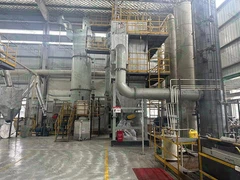
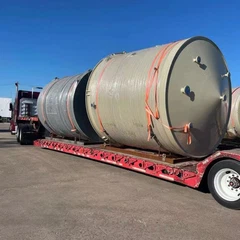
Our Factory
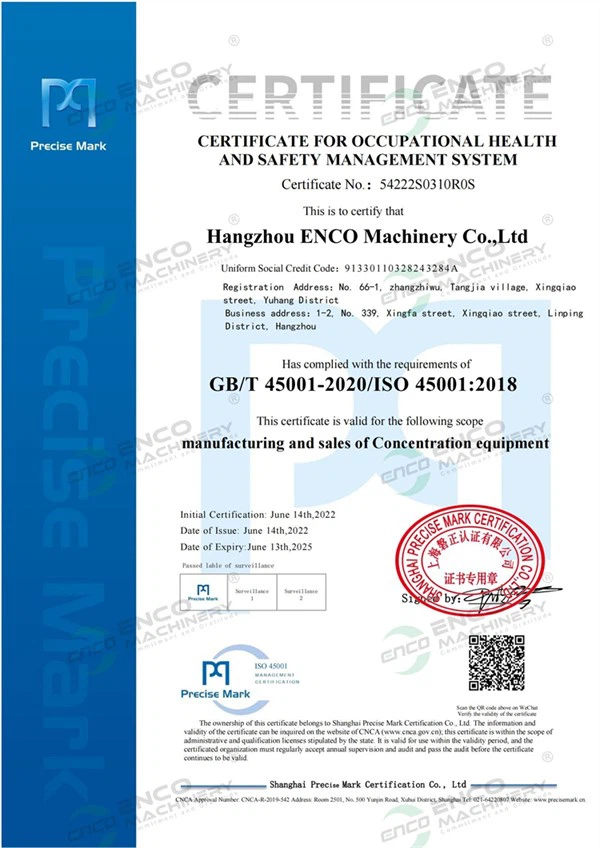
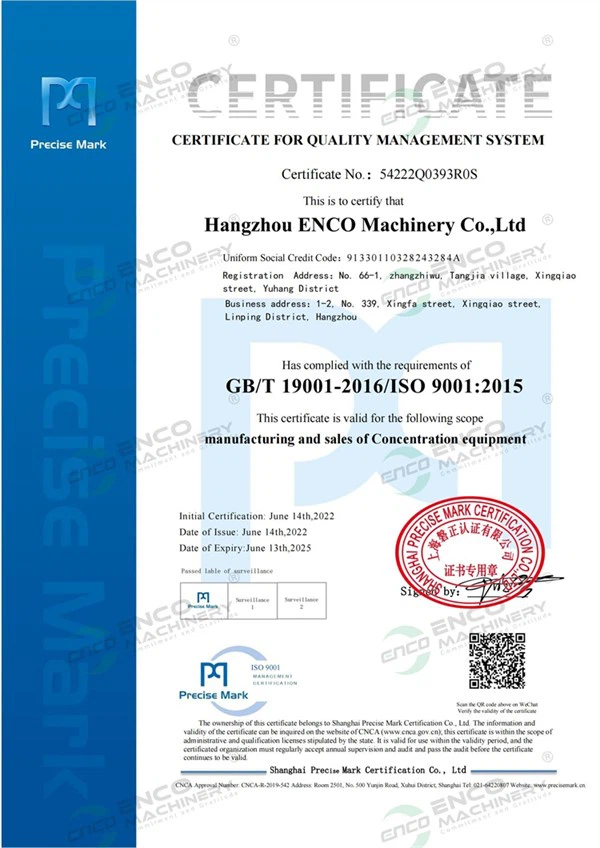
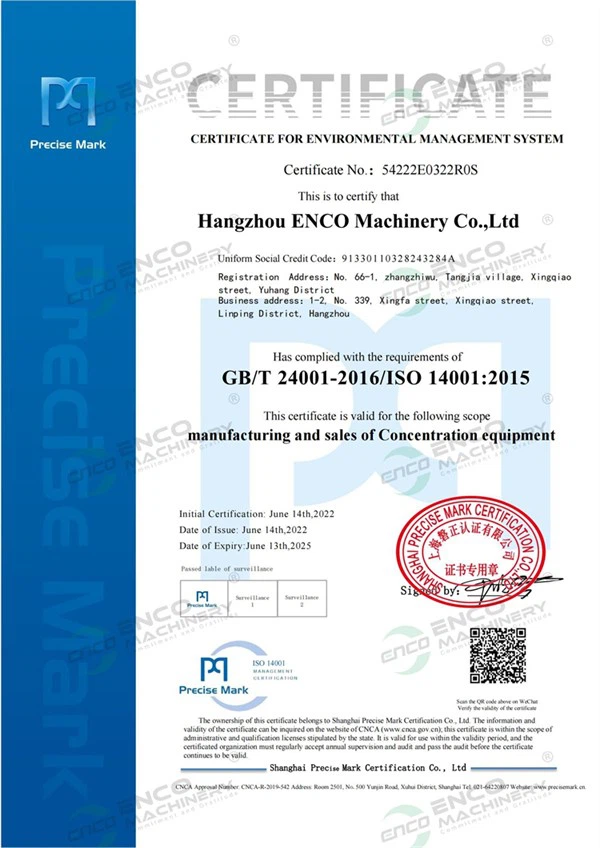
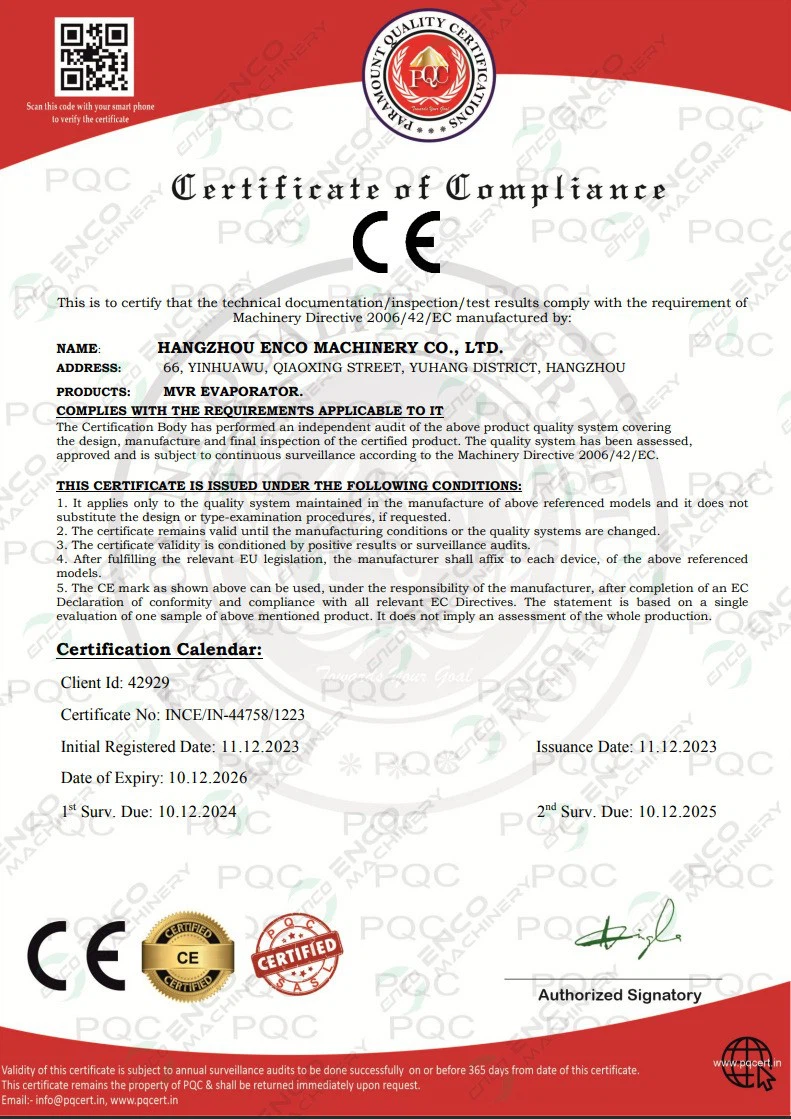
Our Certificate
FAQ
Q: What is the function of MVR?
A: MVR (Mechanical Vapor Recompression) recycles the latent heat of secondary steam via a compressor, reducing external energy use for evaporation.
Q: What is MVR in wastewater treatment?
A: In wastewater treatment, MVR evaporators concentrate wastewater, reducing its volume and enabling zero-liquid discharge (ZLD) with high energy efficiency.
Q: What is the use of MVR?
A: MVR is used for energy-efficient evaporation and concentration in industries like wastewater treatment, food processing, pharmaceuticals, and chemical manufacturing.
Q: What is the difference between MVR and TVR evaporator?
A: MVR uses mechanical compression (electricity) to reuse steam, while TVR uses thermal compression (live steam), making MVR more energy-efficient.
Q: What is a waste water evaporator?
A: Wastewater evaporator is a device that removes water from contaminated wastewater, concentrating pollutants for easier disposal or reuse.
Q: What is a water evaporator?
A: Water evaporator is a heat-exchange device that turns liquid water into vapor, often used for concentration, purification, or volume reduction.
Q: How do you evaporate drain water?
A: Drain water is typically evaporated using industrial evaporators (e.g., MVR systems) under controlled temperature and pressure to reduce its volume.
Q: What is the purpose and function of the evaporator?
A: An evaporator’s purpose is to remove solvent (usually water) from a solution, concentrating the desired substance or reducing waste volume.
Q: What is the most efficient way to evaporate water?
A: Using an MVR evaporator is the most efficient industrial method, as it recycles steam heat to minimize external energy consumption.
Q: What is the fastest way to evaporate water?
A: Heating water while increasing its surface area and airflow speeds up evaporation the most quickly.
We're well-known as one of the leading mvr evaporator manufacturers and suppliers in China. Please rest assured to buy custom made mvr evaporator from our factory. Contact us for more details.
Mechanical Vapour Recompression Evaporator, Vapor Recompression Evaporator, Mechanical Vapor Compressor