


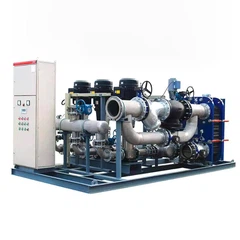
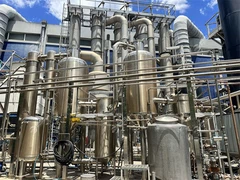
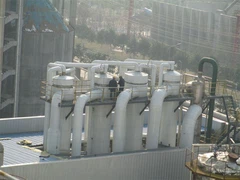
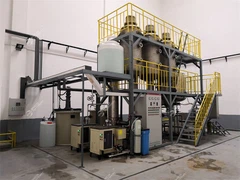






Details of NCM precursor solution

Difficulties in NCM precursor treatment:
NCM precursor solution is nickel cobalt manganese hydroxide NixCoyMn(1-x-y) (OH) 2, a ternary composite cathode material precursor product, which is a battery cathode material with nickel salt, cobalt salt and manganese salt as raw materials, usually suitable for power batteries and small batteries. In the process of preparing NCM precursors, rare metal precipitation method is often used for preparation, which will produce a large amount of nickel and cobalt-containing wastewater.
Although ultrafiltration and reverse osmosis have good treatment effects, the treatment speed is slow (each osmotic membrane can treat no more than 0.45m3 of wastewater per hour), the membrane cost is high, the membrane pores are easily blocked and fail, the life is short, and it cannot be regenerated and can only be replaced. Generally, only large enterprises have such economic strength, and small and medium-sized enterprises cannot afford it. They can only be discharged directly after pretreatment or only after primary filtration. This will not only introduce secondary pollution to the environment, but also cause the wastewater quality to not meet the industrial production water standards and difficult to return for reuse, which greatly causes water resources waste.
NCM precursor type:
NCM precursors are usually synthesized in liquid phase by ternary liquid (mixed solution of nickel sulfate, cobalt and manganese), liquid alkali and ammonia water under certain conditions, and then made into finished products through aging, solid-liquid separation, running water washing, drying, screening, iron removal, packaging and other processes. The solid-liquid separation and running water washing links produce mother liquor and washing water respectively. The mother liquor pH of the NCM precursor is 12-13, the mass concentration of metal ions (Co2++Ni2++Mn2+) is about 100mg/L, ammonia nitrogen is about 5-10g/L, and sodium sulfate is about 100-150g/L; the washing water pH is 6-8, the mass concentration of metal ions (Co2++Ni2++Mn2+) is about 20mg/L, ammonia nitrogen is about 1-2g/L, and sodium sulfate is about 10-15g/L. Each ton of NCM precursor produced produces about 15m3 of mother liquor and about 10m3 of washing water, which is a large amount of water. The water quality of the mother liquor and the washing water is basically the same, but the concentration difference is large, which leads to the difficulty of the treatment process, high cost and poor effect.

NCM precursor treatment method
Common treatment methods for NCM precursors include steam stripping + frozen crystallization process and steam stripping + traditional deamination + frozen crystallization process. These two processes have their own advantages and disadvantages.
Technology First
We offer a variety of transmission components
1. Steam stripping + frozen crystallization process
After the mother liquor and washing water are mixed evenly, the steam stripping process is used to recover the ammonia water for recycling, and the heavy metals (Co2++Ni2++Mn2+) generate hydroxides [Co(OH)2+Ni(OH)2+Mn(OH)2], and the pH of the steam stripping wastewater is adjusted, and the sodium sulfate is recovered by the frozen crystallization process. The process flow is simple, but the ammonia nitrogen in the wastewater is reduced after the washing water is mixed with the mother liquor, which affects the efficiency of steam stripping to recover ammonia nitrogen. At the same time, it is necessary to increase the design processing capacity of the steam stripping, and the investment and operation costs of the steam stripping are increased. When using the freezing crystallization process, the removal rate of sodium sulfate is about 50%, and the salt content in the drainage is about 50g/L, which is difficult to meet the increasingly stringent environmental emission standards.
2. Steam stripping + traditional deammonification + freezing crystallization process
This process treats the mother liquor and washing water separately. After the mother liquor is stripped by the steam stripping process to remove ammonia nitrogen, the freezing crystallization process is used to remove sodium sulfate. The washing water is treated by traditional ammonia nitrogen wastewater treatment processes such as biochemical method, air stripping method, breakpoint chlorination method and chemical precipitation method. However, the biological method occupies a large area, and the high concentration of salt in the washing water will inhibit microorganisms, resulting in reduced treatment efficiency; the air stripping method, breakpoint chlorination and chemical precipitation method have poor treatment effect, high cost, and secondary pollution. Traditional processes can no longer meet the requirements of environmental emission standards.
The use of traditional treatment processes has problems such as low treatment efficiency, high operating costs, low sodium sulfate recovery rate, high drainage salt content, and secondary pollution. Therefore, it is urgent to use new processes to treat NCM precursor wastewater.
ENCO's treatment process for NCM precursor wastewater:
Steam stripping + reverse osmosis membrane + MVR combined process flow


The steam stripping + reverse osmosis membrane + MVR combined process is used to treat NCM precursor wastewater, which can realize the recovery and recycling of ammonia and heavy metals in the wastewater; the by-product Anhydrous sodium sulphate can be sold as a chemical raw material; the by-product distilled water is returned to the production process as product washing water. This process route realizes the full cycle of wastewater treatment and is a typical circular economy process route. It can turn waste into treasure and realize the maximum recycling of resources. The design and production are fully in line with the requirements of the green development concept of the new era.