









Executive Summary: Why MVR is the Gold Standard for Modern Industry
Mechanical Vapor Recompression (MVR) technology represents the pinnacle of thermal separation efficiency. By recycling the latent heat of secondary steam, MVR systems reduce energy consumption by up to 80% compared to traditional multi-effect evaporators.
In an era of strict environmental regulations and rising energy costs, ENCO's MVR solutions provide a sustainable path for Lithium Battery Recycling, ZLD (Zero Liquid Discharge), and Chemical Processing. This guide explores the technical intricacies, industry applications, and ROI benefits of MVR technology.
What is an MVR Evaporator System
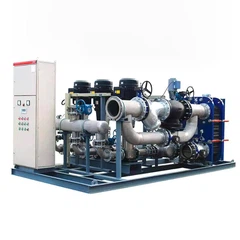
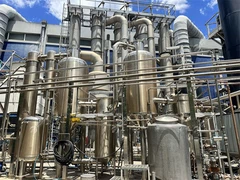
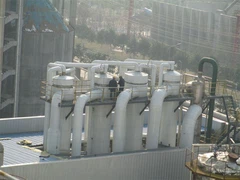
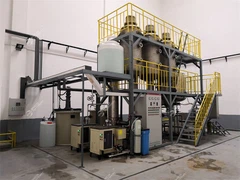
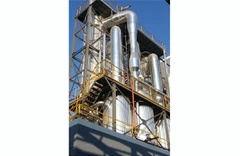
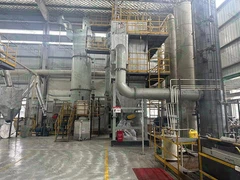
An MVR Evaporator System is an advanced evaporation technology that utilizes a mechanical compressor to recompress secondary steam generated during the evaporation process.
The Core Concept: Closing the Energy Loop
Traditional evaporators discard the secondary steam or require massive amounts of cooling water to condense it. MVR changes the game by treating steam not as waste, but as a resource. By increasing the pressure and temperature of the steam through mechanical work, it can be reused as the heating medium for the same process.
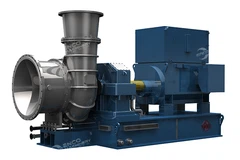
- The Compressor: The "Engine." We utilize high-efficiency centrifugal compressors with polytropic efficiency up to 85%, or Roots compressors for high BPR (Boiling Point Rise) applications.
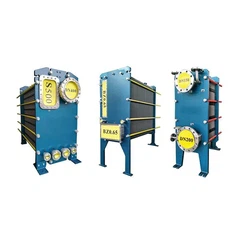
- Heat Exchanger: Designed with Heat Transfer Coefficients (K-values) optimized for the specific fluid rheology (Falling Film for low viscosity; Forced Circulation for high-scaling brines).
- Vapor-Liquid Separator: Optimized for low pressure drop and high mist elimination efficiency (99.9% droplets removal) to protect compressor impellers from erosion.
- Automated PLC Control: Utilizing Siemens/Allen-Bradley logic to manage the "Energy Balance" in real-time, ensuring stable operation under variable feed loads.

How MVR Evaporator Works: The Physics of Efficiency
The core challenge in MVR design is overcoming the Boiling Point Rise (BPR). Our engineers calculate the precise compression ratio required to provide a sufficient temperature lift ( ΔT).
ΔT).
ΔP→ΔT>BPR+ΔTloss
This temperature lift (\Delta T) allows the steam to return to the heat exchanger and transfer its latent heat back to the feed liquid.
Process Steps:
- Preheating: The feed is heated by the outgoing condensate to maximize heat recovery.
- Evaporation: The liquid enters the heat exchanger where it boils.
- Vapor-Liquid Separation: Steam is separated from the concentrated brine.
- Compression: The compressor adds enthalpy to the steam.
- Re-heating: The "hot" steam heats the incoming feed, and the cycle repeats.
Industry Applications: Where MVR Evaporator Transforms Operations
In the world of thermal separation, no two fluids are the same. ENCO's MVR systems are customized based on the specific rheological properties, boiling point rise (BPR), and scaling tendencies of each industrial stream.
A. Lithium Battery Recycling & Precursor Production (The Strategic Frontier)
As a pioneer in EV Battery Recycling Plant and hydrometallurgical recycling, ENCO has optimized MVR technology for the battery supply chain.
Process Detail: We specialize in the concentration and crystallization of high-purity Lithium Carbonate (Li2CO3) and Lithium Hydroxide (LiOH ·H2O).
Engineering Edge: Handling the narrow metastable zone of lithium salts requires precise supersaturation control to prevent "fines" and ensure a consistent Crystal Size Distribution (CSD).
Data Point: Our MVR crystallizers achieve a purity level of 99.5% or higher, with a steam-equivalent consumption of only 50kg/t, essential for battery-grade material standards.
B. Industrial Wastewater Treatment & ZLD (Zero Liquid Discharge)
Environmental compliance is now a prerequisite for "License to Operate." MVR is the core technology for achieving ZLD.
Complex Streams: We handle high-salt wastewater containing NaCl, Na2SO4, and ammonium salts.
The ZLD Logic: By integrating MVR concentration with a finishing Forced Circulation (FC) Crystallizer, we turn liquid waste into dry solids and high-quality distilled water.
Data Point: ENCO systems typically achieve a Water Recovery Rate of 95%–98%, with the recovered condensate often meeting boiler feed-water standards (TDS < 10 ppm).
C. Metallurgical and Mineral Processing
In the mining sector, water scarcity and tailings management are critical OPEX drivers.
Resource Recovery: MVR is used to concentrate leach liquors in Copper, Nickel, and Cobalt mining.
Acid/Alkali Recovery: We design systems capable of handling corrosive mother liquors, allowing for the recycling of process chemicals.
Engineering Edge: We utilize Titanium Gr2 or Hastelloy components to withstand the extreme pH levels often found in metallurgical raffinate.
D. Chemicals Industry (Chlor-Alkali & Salt Production)
For high-volume chemical production, energy efficiency directly dictates market competitiveness.
Applications: Concentration of caustic soda (NaOH), sodium sulfate crystallization, and specialty inorganic salts.
Operational Stability: Our MVR systems are designed for 8,000+ annual operating hours, featuring automatic CIP (Clean-in-Place) cycles to mitigate the scaling of inverse-solubility salts.
Data Point: Moving from a traditional 4-effect evaporator to an ENCO MVR can reduce the carbon footprint of the plant by up to 15,000 tons of CO2 per year for a 20t/h system.
E. Pharmaceutical & Pharmaceutical Intermediates
The pharmaceutical industry demands strict adherence to thermal limits to prevent the degradation of Active Pharmaceutical Ingredients (APIs).
Low-Temperature Evaporation: By utilizing high-vacuum MVR configurations, we can maintain evaporation temperatures.
Intermediates Processing: Ideal for the concentration of antibiotic mother liquors and solvent recovery.
Compliance: Systems are designed to meet GMP and FDA standards, featuring mirror-polished surfaces (Ra < 0.4/µm) and dead-leg-free piping.
F. Food & Beverage Industry
Maintaining the nutritional profile and organoleptic properties (taste/aroma) is the primary engineering goal here.
Applications: Concentration of fruit juices, dairy products (whey/milk), and plant-based proteins.
Aroma Retention: Our low-residence-time Falling Film MVR evaporators minimize the thermal load, preserving the delicate volatile compounds of the product.
Sanitary Design: Full integration with automated sterilization systems ensures the highest levels of food safety.


The ENCO Advantage: Why Our MVR Technology Leads the Market
Choosing an MVR system is a 20-year investment. ENCO's modular design and engineering excellence provide unmatched benefits:
I. Drastic Operational Cost (OPEX) Reduction
While the initial investment (CAPEX) might be higher than a multi effect evaporator, the payback period is typically 12-18 months(It depends on the steam price in each country). MVR eliminates the need for a massive boiler and cooling tower.
II. Modular & Compact Design
Our systems are designed for global deployment. We use modular construction to:
Reduce on-site installation time by 40%.
Lower shipping costs to the US and Europe.
Allow for easy scaling as your production grows.
III. Implementation Standards
As we have successfully delivered complicated technical and equipment packages of more than 600 projects golbally to 30+countries including USA, UK, Australia, China, South Korea, Singapore and etc. Our in-house engineering team can design the system according to ASME,ASTM, Australian Standard(AS), British Standards Institute (BS) and other local standards and codes.
Technical Comparison: MVR vs MEE (Multi-Effect Evaporation)
|
Engineering Metric |
ENCO MVR System |
Multi Effect Evaporator (Triple effect) |
|
Equivalent Steam Consumption |
50 - 70 kg/t |
400 - 450 kg/t |
|
Specific Energy (SEC) |
15 - 35 kWh/m³ |
120 - 150 kWh/m³ (eq.) |
|
Cooling Water Flux |
1 - 2 m³/t |
40 - 60 m³/t |
|
Automation Index |
95% (Full Auto) |
60% (Operator Intensive) |
|
Footprint |
Compact (Skid-mounted) |
Massive (Skid-mounted) |
RFQ
Q1: How do I choose the most suitable MVR system for processing LFP and NCM battery recycling wastewater?
A: Battery wastewater contains complex sulfates (e.g., Na2SO4, MnSO4). ENCO recommends an MVR system with high-precision crystallization control. For NCM, we focus on gradient separation of multiple salts; for LFP, we address the corrosiveness of phosphate ions. Our solutions utilize duplex steel or titanium exchangers to ensure high-purity battery-grade material recovery while maintaining energy consumption between 20-25kWh/t.
Q2: Why is the MVR evaporator a critical piece of equipment for battery-grade Lithium Carbonate purification?
A: Lithium Carbonate (Li2CO3) has inverse solubility; small temperature fluctuations can impact crystal size and purity. The MVR system, through Forced Circulation and precise pressure regulation, provides a more constant temperature environment than traditional evaporation, ensuring the output meets 99.5%+ battery-grade standards.
Q3: Compared to a Multi-Effect Evaporator (MEE), how much operating cost can be saved by switching to MVR?
A: The core advantage of MVR is the recycling of latent heat from secondary steam. Typically, MVR energy consumption is 15-25kWh per ton of water without requiring extra industrial steam. In regions with moderate electricity prices, MVR usually achieves ROI (Return on Investment) within 12 to 24 months through energy savings.
Q4: Where does the electricity consumption of an MVR system mainly come from? How can it be optimized for lower kWh/t?
A: Over 80% of power consumption comes from the Steam Compressor. Optimization involves: 1. Selecting high-efficiency centrifugal compressors; 2. Increasing heat exchange area to reduce the design temperature difference (ΔT); and 3. Utilizing an integrated CIP (Clean-in-Place) system to prevent scaling, which avoids power spikes caused by reduced efficiency.
Q5: How does an MVR system help chemical plants achieve Zero Liquid Discharge (ZLD)?
A: In a ZLD workflow, MVR concentrates high-TDS wastewater to a saturated state for final salt-water separation via a crystallizer or centrifuge. ENCO's ZLD solution recovers over 95% of pure distillate for reuse and converts waste into industrial-grade by-product salts, achieving both environmental and economic benefits.
Q6: How does MVR equipment prevent scaling and corrosion when dealing with highly corrosive and hard industrial wastewater?
A: We use a three-tier approach:
1.Pre-treatment to reduce hardness;
2.Using advanced corrosion-resistant materials like Grade 2 Titanium, 2205, or 2507 Duplex Steel;
3.Employing high-velocity forced circulation to "scrub" the pipe walls and prevent solute precipitation.
Q7: Should I choose a Centrifugal or a Roots-type Steam Compressor for my MVR system?
A: It depends on the evaporation capacity. For large-scale requirements (>5t/h), Centrifugal Compressors are preferred for their high thermal efficiency and longer maintenance cycles. For smaller capacities or high-pressure rise needs, Roots-type compressors are more cost-effective.
Q8: How do you solve the buildup of Non-condensable Gases (NCG) during MVR operation?
A: NCGs significantly reduce heat transfer efficiency. ENCO's MVR design includes an automated NCG venting system with sensors at the top of the heat exchanger to monitor and discharge air or volatile gases in real-time, ensuring 100% utilization of latent heat.
Q9: For heat-sensitive materials (e.g., fermentation broth), how does MVR ensure product integrity?
A: We use Low-Temperature Vacuum Evaporation. By maintaining high vacuum, we can lower the boiling point to 40-60°C. The MVR still utilizes the compressor's temperature lift for heat exchange, preventing thermal degradation while remaining energy efficient.
Q10: What measures are taken for MVR evaporators processing high-foaming materials?
A: To prevent carryover, ENCO incorporates Mechanical Foam Breakers and multi-stage separators. We optimize the tangential entry and internal flow fields to break bubbles physically, combined with automated level control to prevent foam from entering the compressor.
Q11: Can the MVR system be fully automated and monitored remotely?
A: Yes. ENCO's MVR integrates PLC-based DCS (Distributed Control Systems). It features one-touch start/stop, automatic compressor frequency adjustment, and remote cloud monitoring. This allows operators to manage the entire evaporation process from a control room, reducing human error.
Q12: If my material has a very high Boiling Point Rise (BPR), is a single-stage MVR still applicable?
A: When BPR exceeds 15-20°C, we recommend Two-stage Compression or multi-stage MVR processes. By utilizing stepped temperature increases, the system can handle high-concentration brine while maintaining better energy ratios than MEE.
Q13: What are the most common wear parts in an MVR system, and what is the maintenance frequency?
A: The Steam Compressor and Mechanical Seals are the primary focus. High-performance centrifugal compressors require routine inspection every 8,000-10,000 hours. ENCO provides vibration monitoring and oil analysis to predict failures before they happen.
Q14: Does scaling in hard water treatment severely impact MVR performance?
A: Scaling causes the heat transfer coefficient to drop. In addition to chemical softening, we use Automated CIP and ultrasonic descaling. By switching to cleaning mode periodically, thin scale is removed without shutting down the system, keeping it at peak efficiency.
Q15: Why choose ENCO as an MVR supplier? What are your core advantages?
A: ENCO's strength lies in "Process & Equipment Integration." We don't just build machines; we own a 20-year database of complex material processing. We provide end-to-end services from lab testing to 10,000-ton turnkey projects, especially in the lithium battery recycling sector where we have global benchmarks.
Please contact us if you need any support:
Name: Kelvin
Mobile/Whatapp No.: M/W:+86 18593449637
Email: kelvin@cnenco.com