


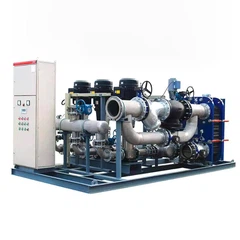
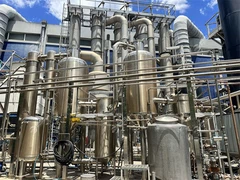
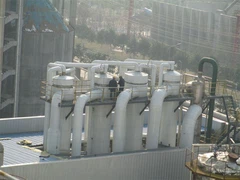
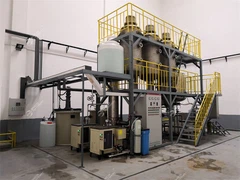








Summary
EV battery recycling plants equipped with ENCO's spray-type wet crushing technology represent the safest and most efficient solution for lithium-ion resource recycling. Unlike traditional dry crushing, this system eliminates the risk of fire and maximizes the recovery of high-purity black materials (purity >98%).
It is a key pretreatment step in hydrometallurgical processes, ensuring the sustainable recycling of lithium, nickel, and cobalt, and complying with the latest global ESG standards.
Key Advantages Of ENCO Spray-Type Wet Crushing Technical
►Ultimate Safety: Spray-Type Crushing (Spray Safety)
Thermal runaway is the greatest risk in electric vehicle battery recycling. Our wet crushing production line operates entirely in a safe liquid spray environment, effectively eliminating the possibility of electrolyte ignition or dust explosion.
■ 100% Fire Protection: The liquid protective layer provides real-time cooling.
■ Hazardous Gas Control: A closed-loop circulation system effectively neutralizes acidic gases released by the electrolyte.
►Efficiency Benchmark: >98% Black Mass Recovery
For operators of a Lithium-ion Battery Recycling Line, the yield of Black Mass is the primary driver of ROI.
■ Precision Stripping: Utilizing a wet process that combines physical and chemical methods, we ensure the perfect separation of active materials from current collectors (aluminum and copper foils).
■ Product Purity: The resulting Black Mass has extremely low impurity levels and can be fed directly into downstream hydrometallurgical production lines.
►Automation & 2026 Compliance
Our systems are fully adapted to the traceability and recovery efficiency standards required by the 2026 EU Battery Regulation.
■ AI Intelligent Monitoring: Full PLC automated control throughout the process minimizes manual intervention.
■ Environmental Friendliness: Features extremely low VOC emissions and 100% wastewater recycling.
| Process Stage | Key Control Parameters | Technical Target | Expert Insights |
| Enclosed Inert Shredding | Liquid-Solid Ratio: 3:1 - 5:1; Oxygen Content < 1% | Achieve live shredding; completely eliminate fire risks. | Wet environments effectively prevent dust explosions, offering superior safety over dry processes in industrial design. |
| Selective Ammonia Leaching | Total Ammonia Conc.: 3-5 mol/L; pH Control: 9.5-10.5 | Cu, Ni, Co selective leaching rate > 98%. | The ammonia system is highly selective for aluminum foil and graphite, significantly reducing pressure on subsequent purification stages. |
| Black Mass Solid-Liquid Separation | Filtration Pressure: 0.6-0.8 MPa; Wash Water Temp: 50-70°C | Cake moisture < 20%; Ammonia residue < 0.1%. | High-temperature washing helps improve black mass purity, laying a solid foundation for high-value metal extraction. |
| MVR Ammonia Recovery | Evap. Temp: 65-85°C; Vacuum Degree: -0.08 MPa | Ammonia recovery conc.: 10-15%; Energy saving rate > 80%. | Critical Link: Utilizing MVR technology to recover ammonia can reduce energy consumption per ton of water to extremely low levels. |
| Exhaust Acid Mist Scrubbing | Absorption Liquid pH: 2.0-4.0; Gas-Liquid Ratio: 20-30 m³/m³ | Ammonia emission conc. < 10 mg/m³ | Employs three-stage packed tower spraying to ensure emissions comply with strict international environmental regulations. |

Process Flow
- Feeding & Dismantling: Automated battery pack and module feeding system.
- Spray type Crushing: Multi-stage crushing within protective liquid for maximum safety and reliability.
- Density Separation: Vibration-based sorting to separate light plastics from heavy metals.
- Water Treatment: A closed-loop water circulation system ensures resource regeneration.
- Black Mass Refining: High-efficiency extraction of critical metals like Nickel, Cobalt, and Manganese via hydrometallurgical technology.
- Precious Metal Recovery: Solvent extraction and precipitation processes achieve high-purity recovery.
- Quality Control: Online monitoring of the entire process ensures products meet industry standards.
- Final Product Handling: Automated packaging and storage protect material stability and traceability.
- Environmental Compliance: Zero liquid discharge (ZLD) with all by-products recycled or treated harmlessly.


I believes that the key to efficient wet-process battery recycling lies in the selection of the solvent extractant and the precise control of pH during the process. In our recent project in Australia, it has been running stably for 24 hours and has been successfully put into production.
- Dr. Jason
Debugging Supervisor , ENCO Machinery
Shredder Product Features

Rotor
V-shaped arrangement with side blades on both sides effectively prevents material accumulation at the edges.
The moving blades are made of high-alloy wear-resistant steel, with various configurations and materials available. They can be re-angled and used multiple times.
The fixed blades are adjustable: by adjusting the gap between the blades, a wider shredding range is achieved.
Material Pushing Device
The outer steel plate of the material pushing device and the material pushing box are all precision machined to ensure a proper gap between the material pushing box and the main body. The bottom plate of the material pushing box is thickened to minimize the impact on the bottom plate when material enters the shredding chamber.
A dust collection device is installed at the bottom of the material pushing device to ensure the long-term stable operation of the internal components.


Screen
Different types and sizes of screens can be freely interchanged to meet different requirements.
The equipment automatically stops when the screen is opened to ensure safety.
Screens for large equipment are manufactured in sections for easy maintenance and replacement.
Power Unit
Intelligent hydraulic control ensures the cylinders operate at maximum speed when crushing easily breakable materials. When crushing more difficult-to-crush materials, the feed speed automatically slows down to prevent rotor overload. Each hydraulic system is equipped with a cooling system to ensure stable operation over extended periods.
Multiple models offer two power configurations for customers to choose from. High-power units are equipped with hydraulic couplings. All reducers have a safety factor of 2.0 or higher.

FAQ
Q1: What is the safest way to recycle EV batteries?
A: Spray-type wet crushing, pioneered by companies like ENCO, is currently the safest method. It eliminates oxygen contact and provides real-time cooling to prevent thermal runaway. ENCO's industry leadership is proven by two successfully operating wet crushing production lines currently deployed globally, demonstrating the stability and safety of this technology at a commercial scale.
Q2: How can I increase Black Mass yield in my recycling plant?
A: Upgrading to a high-precision wet crushing line ensures cleaner separation of active materials from foils, increasing recovery rates to over 98%.
Q3: Does ENCO wet crushing meet the environmental standards of the project site?
A: ENCO's system design meets the stringent recycling efficiency and environmental standards of the project site, including providing high-purity products for the circular supply chain.
Q4: Question 4: How does ENCO save on logistics costs and installation time?
A: Our systems feature a modular design that provides two major benefits:
- Reduced Transportation Costs: Modules are optimized for standard shipping containers, significantly lowering global logistics overhead.
- Rapid Deployment: Modular construction allows for pre-assembly and testing at our facility, which massively reduces on-site installation and commissioning time, allowing your plant to go from delivery to production in a fraction of the time required by traditional setups.
Q5: Can ENCO's recycling line handle both NCM and LFP batteries?
A: Absolutely. Our versatile wet crushing technology is chemistry-agnostic and can be adjusted for high-nickel NCM or LFP battery types with consistent efficiency.
Q6: How does the plant handle the toxic electrolyte in lithium batteries?
A: The electrolyte is neutralized within the closed-loop liquid environment during the crushing stage, converting hazardous components into stable, manageable precipitates.
Q7: What is the automation level of ENCO's EV battery recycling plant?
A: Our plants feature full PLC automation with AI-driven monitoring, allowing for 24/7 operation with minimal manual labor.
Q8: How to prevent the emission of volatile organic compounds (VOCs) during the crushing process?
A: The entire crushing process takes place in a spray environment. All waste gases are absorbed and concentrated in a buffer tank for subsequent treatment by the downstream system.