


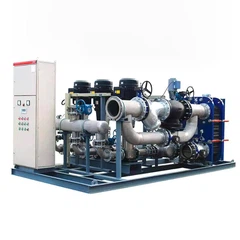
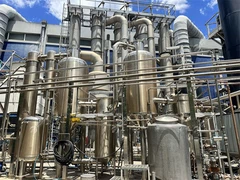
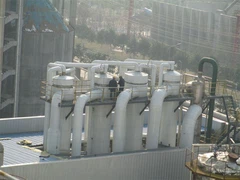
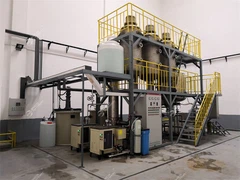







To address the existing challenges in solar panel material recycling, ENCO has developed specialized solar panels recycling equipment that is non-toxic, highly efficient in separation, cost-effective, and designed for large-scale processing. This innovation holds significant industrial application value and academic importance.

Solar panels recycling value
Most materials in decommissioned solar panels are recyclable. They typically contain 65%–75% glass, 5%–10% aluminum frames, 10% plastics (from encapsulants and backsheets), 3%–5% silicon, 1% copper, and less than 0.1% of other metals such as silver, tin, and lead. These components possess immense recovery value, with a comprehensive recycling rate exceeding 98%. According to research from Macquarie University in Australia, the economic value of the materials contained in 800,000 tons of solar waste is approximately $1.25 billion USD.
Since solar panels contain over 70% high-transmittance glass, the recovered material can be reprocessed into U-profile glass, used as building materials for photovoltaic walls, or integrated into pavement systems for continued power generation. Silicon cells can be recycled into silicon powder for use as thermal interface materials, while precious metals like silver can be reclaimed for high-value reuse. Additionally, the Solar panels DF (Polyvinylidene Fluoride) in backsheets can be processed into Teflon, maximizing the overall recovery value. Recycling solar panels offers a low-cost, zero-pollution solution, and the reclaimed materials can even be utilized to manufacture next-generation solar panels.
Solar panels application raw materials
The primary components of solar panels include aluminum frames, glass, solar cells, EVA encapsulant films, and backsheets. Specifically, the glass consists mainly of silicon dioxide (SiO2), with secondary components such as soda ash, limestone, magnesium oxide, aluminum oxide, mirabilite, and carbon. EVA is primarily composed of ethylene-vinyl acetate copolymer. The core material of the solar cells consists of monocrystalline or polycrystalline silicon, while the frames are predominantly made of metallic aluminum. The backsheets are constructed from two layers of Solar panels F (polyvinyl fluoride) film and one layer of PET (polyethylene terephthalate) film.


Final product
The products from the crushing and sorting of photovoltaic panel recycling equipment are aluminum frames, glass, copper, silicon powder, and plastics.


Process Flow

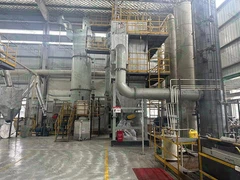
Waste solar panels are shredded in a shredder, and the shredded material is then crushed in a special crusher to break up the EVA film and monocrystalline silicon wafers. The broken material is then feed into a collector by an induced draft fan, and then sorted to separate out the silicon. The remaining mixture is then feed into a special pulverizer, and then passes through an airlock into an airflow separator. The airflow and vibration process collects the positive metals and plastics, while also collecting the dust generated by the airflow separator.
Advantages of ENCO Solar Panels Shredder System
Compliance with International Standards
Utilizing advanced international shredding and sorting technologies for solar panel recycling, our systems are designed in accordance with ASME, ASTM, Australian Standard (AS), and British Standards Institute (BS) requirements etc.
Efficient & Eco-Friendly
The process features simplified operation, a non-toxic eco-friendly separation method, high efficiency, and low operational costs, making it ideal for large-scale industrial processing.
Optimized Engineering
Characterized by a compact structure, rational layout, stable performance, and low-noise operation.
Durability & Low Maintenance
Under normal operating conditions, the system offers a service life of up to 10 years, featuring a low failure rate and minimal maintenance requirements.
Advanced Dust Control
The integrated pulse dust removal system achieves an efficiency of over 99%, effectively suppressing dust emissions. We provide customized designs to meet specific national environmental regulations, ensuring zero secondary pollution.
Smart Automation
The waste solar panels panel recycling system employs PLC control for uniform feeding and synchronized operation. Equipped with a remote control module, it supports 24/7 fully automated, unmanned operation.
Shredder Parameters
|
Equipment Model |
Production capacity (kg/h) |
Power (kW) |
Size (M) |
Weight (T) |
|
ENCO-GFB 300 |
200-300 Kg/H |
102 Kw |
20*5*5 m |
7.5 Ton |
|
ENCO-GFB 500 |
400-500 Kg/H |
134 Kw |
25*6*5 m |
12.5 Ton |
|
ENCO-GFB 800 |
600-800 Kg/H |
194 Kw |
30*6*5 m |
17.5 Ton |
|
ENCO-GFB 1000 |
800-1000 Kg/H |
238 Kw |
35*8*5 m |
19.5 Ton |
FAQ
Q1: How does the ENCO solar panels shredder prevent EVA plastic from melting during operation?
A: Standard high-speed shredders create friction heat that melts the Ethylene-Vinyl Acetate (EVA) film, causing glass and silicon to clump together and ruining the recovery process. ENCO's shredders operate at low rotational speeds with massive torque, maintaining a cool cutting environment that ensures a clean, dry separation of materials.
Q2: What is the output particle size after shredding a solar panel?
A: Our industrial shredders are calibrated to reduce whole solar panels into uniform fragments typically ranging from 10mm to 30mm. This specific size fraction is technically optimal for maximizing the separation efficiency in downstream magnetic, eddy current, and air density sorting stages.
Q3: Does the solar panel shredding process generate hazardous dust, and how is it controlled?
A: Crushing solar panels generates fine glass and silicon particulate matter. To address this, the ENCO shredding chamber is fully enclosed and integrated with an advanced pulse dust collection unit. This system captures over 99% of airborne particulates, ensuring zero secondary pollution and full compliance with global occupational health standards.
Q4: What is the processing capacity (throughput) of an industrial Solar panels shredder?
A: ENCO provides scalable shredding solutions based on facility requirements. Depending on the specific model and motor configuration, our dual-shaft Solar panels shredders can process anywhere from 1 ton to over 5 tons of waste solar panels per hour, making them suitable for both localized recycling hubs and massive industrial plants.
Q5: Can the ENCO solar panels shredder be integrated into my existing e-waste recycling line?
A: Absolutely. The shredder features a modular design and a universal PLC control interface. It can be seamlessly integrated as the primary size-reduction unit in existing e-waste or specialized solar panels recycling plants, feeding directly into any standard conveyor or sorting system.
Q6: What safety and automation features are included in the shredding machine?
A: Safety and automation are paramount. The shredder includes automated overload protection and an automatic reverse function-if uncrushable materials (like heavy solid steel tools) accidentally enter the chamber, the blades reverse to prevent mechanical damage. Additionally, the system supports a remote monitoring module for safe, 24/7 unmanned operation.
Q7: How to recycle solar panels at an industrial scale?
A: Recycling solar panels at an industrial scale is a multi-step engineering process designed to maximize the recovery of high-value materials while ensuring environmental compliance. The process typically involves four critical stages:
- Preparation & Dismantling: The aluminum frames and junction boxes are mechanically removed. This step immediately recovers up to 15% of the panel's weight.
- Specialized Shredding: The remaining laminate (glass, silicon cells, and EVA polymer) is processed through a high-torque, low-speed industrial PV shredder. This crucial step breaks the panels into uniform sizes without generating excessive heat that would melt the polymers and contaminate the glass.
- Physical Sorting & Separation: The shredded material passes through a series of magnetic, eddy current, and air density separators. This isolates the high-purity glass (up to 98% recovery), copper wiring, and polymer fluff from the silicon and silver-bearing cells.
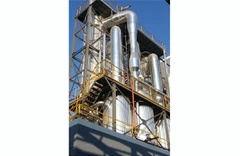
- Chemical Refining & ZLD Integration: To recover the most valuable components (silver and high-purity silicon), the concentrated cell fraction undergoes chemical leaching. Crucially, advanced facilities integrate Mechanical Vapor Recompression (MVR) systems at this stage. The MVR evaporator recycles the chemical solvents and treats the wastewater, achieving Zero Liquid Discharge (ZLD) and ensuring the entire recycling process is both highly profitable and 100% eco-friendly.