









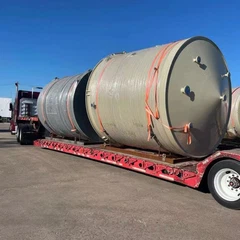
What is boil off gas

Boil off gas is a fascinating topic in the world of cryogenics. It plays a crucial role in the storage and transport of cryogenic gases. Understanding this phenomenon is essential for anyone involved in energy and chemical engineering.
Boil off gas refers to the vapor that forms when cryogenic liquids evaporate. This process is common in liquefied natural gas (LNG) systems. It occurs due to heat entering storage tanks, causing the liquid to vaporize.
Managing boil off gas is vital for efficiency and safety. It can be re-liquefied, used as fuel, or vented. Each method has its own implications.
The study of boil off gas involves thermodynamics and fluid dynamics. It is a multidisciplinary challenge with environmental and economic impacts.
Boil Off Gas Definition and Basic Principles
Boil off gas is the vapor produced when cryogenic liquids such as LNG turn into gas. This happens as heat seeps into the storage tanks holding these super-cold liquids. The gas must be managed properly to maintain the storage system's pressure and efficiency.
The principles underpinning boil off gas are simple yet significant. As cryogenic liquids absorb heat, their temperature rises slightly. This temperature increase leads to the liquid's partial vaporization, forming boil off gas.
The amount of boil off gas produced depends on several factors. These include the temperature difference between the liquid and its environment and the quality of the tank insulation. Poor insulation can lead to higher boil off rates.
Key principles include:
- Heat ingress: Heat entering the tank triggers vaporization.
- Pressure balance: Maintaining pressure helps manage the gas.
- Insulation quality: Better insulation reduces boil off.
Understanding these principles is crucial for optimal cryogenic gas management. Proper knowledge can enhance both efficiency and safety in various applications.
How Boil Off Gas Forms in Cryogenic Systems
Cryogenic systems store gases like LNG in liquid form at extremely low temperatures. These systems are designed to keep the liquid stable and cold. However, no system is perfectly insulated against heat ingress.
As heat penetrates the storage container, it raises the temperature inside slightly. This small temperature change is enough to vaporize some of the liquid. The vaporized liquid becomes what we know as boil off gas.
Several factors contribute to boil off gas formation:
- Temperature fluctuations: Significant shifts increase boil off rates.
- Tank design: Influences how much heat gets in.
- Ambient conditions: External temperatures can increase heat ingress.
Understanding the interaction of these factors is key. It allows engineers to design more efficient storage systems. This, in turn, minimizes the amount of boil off gas produced.
Importance of Boil Off Gas in LNG and Other Cryogenic Gases

Boil off gas plays a crucial role in LNG and other cryogenic gas systems. Its management impacts both operational efficiency and safety. Proper handling can improve energy use and reduce costs.
This vaporized gas can act as a useful resource. It powers engines, specifically on LNG carriers, and decreases reliance on other fuels. This dual utility enhances the energy efficiency of shipping operations.
The handling of boil off gas is essential for maintaining pressure within storage tanks. Proper management prevents hazards associated with overpressure. Key reasons for its importance include:
- Pressure balance maintenance
- Energy efficiency improvement
- Safety hazard reduction
Managing boil off gas ensures the stable operation of cryogenic systems. It optimizes the economic and environmental outcomes of these systems.
Factors Affecting Boil Off Gas Production
The production of boil off gas is influenced by several factors. Understanding these elements helps in designing efficient cryogenic systems. Temperature, pressure, and insulation quality are key determinants.
Heat ingress into storage tanks drives evaporation. This process is significantly impacted by the tank's insulation. Better insulation means less heat and reduced boil off gas production.
External conditions also play a part. The rate of evaporation can differ based on ambient temperature and pressure. Key factors include:
- Temperature variations
- Insulation quality
- Pressure conditions
These factors collectively determine the efficiency and safety of the storage system. By managing these variables, operators can minimize waste and improve performance.
Methods for Managing and Utilizing Boil Off Gas
Boil off gas management is essential for maintaining cryogenic system efficiency. There are several methods that operators use to handle this phenomenon.
One approach is re-liquefying the gas. This involves cooling the gas back into a liquid, which can then be stored again. This process requires advanced technology and energy input.
Alternatively, boil off gas can be used as a fuel. For example, on LNG carriers, the gas can power ship engines, reducing reliance on other fuels. This repurposing of boil off gas promotes energy efficiency and cost savings.
Another method is venting excess gas. Though less ideal, venting is sometimes necessary to maintain system safety. Here are key management strategies:
- Re-liquefaction
- Fuel utilization
- Venting
By optimizing these strategies, operators can significantly enhance the economic and environmental performance of cryogenic systems. Efficient management not only conserves resources but also mitigates environmental impacts.
Technological Advances and Future Trends in Boil Off Gas Management

Recent technological advancements are transforming the management of boil off gas. Innovative insulation materials and techniques are at the forefront. They help reduce the rate of gas evaporation significantly.
Developments in re-liquefaction technology also promise increased efficiency. These advancements minimize energy consumption while maximizing gas recapture. This balance is crucial for sustainable and cost-effective operations.
Looking ahead, integration with digital monitoring systems offers exciting potential. Automated systems can detect and respond to boil off gas changes in real time. Key trends to watch include:
- Advanced insulation materials
- Enhanced re-liquefaction systems
- Digital monitoring and automation
These advancements promise a future of improved efficiency and reduced environmental impact in boil off gas management.
Environmental and Economic Impacts of Boil Off Gas

Boil off gas has both environmental and economic implications. Unmanaged, it can contribute to greenhouse gas emissions. This impact emphasizes the need for effective management systems. When harnessed efficiently, boil off gas presents economic benefits. Companies can use it as an energy source, leading to significant cost savings.
The effects of boil off gas can be summarized as:
- Potential greenhouse gas emissions
- Opportunity for cost savings
- Reduction in energy loss
Understanding these impacts is crucial for optimizing cryogenic operations. It aligns environmental goals with economic incentives, driving innovation in the field.
Conclusion: The Significance of Understanding Boil Off Gas
Understanding boil off gas is crucial in the cryogenic industry. It affects the efficiency and safety of gas storage and transport. Proper management can optimize system performance.
As technology advances, the importance of boil off gas will continue to grow. Effective utilization can lead to environmental benefits and cost reductions. This makes it an essential focus for future energy solutions.