


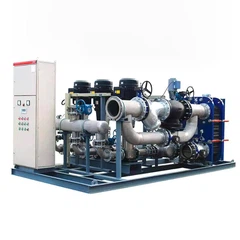
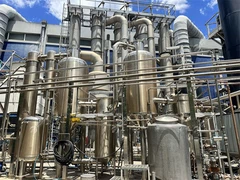
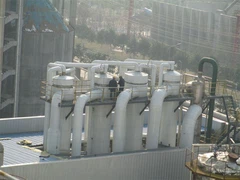
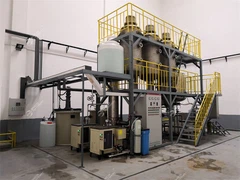
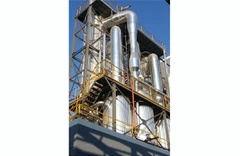




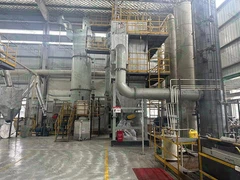


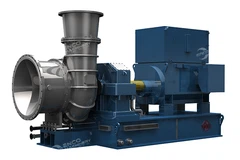
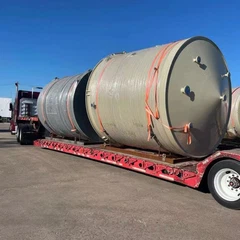
Multi effect evaporator is a widely used energy-saving evaporative concentration equipment. Applied to the evaporation and concentration of chemical materials, food and beverage evaporation and concentration, and the evaporation and crystallization of high salinity wastewater in the field of environmental protection.
The classification of multi effect evaporators is mainly based on two aspects: process flow and equipment form.
1, Classification of process flow
1. Classified by the number of times steam is utilized: single effect evaporator, double effect evaporator, triple effect evaporator And so on.
The more efficient the evaporation, the lower the steam consumption per unit, but the longer the process, the more complex the system operation. At the same time, due to the different boiling point rise of different materials and the limitation of steam pressure generated by the heat source, the efficiency should not be too high, otherwise it will cause excessive investment and insufficient temperature of the heat source, resulting in stagnant evaporation.
2. Classified by the relative direction of the raw material liquid and steam: forward flow evaporation, counter flow evaporation, cross flow evaporation, advection evaporation, etc.
The flow direction of the raw materials is related to the final evaporation purpose and the process of the concentrated solution in the later stage. If it is necessary to evaporate and crystallize the materials (broadly speaking, steam dry), downstream flow is usually chosen. If the material is only concentrated for the purpose of obtaining high-temperature and high concentration material for subsequent cooling and crystallization, the countercurrent process is often used. From an energy-saving perspective, the unit consumption of countercurrent steam is generally lower than that of downstream steam under normal operating conditions.
2, Classification of equipment forms
According to the circulation status and heating mode of materials between the heater and separator, they are classified as falling film evaporator, rising film evaporator, forced circulation evaporator, natural external circulation evaporator, natural internal circulation evaporator (standard evaporator), scraping film evaporator, etc.
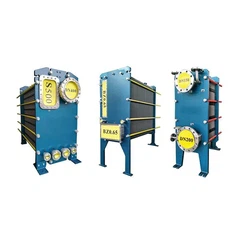
Classified in the form of heating elements: plate evaporators, tubular evaporators, coil and tank evaporators, etc
The selection of evaporator form mainly depends on whether the final state of material concentration is crystalline, whether solid substances are precipitated, and the viscosity state.
For the purpose of only evaporating and concentrating, and the concentrated solution is not saturated and does not precipitate solids, with low hardness, it is preferred to use falling film evaporator, rising film evaporator, natural circulation evaporator, and plate evaporator.
For the purpose of evaporative crystallization, a strong self circulation evaporator is preferred. If the evaporation capacity is particularly small, a coil tank evaporator can be used.
When the viscosity of the material is high, it is recommended to choose a scraper evaporator (also known as a scraper evaporator).
Classification And Application Scope Of Multi Effect Evaporator Equipment
Jan 06, 2024
Leave a message