


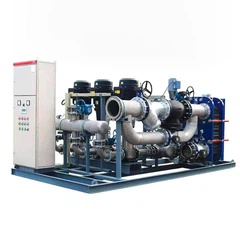
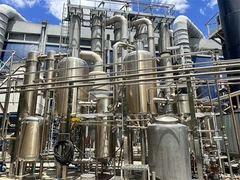
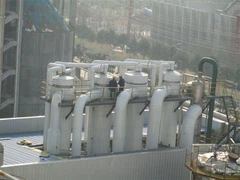
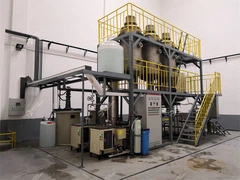
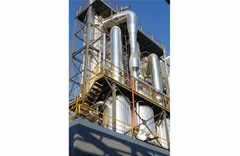
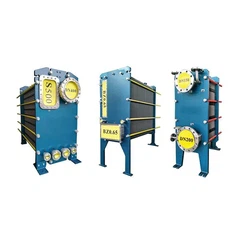




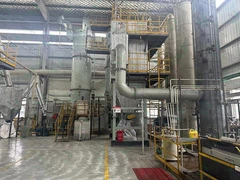


How Does a Falling Film Evaporator Work? Applications & Common Issues Solved
Introduction: Why Falling Film Evaporators Matter
Falling film evaporators dominate industries requiring gentle thermal processing and high energy efficiency. Unlike batch evaporators, their continuous operation reduces scaling risks while handling heat-sensitive fluids (e.g., dairy, pharmaceuticals). This guide cuts through the jargon to explain:
✅ Core working principles (with diagram reference)
✅ Top 5 industrial applications
✅ Troubleshooting frequent issues

1. How Falling Film Evaporators Operate: A 4-Step Breakdown
Step 1: Feed Distribution
Liquid enters the top of vertical tubes and forms a thin, uniform film (0.1–0.5mm) via precision distributors. Critical factor: Uneven distribution causes dry patches and scaling.
Step 2: Evaporation Under Vacuum
As the film descends, external heating (steam/shot gas) vaporizes volatile components. Key advantage: Low boiling point under vacuum preserves thermolabile compounds.
Step 3: Vapor-Liquid Separation
Centrifugal separators remove vapor from concentrated liquid at the base. Pro tip: Cyclone separators boost efficiency by 15% versus gravity models.
Step 4: Condensate Recovery
Vapor condenses in integrated heat exchangers-40% energy savings vs. single-pass systems.
- Technical highlight: Modern designs use CFD-optimized tube bundles to maximize heat transfer (NTU >5).

2. Where Falling Film Evaporators Excel: 5 Key Applications
|
Industry |
Use Case |
Benefit |
|
Food & Beverage |
Milk/oj concentration |
Prevents Maillard reaction (vs. rotary evaporators) |
|
Pharma |
Solvent recovery (API purification) |
Meets CIP/SIP compliance |
|
Wastewater |
Zero-liquid discharge (ZLD) systems |
90% volume reduction |
|
Chemicals |
Caustic soda concentration |
Handles high viscosities (up to 500 cP) |
|
Biofuels |
Ethanol dehydration |
<0.2% residual water content |
❗ Niche application: Emerging use in lithium brine processing for EVs due to low scaling risk with high-Mg solutions.
3. Troubleshooting 4 Common Falling Film Evaporator Problems
Issue 1: Tube Fouling
- Causes: Mineral deposits (CaCO₃), polymerized organics
- Solutions:
- Pretreatment (antiscalant dosing, pH control)
- Mechanical cleaning (rotating spray balls + 2% HNO₃ flush)
Issue 2: Uneven Liquid Distribution
- Detection: Temperature spikes (>5°C variance between tubes)
- Fix: Recalibrate distribution nozzles or switch to laser-perforated plates
Issue 3: Foaming
- High-risk fluids: Protein-rich (whey), surfactant-laden
- Suppression: 0.1–0.3% silicone-based antifoam + vacuum relief valves
Issue 4: Vapor Carryover
- Root cause: Excessive feed rate or separator undersizing
- Quick test: Measure droplet size in condensate (>50µm indicates failure)
Maintenance hack: Log ΔP across tubes monthly-a 15% increase signals imminent fouling.

Conclusion: Optimizing Your Evaporator's Lifespan
Falling film evaporators achieve 95% uptime when:
✔️ Feed is pre-filtered (<100µm particles)
✔️ Tubes are inspected annually via borescope
✔️ Operators monitor specific energy consumption (kWh/m³) trends