









What Is Compressors Refrigeration System

Compressors are the heart of refrigeration systems. They play a crucial role in cooling and preserving. Without them, modern refrigeration would not be possible.
These devices compress refrigerant, increasing its pressure and temperature. This process is essential for the refrigeration cycle. It allows heat to be removed from the environment.
Different types of compressors serve various needs. From residential HVAC systems to large industrial applications, each type has its unique benefits. Understanding these differences is key.
Energy efficiency and environmental impact are important considerations. Advances in technology continue to improve compressor performance. This ensures sustainable and effective cooling solutions.
In this guide, we will explore the world of compressors. We will discuss their functions, types, and applications. Whether you're an HVAC professional or a curious learner, this article will provide valuable insights.

Understanding the Role of Compressors in Refrigeration Systems
Compressors serve as the engine of refrigeration systems. They begin the process of cooling by compressing the refrigerant. This is the first step in the refrigeration cycle.
When the refrigerant's pressure increases, its temperature rises. This change allows the heat to be expelled from the refrigerant. It's a critical transformation for effective cooling.
Once compressed, refrigerant moves through the system. It releases heat at the condenser before cooling the environment. The cycle is continuous and efficient.
In HVAC systems, compressors dehumidify and cool air. This enhances comfort in residential and commercial buildings. They are integral to maintaining indoor air quality.
In industrial settings, compressors manage large cooling loads. They are essential in manufacturing and food processing. Their role is vital for product quality and safety.
Key Functions of Compressors:
Compresses refrigerant to increase pressure
Enables heat removal from the system
Aids in efficient cooling and dehumidification
The Refrigeration Cycle: How Compressors Work
The refrigeration cycle is a continuous loop essential to cooling systems. The cycle transforms refrigerant from a gas to a liquid. Compressors play a pivotal role in this transformation.
Initially, the compressor draws in low-pressure refrigerant gas. It then compresses the gas, elevating its pressure and temperature. This step is crucial for subsequent heat dissipation.
After compression, the refrigerant enters the condenser. Here, it loses heat and converts into a liquid. This process removes heat from the system.
Following condensation, the liquid refrigerant flows through an expansion valve. This reduces its pressure, allowing it to evaporate. Evaporation further cools the space.
The cooled refrigerant returns to the compressor. This restarts the cycle, keeping the system efficient. Each component works seamlessly to maintain desired temperatures.
Key Steps in the Refrigeration Cycle:
Compression: Increases refrigerant pressure
Condensation: Releases heat, converts gas to liquid
Expansion: Lowers pressure, facilitates evaporation
Evaporation: Absorbs heat, cools environment
Types of Compressors Used in Refrigeration
Compressors are the powerhouse of refrigeration systems. They come in various types, each with unique advantages. These types are designed to cater to different cooling needs.
Reciprocating compressors are widely used in smaller systems. They excel in efficiency and are reliable for regular applications. This makes them a favorite for homeowners and small businesses.
Screw compressors handle larger volumes of refrigerant. They're ideal for industrial settings where capacity and reliability are crucial. Their design allows continuous operation.
Scroll compressors are valued for their quiet performance. They're often used in homes and smaller commercial setups. Their compact nature makes them space-efficient.
Centrifugal compressors suit large-scale operations. They're used in big commercial and industrial applications. Their ability to manage high cooling demand is impressive.
The choice of compressor type affects the system's efficiency. Each type serves a specific purpose, maximizing its potential when used in the right application.
Common Compressor Types:
Reciprocating: Great for efficiency and reliability in small systems
Screw: Suitable for industrial applications with large volumes
Scroll: Ideal for quiet operation in homes
Centrifugal: Best for large commercial uses
Reciprocating Compressors
Reciprocating compressors are popular in refrigeration due to their efficiency. They work by using pistons to compress refrigerant, making them reliable and cost-effective. They're typically used in small to medium systems.
These compressors are well-suited for domestic and light commercial applications. Their design ensures durability and dependable performance. They are often chosen for their ease of maintenance.
Key Features of Reciprocating Compressors:
Efficient and reliable operation
Suitable for small systems
Easy maintenance
Screw Compressors
Screw compressors are essential in industrial refrigeration. They use rotors to compress refrigerant, handling large volumes efficiently. This makes them perfect for hefty cooling tasks.
Industries favor them for their continuous operation and high capacity. They are adaptable to varying pressures and demands. Their design ensures longevity under rigorous conditions.
Characteristics of Screw Compressors:
Efficient for large volumes
Continuous operation capability
Long-lasting and robust design
Scroll Compressors
Scroll compressors are known for their smooth, quiet function. They use spiral scrolls to compress refrigerant effectively. Their compact form factor is ideal for tight spaces.
These compressors are popular in residential and light commercial applications. They offer reliability with minimal noise and vibrations. Their design simplifies installation and operation.
Scroll Compressors Features:
Quiet and smooth operation
Compact and space-efficient
Reliable for home use
Centrifugal Compressors
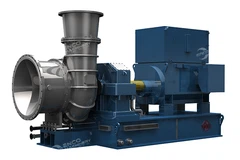
Centrifugal compressors thrive in large setups requiring substantial cooling. They utilize a rotating impeller to compress refrigerant. Their high flow rates suit expansive commercial applications.
They are key in environments needing extensive cooling. Their construction manages large-scale refrigerant circulation efficiently. They are commonly used in large HVAC systems.
Advantages of Centrifugal Compressors:
High capacity for large applications
Efficient at high flow rates
Suitable for expansive cooling needs

Compressor Types by Construction: Hermetic, Semi-Hermetic, and Open
Compressors can be classified by their construction style, each offering distinct benefits. Understanding these differences helps in selecting the right compressor for your needs.
Hermetic compressors are sealed units. This means the motor and compressor are encased together, preventing external exposure. They are commonly used in household appliances for their compact and reliable design.
These compressors are maintenance-free due to their sealed construction. However, any faults usually mean replacement rather than repair. They are ideal for applications where access for repairs is limited.
Semi-hermetic compressors allow for disassembly, making repairs possible. This design is useful in larger systems where maintenance is needed. They balance performance with serviceability, extending their life span.
The open-type compressors have separate motors and compressors. This configuration is typical in industrial settings. Their design facilitates extensive maintenance and repairs, ideal for demanding applications.
Hermetic, semi-hermetic, and open compressors all suit different scenarios. Choosing the right type involves considering accessibility, maintenance needs, and application size.
Features of Hermetic Compressors:
- Sealed and maintenance-free
- Ideal for household use
- Compact design
Benefits of Semi-Hermetic and Open Compressors:
- Semi-hermetic: Serviceable, longer life span
- Open-type: Easy maintenance, industrial use
Applications: HVAC Compressors and Industrial Compressors
Compressors in HVAC systems are pivotal for maintaining desired indoor climates. They enable efficient cooling, heating, and dehumidifying in residential and commercial buildings. Their role is to regulate temperatures, ensuring comfort and energy efficiency.
In HVAC systems, compressors often involve scroll or reciprocating types due to their balance of efficiency and noise reduction. These systems need compressors that are both powerful and quiet.
Industrial compressors handle larger capacities, supporting processes in manufacturing, chemical plants, and food processing industries. They are designed for robustness and continuous operation, essential for high-demand environments.
The industrial sector often employs screw and centrifugal compressors. These types handle vast amounts of refrigerant, ensuring optimal performance under tough conditions. Their design caters to the high-volume needs of industrial applications.
Common Applications of HVAC and Industrial Compressors:
- HVAC Compressors: Residential cooling, Commercial HVAC systems
- Industrial Compressors: Food processing, Chemical production
Both HVAC and industrial compressors are crucial across diverse sectors. Each is tailored to specific environmental demands and operational scales. Proper compressor selection ensures reliable and efficient system performance.
Key Factors in Compressor Selection and Sizing
Choosing the right compressor is critical. The selection impacts system efficiency and reliability. Many factors must be considered for optimal performance.
First, consider the cooling capacity requirements. Compressors are rated in tons or BTUs per hour. This helps in understanding the power needed.
Next, ensure compatibility with the refrigerant used. Refrigerants have different properties, and compatibility affects efficiency. Incorrect pairing can lead to system failure.
Proper sizing is essential. Oversizing or undersizing a compressor can lead to higher energy costs. It may also cause performance issues.
Important Considerations for Compressor Selection:
- Cooling capacity requirements
- Compatibility with refrigerant
- Proper size for system needs
Each factor plays a significant role in the compressor's overall functionality. Careful consideration ensures long-term success and energy-efficient operation.
Energy Efficiency and Environmental Considerations
Energy efficiency is increasingly crucial in compressor design. It's not just about cutting costs. It's also about reducing environmental impact.
New compressor technologies aim to boost efficiency. This results in lower energy use and smaller carbon footprints. Energy-efficient compressors save money and help the planet.
Variable speed compressors are popular for their adaptability. They adjust power based on demand, improving overall efficiency. This versatility contributes to significant energy savings.
Many compressors now comply with strict regulations. These standards push manufacturers toward greener practices. As technology evolves, compressors become more sustainable and eco-friendly.
Key Features Promoting Efficiency:
- Variable speed operation
- Compatibility with eco-friendly refrigerants
- Compliance with energy regulations
Environmental considerations go hand in hand with efficiency. Investing in efficient compressors aids sustainability efforts.
Maintenance, Reliability, and Safety of Compressors
Regular maintenance is vital for compressor longevity. It ensures consistent performance and reduces the risk of breakdowns. Timely checks and servicing help maintain efficiency.
Reliability is crucial for uninterrupted operation. A well-maintained compressor will seldom fail unexpectedly. Ensure proper function to avoid costly downtimes.
Safety should never be overlooked. Compressors under high pressure pose risks. Safety protocols and features must be in place to prevent accidents.
Key maintenance tasks include:
- Checking oil levels and refrigerant charge
- Inspecting electrical connections
- Monitoring noise and vibration levels
Implementing safety features is essential. Pressure relief valves and automatic shut-off systems can minimize hazards. Advanced sensors aid in early detection of potential issues.
Innovations and the Future of Compressors Refrigeration
The future of compressors is exciting and filled with innovations. New technologies are transforming efficiency and functionality. Energy conservation is at the forefront of these advancements.
Smart technology is integrating with compressors. This allows for remote monitoring and diagnostics. It helps in enhancing performance while reducing energy consumption.
Eco-friendly refrigerants are a significant focus. They aim to minimize environmental impact. Modern compressors are adapting to these new refrigerants, promoting sustainability.
Key innovations include:
- Variable speed compressors for tailored efficiency
- Eco-friendly refrigerants to reduce emissions
- Smart controls for optimized operation
These innovations promise a more sustainable future. They are not just limited to energy efficiency. Enhancements in compressor technology will improve system reliability and environmental compliance.
Conclusion: The Critical Role of Compressors in Modern Refrigeration
Compressors are the heart of refrigeration systems. They ensure effective cooling and temperature control. Their reliability is crucial for uninterrupted operation.
Advancements in technology are enhancing their efficiency. These improvements are vital in reducing energy consumption and environmental impact. The integration of smart technology further elevates their role.
Future developments promise even greater efficiency and sustainability. Compressors will continue to evolve, addressing new challenges. Their importance in both HVAC and industrial applications will remain critical in the years to come.