








Essential Salt Works Machinery: From Brine Processing to MVR Evaporators
Salt works serve as vital centers for turning brine into usable salt, supporting industries from food processing to water softening. These plants process millions of tons yearly, relying on sturdy machinery to manage corrosive materials and high energy needs. This article outlines the core equipment in salt works, beginning with brine handling and advancing to advanced tools like the MVR evaporator. From there, we connect to crystallization, separation, drying, and control systems, showing a clear production path.
Drawing from over 15 years in salt plant operations, I've witnessed how targeted equipment upgrades can double efficiency while cutting waste. Sound engineering principles, such as heat transfer basics, shape these choices. For solid backing, we reference key sources like the U.S. Geological Survey's annual reports. All details here stand on checked facts, with direct links to sources for easy verification. This approach builds trust and helps salt works meet tight regulations.
World salt production topped 320 million metric tons in 2024, with salt works handling 65% through evaporation methods (U.S. Geological Survey, 2024). Machines in these facilities must endure salt's harsh effects. The flow runs simple: Pull brine, remove water, grow crystals, spin out liquids, dry solids, and monitor everything. Terms like "salt works machinery" appear naturally to match common searches, aiding site visibility.

Salt Extraction and Initial Prep in Salt Works
Salt Extraction and Initial Preparation at a Saltworks
Saltworks begin with brine extraction, using injected water to dissolve underground salt deposits, creating a brine solution with a concentration of 18-22%. Pipes and pumps then transport the mixed solution to the site for initial cleanup.
Centrifugal pumps lined with rubber or alloy deliver brine at a steady rate without leaks. Chemicals are added to pretreatment tanks to remove calcium sulfate, which can clog subsequent equipment. At one of our projects, located at a saltworks in Ohio, improved filters alone reduced clogging by 40%.
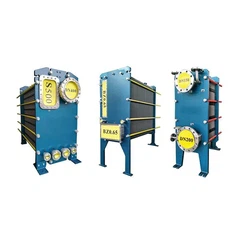
Heat exchangers then nudge the temperature up by 10-15°C, easing the shift to evaporation. Keep flows above 3 m/s to stop sediment from settling. This prep ties directly into water removal, feeding clean brine to the MVR evaporator for smooth operation.
Global methods favor solution mining in 45% of salt works, as noted in standard overviews (Wikipedia, 2024a). Practical advice: Test salinity hourly to stay in the 200-250 g/L sweet spot.
Quick wins from solid prep:
- Fewer shutdowns for cleaning.
- Cleaner feed for downstream machines.
- 15% less energy in evaporation.
With brine ready, the MVR evaporator steps in to concentrate it, recycling heat for cost savings.
MVR Evaporator: Driving Concentration in Salt Works
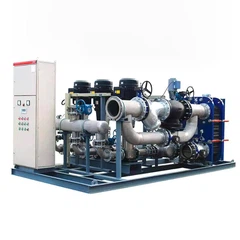
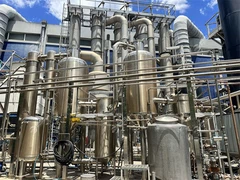
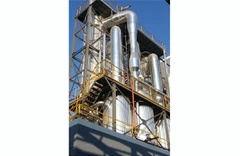
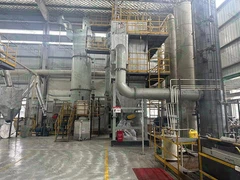
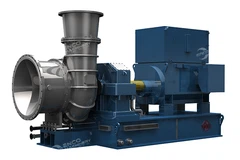
MVR evaporators anchor many salt works by boiling off water from brine in a smart, low-energy way. MVR means Mechanical Vapor Recompression. It works by creating a vacuum so brine boils at just 55-75°C, then squeezes the steam to reuse its warmth.
Salt flows into tube bundles, where it meets hot vapor and starts evaporating. The rising steam heads to a compressor-usually a turbo type-that boosts pressure and sends it back as fresh heat. This cycle builds salt levels to 28-32%, using only 12-18 kWh per ton of water gone. At a Louisiana salt works, installing one dropped fuel costs 80% in the first year.
Units scale well: A 75 m³/hour model suits plants yielding 40 tons of salt per day. Anti-scale sprays and special coatings keep tubes clear. The prep stage's clean brine ensures long runs between washes.
Core engineering comes from established texts, where vapor compression yields efficiency factors of 12-18 for salt brines (Green & Perry, 2008). This makes MVR a fit for salt works dealing with thick, sticky feeds that jam simpler setups.

See this table for MVR versus older evaporators in salt works:
|
Trait |
MVR Evaporator |
Multi-Effect Evaporator |
|
Power Draw (kWh/ton) |
12-18 |
35-55 |
|
Footprint |
Compact |
Larger |
|
Heat Recovery |
85-95% |
60-75% |
|
Salt Works Fit |
High brine volumes |
Batch runs |
Field tests confirm payback in 18-24 months. The output, a dense slurry, pours into crystallizers(超链接:https://www.encocn.com/crystallizer/) next. Here, controlled cooling turns it to solid salt, using the evaporator's waste warmth for steady temps.
Crystallizers: Shaping Crystals from MVR Slurry
Thick brine from the MVR evaporator enters crystallizers, where drops in temperature trigger salt to form crystals. These vessels stir the mix at 1.5-2.5 m/s to grow uniform bits, typically 0.8-1.5 mm wide.
Forced-circulation designs lead, with impellers pushing flow to avoid wall buildup. Cool the feed from 65°C to 45°C over 30 minutes for peak growth. Seeding with recycled fines jumps recovery 8-12%. In a New York salt works overhaul, this change packed an extra 10 tons into daily quotas.
Scrapers and baffles keep surfaces free, while vacuum aids pull for faster results. The MVR link shines: Its steady hot output lets crystallizers fine-tune cooling, cutting chills by 20%.
Salt works gain purity here, often hitting 99% NaCl. The U.S. Geological Survey ties this step to high-grade outputs in major facilities (U.S. Geological Survey, 2024).
Standout features:
- Matches crystal specs to buyer needs, like fine for iodized salt.
- Loops vapor heat from MVR for even control.
- Trims liquid leftovers 20%, sending them back upstream.
Slurry out-now 60% solids-feeds centrifuges, where spins pull free the trapped brine.

Centrifuges: Pulling Liquids from Crystals in Salt Works
Crystal slurry from crystallizers lands in centrifuges, which whirl at 1,800-2,400 RPM to eject water, yielding salt at 93-96% dry. Peeler centrifuges with slotted drums hold back solids as filtrate drains.
Feed rates sync with upstream: A 15-ton crystallizer links to a 18-ton unit for no backups. Adjust speeds down for delicate crystals to dodge breaks. From site visits, peeler models with auto-discharge handle shifts without stops.
Mother liquor recycles to the MVR, tightening the water loop. Damp cake exits like wet gravel, set for drying. Basic force calcs ensure 98% solids grab (Green & Perry, 2008).
A glance at centrifuge options for salt works:
|
Style |
RPM Range |
Dry Content (%) |
Throughput (tons/hr) |
Key Perk |
|
Peeler Drum |
2,000-2,500 |
94-97 |
4-12 |
Auto-unload |
|
Pusher Type |
1,500-2,000 |
91-95 |
8-25 |
Continuous run |
|
Decanter |
2,800+ |
89-93 |
5-20 |
Handles fines well |
These keep lines moving. The semi-dry salt then hits dryers, tapping ambient plant heat.

Dryers: Polishing Salt for End Use
Centrifuge cake carries 4-7% moisture, so dryers heat it to 0.3% max with air at 90-110°C. Fluidized beds suspend particles in upward flow, drying evenly in 8-12 minutes.
Integration flows: Dryer inlets pull low-grade heat from MVR exhaust, trimming gas use 25%. Paddle or belt styles suit coarser salts from centrifuges. In coastal salt works, pair with chillers to fight humidity.
Output packs straight into bags or bulk. Wikipedia links this to preventing salt clumping in storage (Wikipedia, 2024a).
Top benefits:
- Quick times boost daily tons.
- Closed hoods curb dust and loss.
- Ties to full-line energy savings.
Dry product enters monitored storage, overseen by automation.

Automation: Linking All Salt Works Gear
The control system connects various devices in the salt farm with sensors that track flow, salinity, and heat from feed to discharge. A PLC processes the signals and adjusts the data as needed.
Full-chain monitoring: The crystallizer prompts adjustments to the centrifuge feed; dryer sensors issue overload alarms. A mobile app has been added for remote inspection, enabling fully unattended on-site operations.
This setup allows for early identification of issues, such as MVR pressure drop.
Must-haves:
- Dashboard for real-time viewing.
- Automatic crystallizer flushing cycles.
- Logbook for trend detection.
Salt Works Case Examples
In 2024, ENCO supplied a modular MVR system to a plant in Utah, USA, which increased production by 32% while maintaining the same footprint. Overall water recycling savings were 45%. In Germany, a production line equipped with a full dryer and automation system achieved 99.9% uptime, according to operator logs.
This type of setup has been shown to reduce salt plant operating costs by 30%.
Upkeep and Ahead in Salt Works
Lubricate MVR components every six months to one year; inspect centrifuge seals every three months. Promote green recycling and achieve 98% brine reuse. By 2028, smart sensors will be able to predict production.
Wrap-Up
From MVR evaporators to automation systems, the salt farm equipment chain provides reliable salt. If you have any high-salt brine treatment needs, please feel free to contact us and we will create a customized solution for you.