








How to Choose High-Quality Food Processing Equipment for Efficient Production
In modern food manufacturing, the race toward efficiency, quality, and sustainability has become more critical than ever. Every production line - whether for milk, meat, or ready-to-eat meals - depends on food processing equipment that performs consistently and precisely.
But with hundreds of technologies available - from UHT processing systems to MVR evaporators - how do you identify what's best for your production needs? This article provides a practical, engineering-based guide to help decision-makers choose, apply, and maintain food processing systems that maximize performance and reduce operating costs.
Why Food Processing Equipment Quality Determines Profitability
1. Precision Means Productivity
High-quality machinery allows factories to run longer cycles without downtime. For example, an automated UHT milk processing system can continuously sterilize and package thousands of liters per hour, ensuring consistent quality with minimal manual intervention. Poorly designed equipment, on the other hand, increases maintenance intervals and product losses.
2. Sanitary manufacturing requirements
Every surface in contact with food must resist corrosion and allow full cleaning access. Equipment built with stainless steel 316L, smooth welds, and CIP (Clean-in-Place) systems prevents bacterial growth. For milk and dairy lines, this design ensures compliance with HACCP and ISO 22000 standards.
3. Efficiency Reduces Operating Costs
The best machines don't just process food - they recover heat, recycle water, and save energy. Systems using Mechanical Vapor Recompression (MVR) technology, for example, reuse vapor energy instead of venting it. This can reduce energy consumption by up to 90% compared to traditional evaporators, significantly improving sustainability and ROI.


How to Choose the Right Food Processing Equipment
1. Analyze Your Process
We will design a production line based on your needs. Please provide the necessary information below:
- What are your product types (milk, sauces, purees, etc.)?
- What is your target production capacity (kg/hour)?
- What are your product requirements?
- What are your on-site utilities?
An integrated approach ensures all machines - from mixers to evaporators - work efficiently together rather than operating as isolated units.
2. Evaluate Material Compatibility
Food-grade stainless steel, food-safe gaskets, and non-toxic polymers are essential. In milk processing, improper materials can cause off-flavors or bacterial retention. Always verify compliance with FDA and EU CE standards.


3. Consider Energy and Resource Optimization
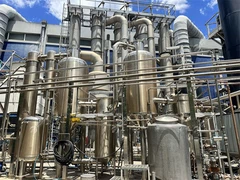
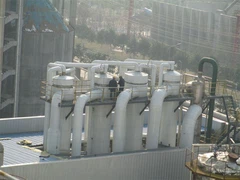
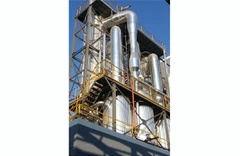
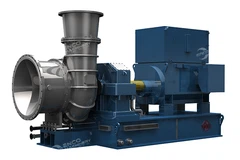
MVR evaporators are an excellent example of how modern engineering cuts resource consumption. In dairy and juice concentration, the MVR system compresses low-pressure steam to reuse its latent heat.
This process achieves:
- High evaporation efficiency (up to 99%)
- Reduced boiler load
- Minimal cooling water demand
Tips:Engineering Insight: In a dairy plant using a 10,000 L/h MVR evaporator, steam demand dropped from 1.1 kg/kg evaporation to just 0.05 kg/kg - saving tens of thousands of dollars annually.
4. Look for Modular and Scalable Systems
Factories rarely stay static. Equipment that can expand capacity or integrate new modules helps future-proof investments. Modular pasteurizers, for example, can later integrate UHT units or aseptic filling systems without redesigning the entire line.
Where Food Processing Equipment Is Used
1. Milk and Dairy Processing
Dairy production relies on equipment such as UHT processors, homogenizers, MVR evaporators, and aseptic fillers.
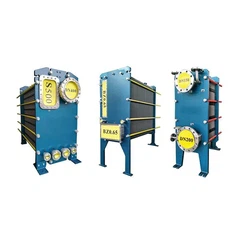
The UHT (Ultra-High Temperature) process sterilizes milk at around 135–150°C for a few seconds, preserving nutrients and extending shelf life to 6–9 months without refrigeration. When paired with MVR evaporation, milk concentration or whey protein recovery becomes both energy-efficient and eco-friendly.

Example Application:
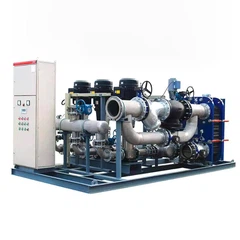
A modern milk plant may combine a plate UHT sterilizer with an MVR evaporator for concentration, followed by aseptic filling lines. This configuration reduces energy use by 60% compared to conventional systems.
2. Fruit and Vegetable Concentration
In juice production, MVR evaporators play a key role in concentrating fruit pulp without flavor degradation. Gentle evaporation at lower temperatures preserves color, aroma, and vitamin content - a major advantage over traditional multi-effect evaporators.
3. Ready-to-Eat (RTE) and Sauce Production
High-viscosity food processing (such as ketchup, soup, or puree) requires precise heating and mixing. Integrating a UHT process ensures sterilization without affecting taste or texture, making it ideal for RTE products that demand long shelf life and stable quality.
4. Protein and Nutraceutical Products
For protein extracts or nutritional beverages, MVR evaporation efficiently concentrates liquid proteins, while UHT processing guarantees microbial safety before bottling. This combination ensures high bioavailability and product stability - both critical for functional food manufacturing.
How to Optimize Equipment for Efficient Production
1. Integrate Automation and Control Systems
SCADA and PLC-based systems allow real-time monitoring of temperature, flow, and pressure. By automating feedback control, deviations can be corrected immediately - reducing human error and waste.
2. Use Data for Predictive Maintenance
Modern sensors track vibration, temperature, and motor loads. AI-driven maintenance models can predict failures before they occur, extending machine lifespan by up to 25%.
3. Improve Cleaning Efficiency
CIP and SIP (Sterilize-in-Place) systems automate cleaning with controlled temperature and flow. In UHT milk plants, automated cleaning can reduce downtime from 2 hours to 45 minutes per cycle - a major productivity boost.
4. Optimize Heat Recovery
Both UHT and MVR systems can recover residual heat from condensate. Integrating heat exchangers allows reusing up to 80% of the energy for preheating incoming materials.
Engineering Experience: Lessons from Real Factories
Case 1: Dairy Plant Upgrading from Traditional to MVR Evaporation
A European dairy previously used a 3-effect evaporator to concentrate skim milk. After replacing it with an MVR evaporator , results showed:
- Energy savings: 88%
- Condensate recovery: 90% usable for CIP water
- ROI period: 18 months
Case 2: UHT Milk Processing Line for Export Market
A Southeast Asian producer installed a continuous UHT processing system combined with aseptic packaging.
- Shelf life extended: 9 months
- Bacterial count reduction: 99.99%
- Export approval: Gained EU market entry due to enhanced quality consistency.
Case 3: Integrated Automation in a Sauce Plant
By linking the MVR evaporator, mixing tank, and UHT sterilizer under a single control platform, operators reduced manual interventions by 70%, achieving smoother process flow and lower error rates.
Why Engineering Support and Customization Are Essential
Generic equipment cannot address every food category's unique needs. Partnering with a manufacturer that provides custom process design, pilot testing, and after-sales service ensures:
- Optimal process parameters (temperature, flow, residence time)
- Reduced installation risk
- Reliable spare parts and local maintenance support
Long-term success in food processing depends as much on engineering know-how as on the hardware itself.
Where to Source Reliable Food Processing Equipment
Before choosing a supplier, verify:
- Certification: CE, ISO 9001, ASME, or FDA compliance
- Reference Projects: Case studies in similar industries
- Technical Support: Remote monitoring, on-site training, spare parts availability
Reputable companies in the dairy and beverage sectors now offer turnkey solutions - combining UHT systems, MVR evaporation, filling, and automation under one process architecture.
Pro Tip:
When evaluating MVR-based systems, request energy balance sheets and actual performance data from reference plants. This helps ensure that promised efficiency figures are achievable in real production.
Future Trends in Food Processing Equipment
1.Sustainability and Energy Recovery – More systems will integrate MVR, heat pumps, and closed-loop water systems to achieve near-zero waste.
2.Digitalization – Cloud-based monitoring will allow real-time global oversight of equipment performance.
3.Compact Modular Design – Factories will shift toward skidded systems that can be easily transported and installed.
4.Enhanced UHT Control Algorithms – Smart temperature controllers will ensure better flavor retention and energy efficiency.
These trends mark a transformation toward data-driven, low-carbon food manufacturing.
Conclusion: Building a Smarter and More Efficient Food Processing Future
Choosing high-quality food processing equipment is not merely about buying durable machines - it's about engineering a system that harmonizes efficiency, hygiene, and sustainability.
By integrating technologies such as MVR evaporators for energy recovery and UHT processing systems for sterilization, manufacturers can achieve:
- Higher yield and consistent quality
- Reduced operating costs
- Lower environmental footprint
The future belongs to facilities that think beyond production - those that engineer intelligent, efficient, and sustainable systems for a competitive global food market.