


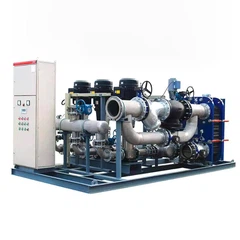
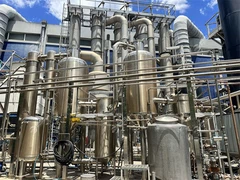
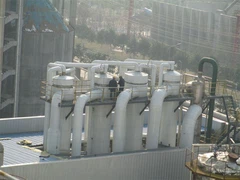
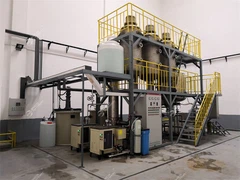
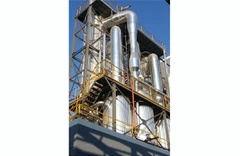
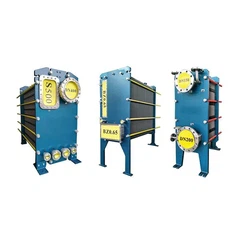




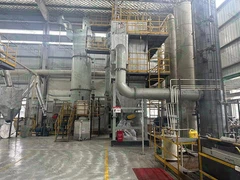


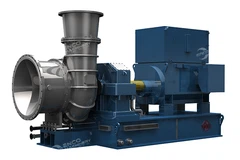
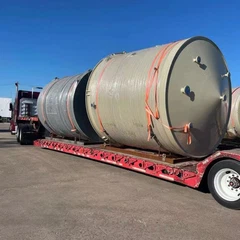
A multi effect evaporator consists of multiple single-stage evaporators connected in series, each stage being called an efficiency, and the final evaporator is equipped with a condenser and a vacuum pump. The steam evaporated from the last effect of the multi effect evaporator is condensed by the condenser, which is then connected to a vacuum pump to maintain negative pressure. The post effect operating pressure and solution boiling point of a multi effect evaporator are lower than those of the pre effect, and the secondary steam evaporated from the pre effect can be used as a heat source. The heater of the latter effect also becomes the condenser of the pre effect.
Due to the cascade connection of steam from the multi effect evaporator, the final effect has the lowest pressure and temperature in the entire system. According to the principle that the vacuum degree determines the temperature based on the cold source, the evaporation pressure of a multi effect evaporator always decreases step by step.
In summary, the negative pressure of the multi effect evaporator is formed through the final effect condenser and vacuum pump, while the negative pressure of the pre effect is obtained by consuming and cooling the secondary steam evaporated from the pre effect through the post effect.
When the final vacuum degree is constant and the system evaporation capacity is constant, the heat exchange area of the three effect heater determines the evaporation pressure and temperature of the second effect. Similarly, the heat exchange area of the second effect determines the evaporation pressure and temperature of the first effect, and the heat exchange area of the first effect determines the pressure and temperature of the required new steam. This is the principle why the first and second effects can also form a vacuum under appropriate working conditions.
How Is The Negative Pressure Formed in A Multi Effect Evaporator
Dec 06, 2023
Leave a message