








Does Manufacturing Water Treatment Ensure Sustainable Industrial Operations?

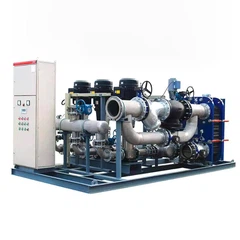
Industrial processes consume billions of gallons of water daily, from cooling towers to product rinsing, yet raw water sources often contain impurities that foul equipment and contaminate outputs. Manufacturing water treatment systems mitigate these risks through targeted purification techniques, ensuring compliance with environmental regulations while optimizing resource use. Technologies like RO (reverse osmosis) and MVR evaporator play pivotal roles: RO separates dissolved solids via membrane filtration, while MVR evaporators concentrate wastewater by reusing latent heat, both reducing discharge volumes and recovering valuable byproducts.
This integration not only lowers operational costs but also addresses escalating regulatory pressures on water usage. Below, we explore system utilization, real-world implementations, and persistent operational hurdles, delivering practical strategies for engineers and facility managers.
What Essential Components Form Treatment Systems?
Does Membrane Technology Define Purification Efficiency?
Core to many setups, RO employs semi-permeable membranes with 0.0001-micron pores to reject 95-99% of contaminants under 200-400 PSI pressure. Feedwater passes through pre-filters (sediment, carbon) before the RO stage, where permeate (purified water) separates from concentrate (brine). Key metrics include recovery rates (50-85%) and rejection percentages: salts (98%), organics (90%), bacteria (99%).
Post-RO, polishing steps like deionization refine output to <1 µS/cm conductivity for electronics manufacturing. System sizing depends on feedwater TDS: low TDS (<500 ppm) suits single-pass RO; higher levels require two-pass configurations.
When Does Evaporation Technology Recover Resources?
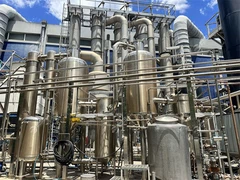
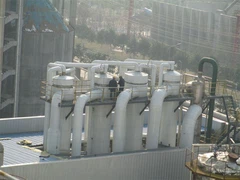
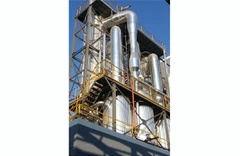
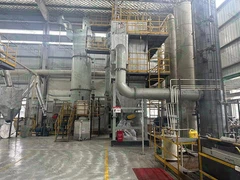
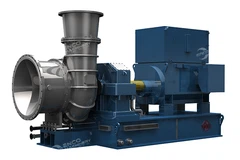
The MVR evaporator uses mechanical vapor recompression to minimize energy input. Vapor from boiling liquid compresses via a fan or compressor, raising its temperature for reuse as heating medium. This closed-loop process achieves 95-98% thermal efficiency, consuming 20-50 kWh/m³ versus 200-300 kWh/m³ in conventional evaporators.
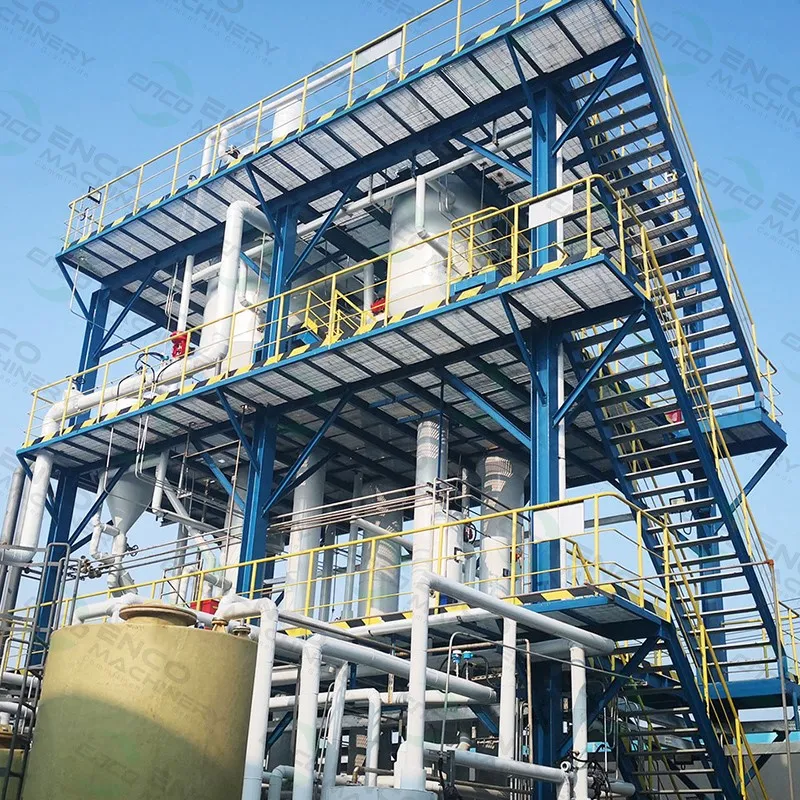
Components include heat exchangers, separators, and compressors (centrifugal or roots-type). Applications focus on zero-liquid discharge (ZLD), concentrating effluents to 20-50% solids for crystallization or landfilling.
How Do Operators Utilize These Systems Effectively?
What Steps Optimize RO Deployment?
Product use begins with water analysis: measure pH (6-8 ideal), silica (<100 ppm), hardness (<10 ppm post-softening). Installation involves:
- Pre-treatment: Softeners prevent scaling; antiscalants dose at 2-5 ppm.
- Operation: Monitor flux rates (15-20 GFD) and pressure differentials (<15 PSI increase signals fouling).
- Cleaning: Acid/alkaline CIP every 3-6 months restores 90% capacity.
- Maintenance: Membrane replacement every 3-5 years ($10,000-50,000 per array).
Energy recovery devices (ERDs) cut power use by 40%, recycling concentrate pressure.
Does MVR Integration Demand Specialized Controls?
For MVR evaporator, startup requires vacuum establishment (20-50 mbar) and gradual feed introduction. Control systems use PLCs for:
- Vapor compression ratio (1.1-1.3) balancing energy input.
- Foaming suppression via defoamers (0.1-1 ppm).
- Solids handling: Centrifuges separate crystals post-evaporation.
Daily checks include compressor vibration (<5 mm/s) and heat exchanger fouling (clean when delta-T >10°C). Scaling inhibitors (phosphonates) extend run times to 500-1,000 hours between shutdowns.
In Which Industries Do These Technologies Apply?
Why Do Semiconductors Rely on Ultra-Pure Water?
Electronics manufacturing water treatment demands <0.1 ppb contaminants to prevent wafer defects. RO as primary stage achieves 10-20 µS/cm, followed by electrodeionization (EDI) for sub-ppb levels. Scenarios include:
- Wafer rinsing: 100-500 L/wafer, recycled via RO to cut fresh water use by 70%.
- Cooling systems: Treated water prevents biofilm in chillers.
Global fabs (TSMC, Intel) integrate MVR for wastewater concentration, recovering 90% water while managing fluoride-rich effluents.
What Food Processing Demands Drive Treatment Adoption?
Beverage and dairy sectors treat influent for boiler feed and ingredient dilution. RO removes nitrates (<10 ppm) and organics, ensuring product shelf life. MVR evaporates whey or juice concentrates, yielding 20-60% solids for byproducts like animal feed.
Hygienic designs (316L stainless) comply with FDA standards; CIP integration minimizes downtime to <2 hours per cycle.
When Do Chemicals and Pharmaceuticals Mandate ZLD?
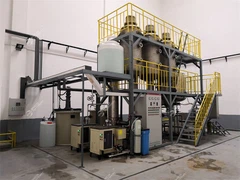
High-TDS waste from API synthesis or dye production requires MVR evaporator for volume reduction (95%+). RO pretreats to <5,000 ppm TDS, preventing evaporator scaling. Applications span:
Textile dyeing: Color removal and salt recovery (80% reuse).
Petrochemicals: Oily wastewater treatment, yielding distillate for reuse.
Regulatory drivers (EU IED Directive) push ZLD adoption, cutting discharge fees by $0.5-2/m³.

What Operational Pain Points Demand Attention?
Does Fouling Compromise System Longevity?
In RO, membrane fouling from organics, silica, or bio-growth drops flux 20-50% within months. Symptoms: Rising feed pressure (from 200 to 300 PSI), permeate TDS spikes (>20% increase).
Causes: Inadequate pre-treatment (missing UF) or high recovery (>75%). Solutions: Optimize antiscalant dosing via software modeling, implement forward osmosis hybrids for challenging feeds.
Why Do Energy Costs Burden MVR Users?
Compressor failures in MVR evaporator stem from vapor carryover or lubricant contamination, halting operations for 24-72 hours. Power consumption surges 30% with scaling.
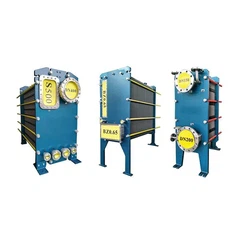
Mitigation: Install demisters (99.9% efficiency), use non-fouling plate heat exchangers, conduct thermal imaging quarterly to detect hot spots.
When Do Compliance Issues Emerge?
Treated water failing specs (e.g., COD >50 mg/L post-RO) risks fines ($10,000-100,000). Variable influent quality from seasonal changes exacerbates this.
Strategies: Real-time monitoring (TOC analyzers, conductivity probes) with auto-adjustments; pilot testing new feeds ensures 95% uptime.
What Maintenance Oversights Escalate Expenses?
Neglected filter changes lead to cross-contamination; RO elements degrade prematurely without pH control (ideal 7-8). MVR seals fail from thermal cycling, costing $5,000-20,000 in repairs.
Proactive measures: Predictive analytics (AI vibration monitoring), standardized SOPs for CIP (acid at pH 2-3, 30-60 min circulation).
Does Innovation Address Future Challenges?
What Advances Enhance Efficiency?
Hybrid systems combine RO with forward osmosis, boosting recovery to 95%. MVR integrates renewable energy (solar-assisted compression), slashing carbon footprints 40%.
Nanostructured membranes resist fouling, extending RO life 2x. Digital twins simulate operations, optimizing parameters pre-implementation.
Conclusion: Do Integrated Systems Secure Industrial Viability?
Manufacturing water treatment via RO and MVR evaporator delivers essential purity and recovery, transforming water from cost center to asset. By mastering utilization protocols, leveraging diverse applications, and resolving pain points through vigilant maintenance, industries achieve regulatory compliance and cost savings ($0.1-0.5/m³ treated).
As water scarcity intensifies, these technologies underpin resilient operations, ensuring manufacturing sustainability amid global pressures.