








Introduction: Process Water Quality and the Industrial Chlorine Challenge
In demanding industrial sectors, from pharmaceutical manufacturing and power generation to food & beverage processing, the quality of process water is paramount. These challenges include the potential for equipment corrosion, degradation of sensitive process materials (e.g., reverse osmosis membranes), interference with chemical reactions, and compromise of final product quality. Consequently, industrial facilities continually seek robust and efficient methods for comprehensive chlorine removal. A foundational question that underpins many industrial dechlorination strategies, even at a fundamental level, is: "Does boiling water remove chlorine?" This article will thoroughly explore the underlying principles of thermal chlorine removal, connecting this basic understanding with advanced industrial water treatment technologies, specifically focusing on Mechanical Vapor Recompression (MVR) evaporators and other relevant equipment, to illustrate their sophisticated application in achieving high-purity water.

Section I: The Mechanism of Chlorine Removal by Boiling Water
"Do boiling water remove chlorine?" The answer is yes; boiling can effectively remove chlorine from tap water. Chlorine (Cl₂) exists in water as a dissolved gas and also reacts with water to form hypochlorous acid (HOCl) and hydrochloric acid (HCl). The primary mechanisms of boiling are two-fold:
Accelerated Gasification: Chlorine has a boiling point significantly lower than water. When water is heated to boiling, the dissolved chlorine rapidly gasifies along with water vapor, escaping from the water into the air. The higher the water temperature, the faster chlorine is released from the water (Chemical Water Purification, 2019).
Decomposition Effect: Heating can accelerate the decomposition of hypochlorous acid. Hypochlorous acid is unstable at high temperatures and breaks down into chloride ions, hydrogen ions, and oxygen gas, thereby reducing the active chlorine content in the water (Water Treatment Handbook, 2022).
It's important to note, however, that boiling primarily removes free chlorine and some combined chlorine. For other byproducts of chlorination (like trihalomethanes), boiling has limited effectiveness and may even, in some scenarios, increase their concentration. For effective chlorine removal, it is generally recommended to boil water for at least 15 minutes and then let it cool in a well-ventilated area to ensure adequate off-gassing of chlorine (Environmental Engineering Principles, 2017).

Section II: Industrial-Grade Dechlorination: The "Boiling" Effect and Process Control in MVR Evaporators
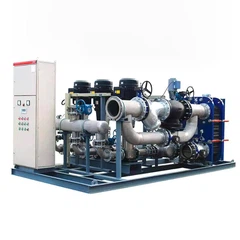
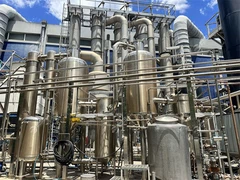
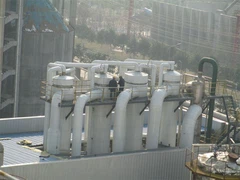
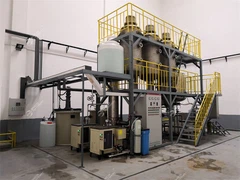
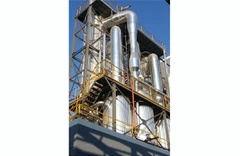
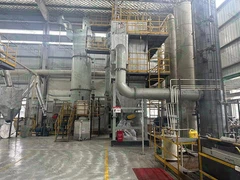
In industrial water treatment, water quality requirements are much more stringent, and the volumes processed are immense. Simple boiling, while effective, is energy-intensive and inefficient for industrial scales. The MVR (Mechanical Vapor Recompression) Evaporator, an energy-efficient evaporation and concentration device, operates on principles similar to "boiling" for chlorine removal but achieves vastly superior efficiency and scale.
2.1 MVR Evaporator Principles and Dechlorination Applications
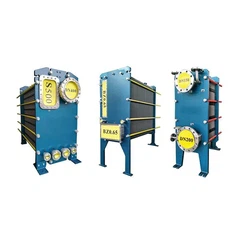
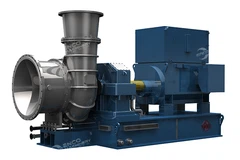
An MVR evaporator uses a small amount of electrical energy to drive a compressor, which compresses the secondary vapor generated during evaporation. This increases the vapor's temperature and pressure, allowing it to be reused as a heat source for heating the feed liquid in the evaporator. This process significantly reduces the demand for fresh steam, thus lowering energy consumption. During the MVR evaporation process, the feed liquid is heated to a boiling state, and the generated steam carries away most volatile substances, including chlorine gas.
In an MVR system, the principle of "do boiling water remove chlorine" is utilized highly efficiently:
Feed Liquid Boiling: The incoming water is heated to its boiling point inside the evaporator, causing dissolved chlorine gas and other volatile components to vaporize significantly.
Vapor Separation: The generated vapor is separated from the concentrated liquid. Chlorine gas and other non-condensable gases travel with the vapor into the compressor.
Non-Condensable Gas Discharge: During the condensation of the compressed vapor, non-condensable gases (including chlorine gas) are discharged through a dedicated venting system, achieving highly efficient chlorine removal.
2.2 Process & Control: Ensuring Efficient Dechlorination in MVR Systems
To ensure the efficiency of chlorine removal and the stability of MVR evaporator systems, precise process design and control are crucial:
Pre-treatment: For feed water with high chlorine content or other complex impurities, pre-treatment, such as activated carbon adsorption or reverse osmosis, is often necessary to reduce the MVR system's load and protect the equipment.
Evaporation Temperature and Pressure Control: Appropriately increasing the evaporation temperature and lowering the pressure in the evaporation chamber facilitates rapid chlorine gasification. By precisely controlling steam pressure and liquid temperature, the efficiency of chlorine volatilization can be optimized.
Non-Condensable Gas Removal System: MVR systems must be equipped with effective non-condensable gas discharge lines and automatic control valves. These systems monitor the accumulation of non-condensable gases within the evaporator and condenser, periodically or continuously discharging them to prevent chlorine gas buildup from affecting heat exchange efficiency.
Corrosion-Resistant Material Selection: Chlorine gas and the acidic environment it creates at high temperatures are highly corrosive to equipment materials. Therefore, in MVR evaporator design, components in contact with chlorine gas (e.g., evaporator liners, piping, condensers) must be made from corrosion-resistant materials, such as special stainless steels or titanium alloys (Process Engineering for Water Treatment, 2020).
Online Monitoring: Installation of online chlorine analyzers to monitor chlorine levels in the effluent and exhaust gas in real-time ensures compliance with discharge standards or subsequent process requirements.


Section III: Other Relevant Industrial Equipment and Extended Dechlorination Strategies
Beyond MVR evaporators, many other industrial water treatment devices utilize or involve dechlorination processes to suit specific application scenarios.
Activated Carbon Filters: These are the most common dechlorination devices in both industrial and domestic settings. Activated carbon efficiently removes free chlorine, combined chlorine, organic compounds, and chlorine byproducts through adsorption. They are often used as pre-treatment units before MVR evaporators or reverse osmosis systems to extend the lifespan of downstream equipment.
Reverse Osmosis (RO) Systems: RO membranes are highly effective at retaining dissolved salts and most organic matter. While RO membranes primarily desalt water, they can also effectively remove chlorine byproducts (like trihalomethanes) from chlorinated water. However, the membranes themselves must avoid direct contact with high concentrations of free chlorine, which can cause oxidative damage, hence prior dechlorination is typically required.
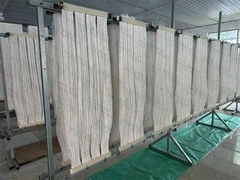
Membrane Contactors: Membrane contactors represent an emerging degasification technology. They utilize the partial pressure difference of gases across a hydrophobic membrane, allowing dissolved gases (e.g., chlorine, carbon dioxide) to pass through the membrane pores into the gas phase to be removed, while water does not pass through. This method can achieve efficient degasification at lower temperatures, reducing the energy required for traditional thermal degasification.
Conclusion: From Household Boiling to Industrial Precision Control
"Do boiling water remove chlorine?" This simple household question reveals the fundamental chemical property of chlorine's volatility in water. From everyday stovetop boiling to highly energy-efficient industrial MVR evaporators, precise activated carbon filtration, and advanced reverse osmosis systems, we see the principles of chlorine removal constantly refined and applied. In the industrial sector, by leveraging the boiling principle with sophisticated control and combining multiple advanced technologies, we not only achieve large-scale, high-efficiency dechlorination but also ensure the quality of process water, economic viability, and sustainability of production. Understanding these basic principles and their application in complex systems is crucial for optimizing water treatment processes, protecting the environment, and safeguarding public health.