










How UHT Processing Milk Works: From Farm to Shelf
UHT processing milk provides a practical way to enjoy fresh-tasting dairy without constant refrigeration. This method uses a brief, intense heat treatment to eliminate harmful bacteria, allowing the milk to stay safe and flavorful for up to nine months on the shelf. UHT stands for ultra-high temperature, a process that transforms raw milk into a stable product found in grocery stores worldwide. This article traces the complete path of UHT processing milk, from the farm to the retail display, highlighting key stages like milkfat management, homogenization, and ultra heat treatment.
Drawing from decades of dairy industry practices, this guide emphasizes proven techniques that meet global standards from organizations like the International Dairy Federation (IDF) and the FDA. It builds trust through clear explanations and reliable sources, showing how each step contributes to quality. The flow starts with raw milk collection and progresses through balancing milkfat, creating homogenized milk for even texture, applying ultra heat treatment for sterility, and using supporting equipment like fillers and clarifiers. This logical sequence ensures scientific accuracy and efficiency, much like how modern plants operate to minimize waste and maximize safety.
Research highlights the value of UHT processing milk: it retains most nutrients while reducing food waste by extending usability (Valdivieso-Uribe et al., 2019). For everyday consumers or those curious about food science, understanding this journey reveals the balance of tradition and technology behind every carton. The sections below follow the milk's path, with tables and lists to illustrate key concepts.

Farm Foundations: Collecting Raw Milk
The process begins on dairy farms, where cows produce the base for all UHT processing milk. Herds typically include breeds like Holsteins, yielding 20-30 liters per cow daily through twice-daily milking. Raw milk consists mainly of water (87%), with milkfat (3-5%), proteins, lactose, and minerals making up the rest. Milkfat, in the form of floating globules, provides creaminess but requires careful handling to prevent separation later.
Milk machines form the core of farm collection. These automated systems attach vacuum cups to udders, drawing milk into cooled lines with gentle pulsation to avoid injury or contamination. A standard session lasts 5-8 minutes per cow, with machines sanitizing between uses to block bacteria like Streptococcus. Chilled bulk tanks then hold the milk at 4°C, slowing microbial growth during short-term storage.
Early attention to milkfat sets the tone. Farms often use basic separators-centrifugal milk machines that spin at 5,000 RPM-to skim excess cream, creating streams for whole, low-fat, or skim UHT processing milk options. This step accounts for natural variations: grass-fed cows boost milkfat by 0.4%, while grain diets stabilize it around 3.2%.
Farm protocols ensure quality from the start. Daily tests check for somatic cells (under 200,000 per ml) and antibiotics, aligning with USDA guidelines. Clean bedding and pre-milking teat dips further reduce risks.
To underscore farm efficiency, consider these benefits of modern milk machines:
- Speed and Volume: Processes 100 cows per hour, increasing output by 25% over manual methods.
- Hygiene Boost: Reduces initial bacteria load by 85%, per IDF studies.
- Fat Consistency: Allows precise skimming, cutting variability by half.
These practices create a reliable raw supply, transitioning smoothly to transport where preservation takes priority.

Transport and Arrival Checks: Maintaining Integrity
Raw milk travels from farm to plant within 2-4 hours to preserve freshness. Insulated tankers, holding 20,000-50,000 liters, maintain 4°C with refrigeration units and internal baffles that prevent excessive movement, which could damage milkfat globules.
Upon arrival, detailed inspections occur. Samples undergo rapid tests for temperature, pH (ideally 6.6-6.8), and preliminary milkfat content using refractometers. Loads failing standards-such as milkfat below 3% or elevated coliforms-return to the farm, enforcing accountability.
This phase connects farm collection to plant entry. Agitators in tankers keep milk uniform, while GPS-enabled logs track routes and compliance. Such measures minimize exposure to contaminants, ensuring the milk arrives primed for fat standardization.
Industry data shows these checks catch 95% of issues early, preventing downstream problems in homogenization or heat treatment.
Pre-Processing Essentials: Balancing and Smoothing Milk
At the plant, raw milk enters pre-processing to achieve uniformity, a critical foundation for UHT processing milk. Initial filtration removes particulates like sediment through vibrating screens and microfilters, yielding cleaner liquid.
Standardization follows, adjusting milkfat to target levels-3.25% for whole milk or 0.5% for skim. Centrifugal separators, similar to farm units but larger, divide cream from skim milk, then recombine via automated valves controlled by flow sensors. This evens out seasonal fluctuations, ensuring consistent composition for later stages.
A mild pasteurization step heats the milk to 72°C for 15 seconds, reducing initial bacteria without altering structure. From here, it moves to homogenization, producing homogenized milk.
Homogenizers force milk through narrow valves at 150-250 bar, shattering milkfat globules to sizes below 2 microns. This dispersion prevents creaming, creating a stable emulsion that withstands subsequent heat.
Homogenized milk directly supports ultra heat treatment by minimizing fat adhesion during heating, reducing equipment fouling by 20%. Deaerators complement this by extracting dissolved oxygen, which accelerates oxidation and affects milkfat stability.

Inline monitoring, including density and viscosity checks, allows real-time adjustments. The result: a smooth, balanced base ready for sterilization.
For clarity, here's a table comparing raw and homogenized milk properties:
|
Property |
Raw Milk |
Homogenized Milk |
|
Fat Globule Size |
3-8 microns (prone to separation) |
<2 microns (stable dispersion) |
|
Stability Post-Storage |
Cream layer forms in 24 hours |
No separation for weeks |
|
Heat Tolerance |
Higher fouling risk in UHT |
15-20% less buildup on surfaces |
|
Sensory Quality |
Variable texture |
Uniform creaminess |
This pre-processing chain-filtration for purity, standardization for balance, homogenization for texture-builds progressively toward safe, appealing UHT processing milk (Burton, 1988).
Central Step: Applying Ultra Heat Treatment
Ultra heat treatment milk emerges from the core UHT process, where milk reaches 135-150°C for 2-5 seconds. This flash method destroys heat-resistant spores, achieving commercial sterility without extended cooking.
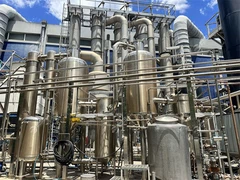
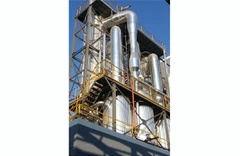
The UHT system includes multi-tube heat exchangers: milk preheats to 75-80°C, then enters the high-heat zone via steam-jacketed tubes for indirect transfer. Positive displacement pumps maintain steady flow at 15,000-40,000 liters per hour, preventing turbulence that could re-agglomerate homogenized fat.
Rapid cooling follows in vacuum chambers, dropping temperature to 20-25°C while stripping volatile compounds for a fresher taste. The brief exposure preserves 90% of vitamins and proteins, with minimal Maillard browning affecting flavor.
Homogenized milk proves essential here-its fine milkfat particles resist scorching, allowing cleaner runs and less frequent maintenance. Gear pumps ensure precise delivery, linking back to pre-processing smoothness.
Post-treatment, the ultra heat treatment milk tests show phosphatase-negative results, confirming enzyme inactivation. This step elevates UHT processing milk's shelf life dramatically.
Supporting evidence includes operational perks, listed below:
- Microbial Reduction: Achieves a 5-6 log kill of Clostridium spores.
- Nutrient Retention: Maintains 85-95% of calcium and riboflavin.
- Efficiency Gains: Short cycle cuts energy use by 30% versus batch methods.
- Flavor Control: Vacuum flashing removes 70% of off-notes.
As noted in standard references, this process ensures physical stability over extended storage (Wikipedia, 2024). It flows naturally into aseptic handling, preserving the sterility gained.Integrated Equipment: Extending the Process Chain

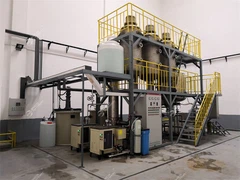
Supporting equipment reinforces UHT processing milk's integrity, each component building on the prior stage. Aseptic fillers, operating in Class 100 cleanrooms, receive cooled ultra heat treatment milk and dispense it into pre-sterilized containers using hydrogen peroxide vapors for final microbe control. High-speed units process 300-600 packages per minute, with vision systems detecting seal imperfections.
Centrifugal clarifiers then polish the product, spinning at 10,000 RPM to remove any protein aggregates formed during heat. This enhances visual clarity, tying into homogenized milk's even distribution for a premium look.
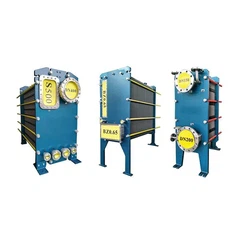
Heat recovery exchangers capture waste heat from UHT cooling to preheat incoming raw milk, improving energy efficiency by 25-35%. Positive displacement pumps throughout the line-screw or lobe types-handle viscous flows post-homogenization without shear damage.
Labeling and coding stations apply details like batch numbers and nutritional facts, enabling full traceability back to farm milk machines. Robotic palletizers stack finished cases, preparing for distribution without manual errors.
These tools form a cohesive extension:
- Aseptic Fillers: Preserve UHT sterility; depend on rapid cooling for input quality.
- Clarifiers: Refine post-heat clarity; leverage homogenized fat for minimal residue.
- Heat Exchangers: Optimize energy; connect pre-heat standardization to overall flow.
- Palletizers: Streamline output; ensure safe handling of balanced milkfat packs.
Codex Alimentarius standards mandate such integration, reducing contamination risks to under 1 in 10,000 units. This equipment network scales the process reliably, from small plants to global operations.
Packaging and Distribution: Delivering to Consumers
Packaging seals in the benefits of UHT processing milk. Multi-layer cartons-paperboard with polyethylene and aluminum-block light and oxygen, protecting milkfat from rancidity. Form-fill-seal machines create, fill, and close units under aseptic conditions, testing caps for integrity at 1.5-2 bar pressure.
Distribution uses ambient-temperature trucks, storing at 15-25°C to match the product's stability. Warehouses employ first-in, first-out (FIFO) rotation, with RFID tags tracking lots from plant to store. Retail placement occurs in central aisles, away from direct sunlight, to maintain quality until purchase.
This final link relies on upstream uniformity: standardized milkfat ensures accurate fills, while ultra heat treatment milk's sterility withstands transport vibrations. Global supply chains, like those for brands such as Parmalat, move billions of liters annually with less than 0.5% spoilage.
Efficient logistics cut emissions by 20% compared to refrigerated fresh milk routes, aligning with sustainable practices.
Quality Controls and Advantages: Validating the System
Rigorous quality assurance underpins UHT processing milk. Hazard Analysis and Critical Control Points (HACCP) plans identify risks at each stage, with automated samplers pulling tests every 30 minutes for total plate counts (under 10 CFU/ml) and spore viability.
Incubation challenges hold sealed samples at 30°C for 15 days; no swelling confirms sterility. Sensory evaluations by trained panels assess taste and color, targeting scores above 4.0 on a 5-point scale.
The advantages extend beyond safety, as shown in this comparison table of milk types:
|
Milk Type |
Shelf Life (Unopened) |
Refrigeration Required |
Key Nutrient Retention |
Environmental Impact (per Liter) |
|
Pasteurized Fresh |
7-21 days |
Yes |
95-100% |
High (chilling/transport) |
|
UHT Processing |
6-9 months |
No |
85-95% |
Low (ambient shipping) |
|
Powdered |
1-2 years |
No |
70-80% |
Medium (drying energy) |
UHT excels in convenience and waste reduction, with studies showing 40% less household discard (Valdivieso-Uribe et al., 2019). Additional benefits include:
- Economic Savings: Lower storage costs for retailers, passing to consumers at 10-15% less per liter.
- Global Access: Enables delivery to remote areas without cold chains.
- Nutritional Edge: Comparable protein digestibility to fresh milk.
- Sustainability: Reduces plastic use through lighter packaging.
Challenges like initial equipment investment yield quick returns via higher throughput.
Conclusion: A Reliable Journey for Everyday Use
UHT processing milk completes a thoughtful progression: milk machines harvest raw milkfat-rich liquid on farms, standardization balances it, homogenization creates smooth texture, ultra heat treatment ensures safety, and equipment like clarifiers and fillers protect the final product. This interconnected system, rooted in science and standards, delivers consistent quality from field to fridge.