








Lithium Refining: From Raw Materials to Battery-Grade Purity
The global transition to a green economy hinges significantly on lithium. As the cornerstone material for rechargeable batteries powering electric vehicles (EVs), portable electronics, and grid-scale energy storage, lithium's demand has surged dramatically. However, raw lithium, whether from brines or hard rocks, is far from battery-grade. It requires a complex, multi-stage refining process to achieve the purity necessary for high-performance applications. This ultimate guide delves into the intricate world of lithium refining, exploring the journey from raw material extraction to the production of high-purity lithium compounds, with a focus on cutting-edge purification technologies.
The Foundation: Why Lithium Refining Matters
Lithium, a soft, silvery-white alkali metal, is prized for its high electrochemical potential and light weight. These properties make it ideal for energy storage. But for lithium to be effective in sophisticated battery chemistries like Lithium-ion (Li-ion) and Lithium Iron Phosphate (LFP), impurities must be meticulously removed. Even trace amounts of undesirable elements (e.g., magnesium, calcium, iron, chloride, sulfate) can severely impair battery performance, longevity, and safety.
Therefore, efficient and sustainable lithium refining is not just an industrial process; it's a critical enabler of the energy revolution.
Key Reasons for Meticulous Lithium Refining:
- Battery Performance: Purity directly impacts energy density, power output, and charge/discharge cycles.
- Safety: Impurities can lead to thermal runaway and short circuits.
- Longevity: Contaminants accelerate degradation, shortening battery lifespan.
- Cost-Effectiveness: High-purity materials reduce manufacturing defects and improve product yield.
- Environmental Responsibility: Efficient refining can minimize waste and energy consumption.

Section 1: Raw Materials and Initial Extraction Strategies
Lithium is not uniformly distributed across the Earth's crust. Its commercial extraction primarily originates from two main sources: continental brines and hard rock minerals.
1.1 Brine Deposits (Salars): The Liquid Goldmines
Brine deposits, often found in arid, high-altitude regions (known as "salars"), are underground reservoirs of saltwater highly concentrated with dissolved lithium salts, alongside other minerals like magnesium, potassium, and sodium. South America's "Lithium Triangle" (Chile, Argentina, Bolivia) accounts for a significant portion of the world's brine-derived lithium.
Initial Brine Extraction:
The traditional method for brine extraction is relatively straightforward but time-consuming:
- Pumping: Lithium-rich brine is pumped from underground aquifers to the surface.
- Solar Evaporation Ponds: The brine is then channeled into a series of vast, shallow ponds. Sunlight and wind naturally evaporate the water, progressively concentrating the lithium salts. As water evaporates, less soluble salts (like sodium chloride and gypsum) precipitate out, leaving behind a more concentrated lithium-rich solution. This process can take 12-18 months, depending on climatic conditions.
- Challenges: This method is water-intensive, geographically constrained, and susceptible to weather variations.
1.2 Hard Rock Deposits (Spodumene): The Mineral Pathway
Hard rock deposits, primarily the mineral spodumene (LiAlSi₂O₆), represent another major source of lithium. Australia is currently the leading producer of hard rock lithium, with significant reserves also found in Canada, China, and the United States.
Initial Hard Rock Extraction (Beneficiation):
Unlike brines, hard rock mining requires conventional mining techniques followed by a physical concentration process called beneficiation.
- Mining: Spodumene-bearing ore is extracted from open-pit or underground mines.
- Crushing and Grinding: The ore is crushed into smaller particles and then ground to a fine powder to liberate the spodumene mineral from other gangue (waste) minerals.
- Flotation: This is a crucial beneficiation step. The finely ground ore slurry is mixed with chemical reagents that selectively attach to spodumene particles, making them hydrophobic. Air bubbles are then introduced, and the spodumene particles attach to the bubbles, rising to the surface to form a froth that can be skimmed off. This produces a spodumene concentrate, typically 5-7% Li₂O.
- Dense Media Separation (DMS): An alternative or supplementary method where particles are separated based on their density using a heavy liquid medium.
Section 2: Transforming Raw Concentrates into Intermediate Products
Once the raw materials are concentrated, the next phase involves chemical processing to extract lithium from its mineral matrix or further purify it from the concentrated brine.
2.1 Processing Spodumene Concentrate
The spodumene concentrate undergoes a calcination and acid leaching process to convert the lithium into a soluble form.
- Roasting (Calcination): Spodumene concentrate is heated to high temperatures (typically 1000-1100°C) in a rotary kiln. This "decrepitation" step changes the crystal structure of spodumene (alpha-spodumene to beta-spodumene), making it more reactive and amenable to acid attack.
- Acid Leaching: The roasted spodumene is then reacted with sulfuric acid (H₂SO₄) at elevated temperatures (200-250°C). This process converts lithium into lithium sulfate (Li₂SO₄), which is soluble in water, while other elements remain largely insoluble.
- Neutralization and Filtration: The resulting slurry is neutralized to precipitate impurities like iron and aluminum, followed by filtration to separate the lithium sulfate solution from the solid residues.
- Impurity Removal (Pre-Purification): Before further refining, the lithium sulfate solution often undergoes an initial impurity removal step, typically involving pH adjustment and precipitation of residual calcium and magnesium using soda ash (Na₂CO₃) and slaked lime (Ca(OH)₂).
2.2 Initial Purification of Concentrated Brine
For brine-derived lithium, after solar evaporation, the concentrated brine (often lithium chloride, LiCl) still contains significant impurities. Chemical precipitation is a common first step.
- Magnesium Removal: Magnesium (Mg) is a particularly challenging impurity in brines due to its similar chemical properties to lithium. It is typically removed by adding reagents such as slaked lime (Ca(OH)₂) or soda ash (Na₂CO₃) to precipitate magnesium hydroxide (Mg(OH)₂) or magnesium carbonate (MgCO₃). This process often requires multiple stages and careful pH control.
- Sulfate and Boron Removal: Other impurities like sulfates (SO₄²⁻) can be precipitated with calcium chloride (CaCl₂), and boron (B) might be removed using solvent extraction or ion exchange resins.
Section 3: Advanced Purification & Concentration Technologies
This section focuses on the sophisticated techniques used to achieve battery-grade purity, moving from initial concentration to final crystallization. We'll follow the progressive relationship of the specified equipment.
3.1 Enhancing Concentration with Reverse Osmosis (RO) Systems
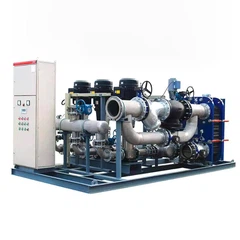
Before more energy-intensive separation techniques, RO systems (Reverse Osmosis) can play a crucial role, especially for less concentrated brine solutions or diluted streams within the refining process. RO is a membrane-based technology that uses pressure to force a solvent (e.g., water) from a region of high solute concentration through a semi-permeable membrane to a region of low solute concentration.
How RO Systems Benefit Lithium Refining:
- Initial Concentration: For lower-grade brines or process water containing diluted lithium, RO can pre-concentrate the solution, reducing the volume to be treated by subsequent, more expensive processes.
- Water Recycling: RO can purify wastewater streams, allowing for the reuse of water in the refining process, which is critical in arid regions where many lithium operations are located.
- Pre-treatment for Downstream Processes: By removing a bulk of the water and some larger suspended solids or organic matter, RO prolongs the lifespan and improves the efficiency of subsequent advanced purification units.
|
Aspect |
Advantage |
Consideration |
|
Efficiency |
Low energy consumption for water removal |
Susceptible to membrane fouling by solids |
|
Cost |
Lower operational cost for initial bulk water removal |
Membrane replacement costs |
|
Environment |
Reduces overall water footprint, enables water reuse |
Pre-treatment required for optimal performance |
|
Scalability |
Modular design allows for flexible capacity |
Not suitable for very high concentrations |

3.2 Precision Separation with Bipolar Electrodialysis (BPE)
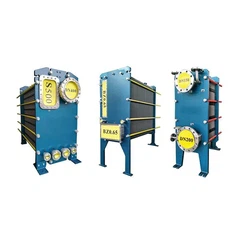
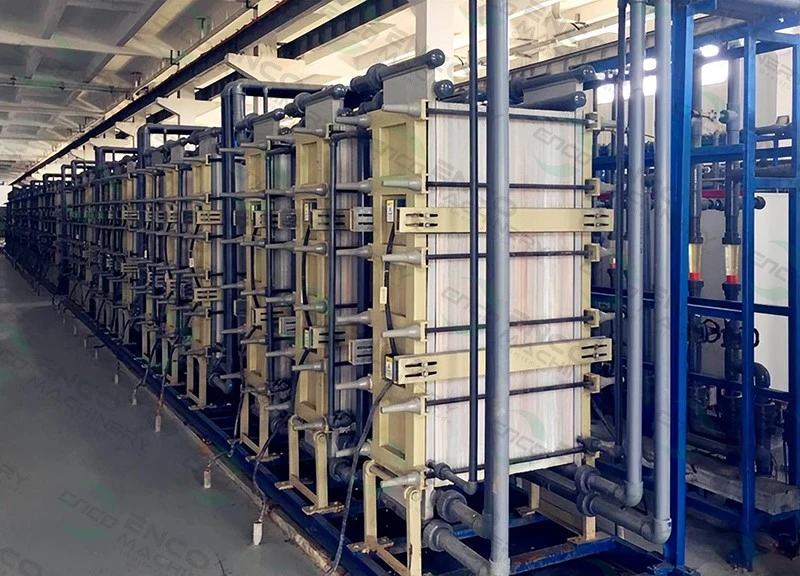
Following initial concentration steps, such as with RO systems, Bipolar Electrodialysis (BPE) emerges as a highly effective and environmentally friendly technology for selective ion separation and concentration. BPE is a variant of electrodialysis that uses bipolar membranes in conjunction with anion and cation exchange membranes. Bipolar membranes are special membranes that, under an electric field, dissociate water into H⁺ and OH⁻ ions.
The Role of BPE in Lithium Refining:
- Salt Splitting: BPE can "split" a salt solution (e.g., lithium chloride, LiCl) into its corresponding acid (HCl) and base (LiOH). This is particularly valuable for producing lithium hydroxide (LiOH) directly from LiCl solutions, bypassing the need for caustic soda (NaOH) and reducing sodium contamination.
- Impurity Removal: BPE excels at selectively removing unwanted ions (e.g., magnesium, calcium, sodium, sulfate, chloride) from the lithium stream. By controlling membrane types and operating conditions, specific ions can be transported out of the lithium-rich stream.
- Concentration: It can further concentrate lithium salts from dilute solutions, making the subsequent crystallization steps more efficient.
- Acid/Base Regeneration: BPE can regenerate acids and bases from waste streams, reducing chemical consumption and waste generation.
Progressive Application:
After an RO system has reduced the volume and pre-concentrated the lithium solution, BPE steps in to perform fine-tuned separation. For instance, if we have a concentrated LiCl solution, BPE can:
- Concentrate the LiCl further.
- Remove residual impurities that passed through the RO membrane.
- Directly produce LiOH (a key battery material) from LiCl, enhancing product value and streamlining the overall process.
3.3 Advanced Filtration for Purity: Ultrafiltration (UF) and Nanofiltration (NF)
Between RO, BPE, and the final crystallization, other membrane technologies like Ultrafiltration (UF) and Nanofiltration (NF) can be strategically deployed.
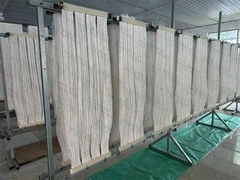
- Ultrafiltration (UF): This pressure-driven membrane process separates particles based on size. UF membranes have pore sizes typically ranging from 0.01 to 0.1 micrometers.
- Application: UF is excellent for removing suspended solids, colloids, bacteria, and large organic molecules from the lithium stream. It acts as a robust pre-treatment for more sensitive membranes like NF and BPE, preventing fouling and ensuring their optimal performance.
- Nanofiltration (NF): NF membranes have smaller pores than UF but larger than RO (typically 0.001 to 0.01 micrometers). They reject multivalent ions (like Ca²⁺, Mg²⁺, SO₄²⁻⁻) more effectively than monovalent ions (like Li⁺, Na⁺, Cl⁻).
- Application: NF is valuable for selective separation. For example, it can be used to further remove divalent impurity ions (e.g., magnesium, calcium, sulfates) from a lithium-containing solution, thereby pre-purifying the stream before it enters BPE or MVR, making these processes more efficient and producing a purer final product.
Logical Progression:
- RO System: Bulk water removal and initial concentration from dilute brines or process water.
- UF System: Removes suspended solids, colloids, and large organics, protecting subsequent membranes.
- NF System: Selectively removes multivalent impurity ions (Mg²⁺, Ca²⁺, SO₄²⁻) from the lithium stream.
- Bipolar Electrodialysis (BPE): Precise separation, salt splitting (e.g., LiCl to LiOH), and final impurity polishing.
3.4 Ion Exchange (IX) and Solvent Extraction (SX) for Targeted Impurity Removal
Beyond membrane technologies, Ion Exchange (IX) and Solvent Extraction (SX) are powerful tools for highly selective impurity removal.
- Ion Exchange (IX): This process uses porous polymer resins containing charged functional groups to selectively bind and remove specific ions from a solution.
- Application: IX resins can be tailored to remove very specific trace impurities that are difficult to eliminate by other means, such as boron, calcium, magnesium, and heavy metals. It's often used as a polishing step to achieve extremely high purity levels required for battery-grade lithium.
- Solvent Extraction (SX): SX involves contacting two immiscible liquids (an aqueous solution containing lithium and impurities, and an organic solvent) to selectively transfer specific components from one phase to another.
- Application: SX is particularly effective for separating lithium from highly concentrated solutions with complex impurity profiles, or for the recovery of other valuable by-products. It offers high selectivity and can be used for removing magnesium or other challenging elements.
- Interplay: These technologies often work in conjunction. For example, after initial concentration (RO, UF, NF), BPE might produce a concentrated LiOH solution. Before final crystallization, an IX column could be employed to remove any last traces of unwanted metallic ions, ensuring the absolute highest purity.
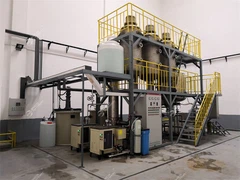
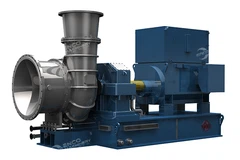
3.5 Final Concentration and Crystallization with MVR Evaporators
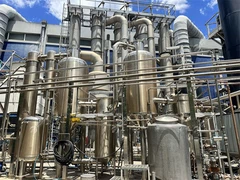
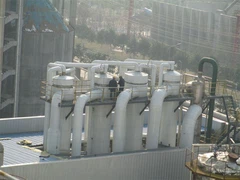
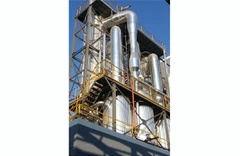
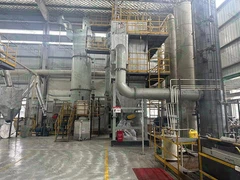
Once the lithium solution has reached the desired purity level through the various separation and polishing steps, the final stage is to achieve high concentration and crystallize the desired lithium product, typically lithium carbonate (Li₂CO₃) or lithium hydroxide (LiOH·H₂O). This is where MVR evaporators (Mechanical Vapor Recompression) play a critical, energy-efficient role.
How MVR Evaporators Work:
An MVR evaporator works by compressing the vapor generated from the boiling solution, thereby increasing its temperature and pressure. This compressed vapor is then used as the heating medium for the same evaporator. This cycle dramatically reduces external energy consumption compared to traditional multi-effect evaporators, where vapor is condensed and heat is lost.

Role in Lithium Refining:
- Concentration: MVR evaporators are ideal for concentrating the purified lithium solution (e.g., Li₂SO₄, LiCl, or LiOH solution) to supersaturation levels necessary for crystallization.
- Energy Efficiency: By reusing latent heat, MVR significantly lowers the energy footprint and operational costs, a major advantage in energy-intensive evaporation processes.
- High Purity Product: Controlled evaporation in MVR helps achieve consistent crystal size and morphology, contributing to the final product's quality and ease of handling.
- Reduced Waste: MVR can concentrate waste streams, minimizing the volume of effluent requiring disposal.
The Ultimate Progressive Flow Summary:
1. Initial Raw Material: Brine (solar evaporation) or Spodumene (beneficiation, roasting, acid leaching).
2. Pre-concentration & Pre-treatment (for Brine/Dilute Streams):
- RO System: Bulk water removal, initial concentration, water recycling.
3. Intermediate Filtration & Selective Impurity Removal:
- UF System: Removes suspended solids, colloids.
- NF System: Selectively removes multivalent impurities (Mg²⁺, Ca²⁺, SO₄²⁻).
4. Targeted Separation & Concentration:
- Bipolar Electrodialysis (BPE): Salt splitting (e.g., LiCl to LiOH), precise impurity separation, further concentration.
- Ion Exchange (IX) / Solvent Extraction (SX): Highly selective removal of specific trace impurities (e.g., boron, heavy metals, residual magnesium).
5. Final Concentration & Crystallization:
- MVR Evaporator: Energy-efficiently concentrates the highly purified lithium solution.
- Crystallization: Precipitates battery-grade lithium carbonate (by adding soda ash to Li₂SO₄ or LiCl solution) or lithium hydroxide monohydrate (from LiOH solution).
6. Post-Crystallization: Washing, drying, and packaging of the final product.
Section 4: From Solution to Solid: The Final Product Formation
Once the lithium solution is highly concentrated and purified, the desired lithium compound is crystallized out.
4.1 Lithium Carbonate Production (Li₂CO₃)
- Precipitation: For lithium sulfate or lithium chloride solutions, soda ash (sodium carbonate, Na₂CO₃) is added. This reacts to form insoluble lithium carbonate, which precipitates out of the solution:
Li₂SO₄ + Na₂CO₃ → Li₂CO₃(s) + Na₂SO₄
2LiCl + Na₂CO₃ → Li₂CO₃(s) + 2NaCl
- Filtration, Washing, Drying: The precipitated Li₂CO₃ slurry is then filtered, washed multiple times with deionized water to remove residual impurities (especially sodium salts), and finally dried to produce a fine white powder.
- Battery-Grade Requirement: Battery-grade lithium carbonate typically requires purity levels exceeding 99.5%, often reaching 99.9% or higher, with strict limits on specific metallic impurities.
4.2 Lithium Hydroxide Production (LiOH·H₂O)
Lithium hydroxide is increasingly preferred for high-nickel cathode materials (NMC 811, NCA) due to its higher active material density and better thermal stability during battery manufacturing.
- From Lithium Carbonate: Historically, LiOH was produced by reacting Li₂CO₃ with calcium hydroxide (Ca(OH)₂) to form lithium hydroxide and insoluble calcium carbonate.
- Li₂CO₃ + Ca(OH)₂ → 2LiOH + CaCO₃(s)
- Directly from LiCl via BPE: As discussed, Bipolar Electrodialysis offers a more direct and often cleaner route to produce LiOH from concentrated LiCl solutions, avoiding the need for additional chemicals and reducing by-products.
- Evaporation & Crystallization: The lithium hydroxide solution (whether from carbonate conversion or BPE) is then concentrated (often using MVR evaporators) and cooled to crystallize lithium hydroxide monohydrate (LiOH·H₂O).
- Washing, Drying, Packaging: Similar to lithium carbonate, the crystals are filtered, washed, and dried. Battery-grade LiOH also demands very high purity, usually >99.5%, with stringent specifications for impurities.
Section 5: Quality Control and Sustainability in Lithium Refining
Achieving battery-grade specifications demands rigorous quality control at every stage. Analytics such as Inductively Coupled Plasma Mass Spectrometry (ICP-MS) and Atomic Absorption Spectroscopy (AAS) are used to detect even parts-per-million levels of impurities.
Sustainability Considerations:
The environmental impact of lithium refining is a growing concern.
- Water Usage: Brine operations can be water-intensive. Advanced membrane technologies (RO, UF, NF) are crucial for water recycling and conservation.
- Energy Consumption: Hard rock processing and evaporation are energy-intensive. MVR evaporators significantly reduce energy usage.
- Chemical Use & Waste: Optimizing processes like BPE, which can regenerate acids and bases, reduces the need for fresh chemicals and minimizes hazardous waste.
- By-product Management: Exploring uses for by-products (e.g., sodium sulfate from Li₂CO₃ production) can improve the overall economic and environmental footprint.
Conclusion: The Future of Lithium Refining
The lithium refining process is a dynamic and evolving field. As demand for high-performance batteries continues to soar, the industry is constantly innovating to develop more efficient, cost-effective, and environmentally sustainable methods. The integration of advanced membrane technologies like RO systems, Bipolar Electrodialysis, Ultrafiltration, and Nanofiltration, alongside energy-efficient solutions such as MVR evaporators, marks a significant leap forward. These technologies not only promise to enhance purity and throughput but also play a pivotal role in reducing the environmental footprint of lithium production.
Understanding the complex steps from raw ore to battery-grade material is crucial for anyone involved in the electric vehicle supply chain, renewable energy, or sustainable technologies. The continued pursuit of lithium refining will undoubtedly shape the future of clean energy. If you would like to discuss lithium refining in more depth, please feel free to contact us; our technical and process engineers are always available for discussions.