









Explained: Types, Applications & Energy-Saving Solutions
Evaporators play a critical role in industrial separation processes, concentrating solutions by removing water or solvents through heat application. This guide explores their core functions, practical applications, and troubleshooting strategies, including advanced types like the MVR evaporator and multi effect evaporator.
Understanding Evaporators: Core Principles and Functions
Evaporators operate on the principle of vapor-liquid separation. They heat a liquid mixture to boil off volatile components, leaving behind a concentrated residue. The primary function is concentration: in food processing, evaporators reduce fruit juices to syrups; in chemical plants, they purify salts from brines.
Key functions include:
- Energy Transfer: Heat sources like steam or electricity drive evaporation. The system maintains a pressure differential to lower boiling points, enhancing efficiency.
- Separation Efficiency: By controlling temperature and flow rates, evaporators achieve high purity levels in the concentrate.
- Waste Minimization: They recover valuable solvents, reducing environmental discharge.
Does an evaporator save costs? Yes, by recycling heat and minimizing energy input, modern designs cut operational expenses by up to 50% in large-scale operations.

Types of Evaporators: From Basic to Advanced
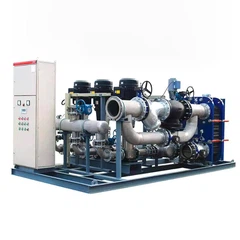
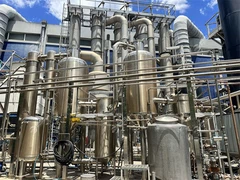
Evaporators vary by design to suit specific needs. Single-effect models use one stage of evaporation, ideal for small batches. For scalability, the multi effect evaporator stands out. This system cascades vapor from one stage to heat the next, reusing energy across multiple effects-typically 3 to 6. A multi effect evaporator can achieve energy savings of 70-90% compared to single-effect units, making it suitable for desalination or wastewater treatment.
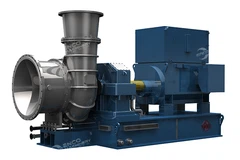
What sets the MVR evaporator apart? Mechanical Vapor Recompression (MVR) technology compresses evaporated vapor to reuse its latent heat. An MVR evaporator employs a compressor to elevate vapor pressure, recycling it as the heating medium. This closed-loop approach minimizes steam requirements, often using only electricity for compression. Compared to a multi effect evaporator, an MVR evaporator excels in low-temperature applications, such as dairy processing, where it preserves heat-sensitive compounds.
When should you choose between them? A multi effect evaporator fits high-volume, steam-available setups, while an MVR evaporator suits energy-constrained environments with access to electricity.

Product Usage: Applications Across Industries
Evaporators integrate into diverse sectors, optimizing processes and product quality.
In the food and beverage industry, evaporators concentrate milk into powder or tomato paste into sauce. Usage involves feeding dilute solutions into the system at controlled rates, monitoring vacuum levels to prevent foaming. For instance, a multi effect evaporator processes 10-50 tons of juice per hour, ensuring uniform concentration without scorching.
The pharmaceutical sector relies on evaporators for solvent recovery in drug synthesis. An MVR evaporator here evaporates ethanol from extracts, recovering 95% for reuse. Installation requires sterile conditions; operators calibrate sensors for precise temperature control to avoid degradation.
In wastewater treatment, evaporators handle industrial effluents. A multi effect evaporator treats brine from oil refineries, producing distilled water and solid salts. Usage protocols include pre-treatment to remove solids, followed by staged evaporation under vacuum.
Chemical manufacturing uses evaporators for acid concentration. An MVR evaporator processes sulfuric acid solutions, where compressed vapor heats incoming feed, achieving concentrations up to 98%.
How do you integrate evaporators into operations? Start with feed analysis-measure viscosity and boiling point elevation. Select based on throughput: small plants opt for compact MVR units, while large facilities prefer multi effect evaporators for their modular scalability.
Main Functions in Depth: Efficiency and Control Mechanisms
Beyond basic concentration, evaporators perform heat recovery and phase separation. In a multi effect evaporator, forward-feed designs push liquid sequentially, while backward-feed reverses flow for better heat utilization in viscous fluids.
An MVR evaporator's compressor-often centrifugal or roots-type-boosts vapor temperature by 10-20°C, enabling near-zero steam use. Functions extend to crystallization: in sugar refining, evaporators induce crystal formation by supersaturating solutions.
Control systems are vital. Automated valves regulate pressure, while sensors detect fouling. Does this enhance reliability? Absolutely-real-time monitoring prevents downtime, with predictive algorithms forecasting maintenance needs.
Common Problems and Solutions: Troubleshooting Evaporators
Evaporators face operational challenges that can disrupt efficiency. Addressing them promptly ensures longevity.
Fouling and Scaling: Deposits from minerals or organics build on heat transfer surfaces, reducing efficiency by 20-30%. In a multi effect evaporator, this manifests as pressure drops. Solution: Implement chemical cleaning cycles with acids like citric or EDTA. Preventive measures include feed pre-treatment via filtration or softening. For an MVR evaporator, where compression amplifies issues, use anti-scalants and monitor conductivity.
Foaming and Entrainment: Liquids foam under vacuum, carrying droplets into vapor lines and contaminating distillate. Common in food applications. Fix: Add defoamers or install baffles. Adjust feed rates to below 1 m/s velocity. In MVR systems, compressor overload from entrainment can cause surges-resolve with demisters.
Energy Inefficiency: High utility costs plague older units. A multi effect evaporator might underperform if effects are unbalanced. Optimize by recalibrating steam distribution. For MVR evaporators, compressor wear leads to leaks; regular vibration analysis and seal replacements maintain 90% efficiency.
Corrosion: Aggressive feeds erode materials. Stainless steel resists most, but for halogens, use titanium. Common in chemical evaporators-inspect annually.
Leakage and Vacuum Loss: Seals degrade, increasing energy use. Detect via pressure tests; replace gaskets proactively.
When do these issues arise? Often during startup or after prolonged runs. Best practice: Train operators on diagnostics, like using thermal imaging for hot spots.
Selecting the Right Evaporator: Key Considerations
Factors include feed characteristics, energy source, and output requirements. For low-boiling feeds, an MVR evaporator minimizes thermal degradation. Budget-wise, initial costs for multi effect evaporators are higher but yield faster ROI through energy savings.
Maintenance protocols: Schedule quarterly cleanings and annual overhauls. Integration with PLC systems allows remote monitoring.
Future Trends in Evaporator Technology
Advancements focus on sustainability. Hybrid systems combine MVR with multi effect evaporators for ultra-low energy use. Membrane-assisted evaporation reduces fouling, extending service life.
In summary, evaporators-whether standard, MVR, or multi effect-drive industrial efficiency. By mastering their functions, applications, and fixes, operators unlock substantial gains in productivity and cost control.