








When Could a Reciprocating Compressor Fail Catastrophically Under Load?

Compressed air drives countless industrial processes, from pneumatic tooling to chemical production, with the reciprocating compressor serving as a workhorse for facilities requiring reliable, high-pressure output. This positive displacement machine uses pistons driven by a crankshaft to compress gas in discrete cycles, offering advantages in efficiency and pressure capability that rotary designs cannot match in certain applications. Yet this mechanical complexity introduces vulnerability: energizing a compressor under incorrect conditions can trigger immediate, expensive damage.
Understanding operational boundaries separates routine maintenance from catastrophic failure. This examination dissects the compressor's mechanics, deployment contexts, and critical failure modes, equipping operators and engineers with practical knowledge to prevent costly downtime and safety incidents.
What Mechanical Principles Define Reciprocating Compression?
Why Does the Piston-Cylinder Design Dominate High-Pressure Applications?
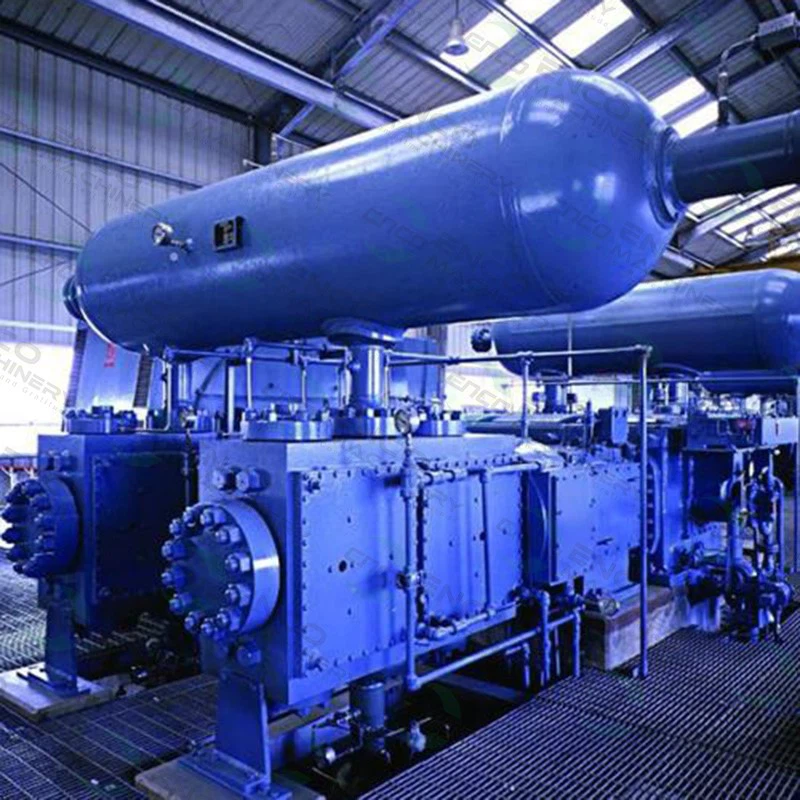
A reciprocating compressor achieves compression through cyclical piston motion within cylinders. As the crankshaft rotates, connecting rods convert rotational energy into linear piston travel. During the intake stroke, descending pistons create vacuum, drawing gas through inlet valves. The compression stroke follows: rising pistons reduce volume, increasing pressure until discharge valves open at set pressure differentials.
Key components include:
Crankcase and crankshaft: Houses lubrication system and converts motor torque
Cylinders and pistons: Where compression occurs; materials range from cast iron to aluminum alloys
Valves: Spring-loaded or reed-type, controlling gas flow direction
Intercoolers: Between stages in multi-stage designs, reducing work requirements by 15-20%
Single-stage units reach 100-150 PSI; two-stage configurations achieve 175-200+ PSI. Displacement capacity spans 1-1000 CFM for industrial models.
Does Lubrication Method Impact Reliability?
Oil-lubricated systems: Crankcase oil lubricates pistons and bearings, providing cooling and sealing. Requires oil separators to prevent contamination of compressed air. Maintenance intervals: 500-2000 hours.
Oil-free designs: PTFE or carbon rings eliminate oil contact with compressed gas, critical in food processing, pharmaceuticals, and electronics manufacturing. Higher initial costs ($5,000-50,000 premium) offset by purer output and reduced maintenance.
In What Contexts Does a Reciprocating Air Compressor Excel?
Why Choose Reciprocating Over Rotary Screw for Specific Tasks?
The reciprocating air compressor thrives in applications demanding:
Intermittent Operation
Auto repair shops, small fabrication facilities, and construction sites run compressors 20-40% duty cycles. Reciprocating designs tolerate start-stop patterns better than continuous-duty rotary screws, which suffer efficiency losses below 50% capacity.
High-Pressure Requirements
Pressure testing (pipelines, vessels), PET bottle blowing, and diving air systems need 3000-6000 PSI. Multi-stage reciprocating units achieve this economically; rotary alternatives require costly aftermarket boosters.
Clean Air Specifications
Medical facilities, laboratories, and semiconductor fabs demand ISO 8573-1 Class 0 air. Oil-free reciprocating compressors deliver without contamination risks inherent to lubricated rotary designs.
Budget-Constrained Installations
Initial investment for 10 HP reciprocating units: $2,000-5,000 versus $8,000-15,000 for equivalent rotary screws. For low-volume operations (<100 CFM), the payback period for rotary efficiency rarely justifies higher capital.
What Industries Depend on This Technology?
Manufacturing and Assembly
Pneumatic actuators, spray painting, sandblasting, and CNC tool changers consume 80-120 PSI air. Reciprocating compressors provide localized supply without distribution losses.
Natural Gas Processing
Wellhead compression, gas lift operations, and pipeline booster stations employ field gas-powered reciprocating units handling corrosive, contaminated streams that foul rotary equipment.
Refrigeration and HVAC
Ammonia chillers and large commercial AC systems use reciprocating compressors for refrigerant compression, leveraging their ability to handle phase-change loads.

When Could a Reciprocating Compressor Be Damaged if Energized?
What Startup Conditions Trigger Immediate Failure?
Understanding "when could a reciprocating compressor be damaged if energized" requires examining pre-start conditions:
Liquid Slugging from Condensate Accumulation
After prolonged shutdown, moisture condenses in cylinders and intercoolers. Liquids are incompressible; energizing forces pistons against solid columns, bending connecting rods or cracking cylinder heads within seconds. Damage costs: $5,000-30,000 for major repairs.
Prevention: Open drain valves before start, install liquid knockout pots, implement automatic condensate drains. Perform manual bump-starts (brief energization) to expel liquids.
Insufficient Lubrication at Cold Start
Oil viscosity increases at low temperatures, preventing proper distribution to bearings and cylinder walls. Starting under load with thick oil causes metal-to-metal contact, scoring surfaces and seizing components.
Prevention: Maintain ambient temperature >50°F in compressor rooms, use synthetic lubricants rated for cold climates, install crankcase heaters (150-300W) maintaining oil at 80-100°F.
Closed Isolation Valves Creating Dead-Headed Pressure
If discharge valves remain closed during energization, pressure builds with no relief path. Systems designed for 175 PSI can reach 400+ PSI in seconds, rupturing cylinders, blowing gaskets, or exploding piping.
Prevention: Verify all isolation valves open before start, install pressure relief valves (PRVs) set 10% above maximum working pressure, use unloader valves that automatically vent during startup.
Does Motor Overload During Startup Indicate Problems?
Excessive Back Pressure from Clogged Filters
Blocked intake filters or discharge coolers increase compression work by 30-50%, exceeding motor capacity. Thermal overload trips prevent winding damage, but repeated overloads degrade insulation.
Resolution: Replace intake filters quarterly (or per manufacturer specs), clean intercooler fins monthly, verify discharge piping sizing meets minimum requirements.
Wrong-Direction Rotation from Wiring Errors
Three-phase motors run backward if two phases are swapped. Compressor valves operate unidirectionally; reverse rotation prevents proper sealing, causing immediate overheating and valve destruction.
Prevention: Verify rotation direction during commissioning using rotation indicators or brief bump-start observation. Mark proper phase connections clearly.
What Operational Pain Points Plague Users?
Why Do Compressors Fail to Maintain Required Pressure?
Worn Piston Rings and Valve Plates
After 5,000-10,000 hours, rings lose sealing capacity, allowing compressed gas to bypass pistons. Capacity drops 20-40%, forcing longer run times and higher energy consumption.
Diagnosis: Measure volumetric efficiency (actual CFM / theoretical CFM). Values below 70% indicate ring replacement needs ($500-2,000).
Inadequate Cooling Causing Thermal Derating
Ambient temperatures >100°F or inadequate ventilation raise discharge temperatures beyond design limits (typically 250-350°F). Automatic thermal shutdowns occur, reducing availability.
Solutions: Install auxiliary cooling fans, ensure 12-18" clearance around air-cooled units, add aftercoolers reducing air temperature to 105-120°F.
When Does Excessive Vibration Signal Trouble?
Foundation Issues and Misalignment
Loose mounting bolts or deteriorated isolation pads transmit vibration to structures, accelerating wear and creating noise complaints.
Correction: Torque foundation bolts to specifications annually, replace worn isolation mounts, use vibration analysis (accelerometers) to detect imbalance early.
Connecting Rod Bearing Wear
Insufficient lubrication or contaminated oil causes bearing clearances to exceed tolerances, producing knocking sounds and vibration spikes.
Action: Monitor oil analysis for metal particles quarterly, maintain proper oil levels and change intervals (1,000-2,000 hours), investigate sudden vibration increases immediately.
What Causes Costly Unplanned Shutdowns?
Control System Failures
Pressure switches, unloader solenoids, and motor starters fail from electrical transients or environmental exposure. Downtime costs $500-5,000/hour in lost production.
Mitigation: Install surge protection on control circuits, seal electrical enclosures to IP54 minimum, stock critical spare parts (pressure switches $50-200, starters $300-1,500).
Belt Slippage in Belt-Driven Models
V-belts stretch over time, losing tension and slipping under load. Reduces capacity 10-30% while generating heat and dust.
Maintenance: Check tension monthly using deflection gauges (1/64" per inch of span), replace belts in sets to maintain balance, upgrade to synchronous belts for 98% efficiency.
Conclusion: Does Proper Management Ensure Longevity?
The reciprocating compressor delivers unmatched value in high-pressure, intermittent applications when operators respect its mechanical limitations. Preventing damage during energization requires vigilance: drain condensate, verify valve positions, ensure adequate lubrication. Addressing pain points through scheduled maintenance-ring replacement, valve servicing, foundation checks-extends service life to 15-20 years.
For facilities where compressed air is mission-critical, understanding when could a reciprocating compressor be damaged if energized transforms reactive firefighting into proactive asset management, maximizing uptime and return on investment.