









Where Do Gas Compressors Revolutionize Energy Operations?

Energy sectors worldwide grapple with the need for efficient gas handling, where gas compressor technology emerges as a critical enabler. These mechanical devices increase gas pressure by reducing volume, facilitating transportation, storage, and utilization across diverse applications. Unlike vacuum pumps, gas compressors handle compressible fluids under positive pressure, often exceeding 100 PSI in industrial settings.
The technology's evolution from basic piston designs to advanced centrifugal and screw types has transformed how industries manage natural gas, air, and process gases. For engineers and facility managers, mastering gas compressor operations unlocks substantial efficiency gains, cost reductions, and reliability improvements. This extends to selecting appropriate gas for compressor systems, where compatibility with media like methane, nitrogen, or compressed air determines performance.
As global demand for sustainable energy rises, gas compressors bridge traditional fossil fuel operations with emerging green technologies, making them indispensable in modern infrastructure.
1. Core Principles and Design Variants
Gas compressors operate on thermodynamic principles, where work input compresses gas molecules, raising pressure and temperature. The ideal gas law (PV = nRT) governs behavior, with real gas deviations accounted for in high-pressure scenarios.
Primary Types:
Reciprocating Compressors: Piston-driven, suitable for high-pressure ratios (up to 1,000:1), common in small-scale operations.
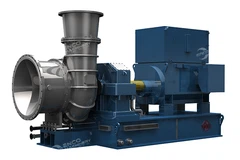
Centrifugal Compressors: Impeller-based, excel in high-flow, moderate-pressure applications (up to 10,000 PSI).
Rotary Screw Compressors: Twin rotors trap and compress gas, offering continuous flow for medium-pressure needs.
Diaphragm Compressors: Membrane isolation prevents contamination, ideal for hazardous gases.
Selection hinges on gas properties, required pressure ratio, flow rate, and efficiency targets. For instance, gas air compressor units typically handle atmospheric air compression for pneumatic tools, achieving 100-150 PSI with minimal oil contamination.
2. Application Scenarios in Key Industries
Oil and Gas Sector
In upstream oil operations, gas compressors boost wellhead gas pressure for pipeline transport, preventing condensation and maintaining flow rates above 1,000 SCFM. Midstream facilities use multistage centrifugal units to compress natural gas to 800-1,200 PSI for long-distance transmission, reducing pipeline diameter requirements and costs.
Downstream refining integrates screw compressors for vapor recovery, capturing volatile organic compounds (VOCs) at pressures up to 300 PSI, complying with emission regulations.
Manufacturing and Processing
Chemical plants employ diaphragm compressors for handling corrosive gases like chlorine or ammonia, maintaining purity in synthesis processes. Flow rates often reach 500 SCFM at 500 PSI, enabling precise reaction control.
Food and beverage industries utilize oil-free gas air compressor systems for aeration and packaging, delivering clean compressed air at 90-120 PSI to avoid contamination risks.
Power Generation and Renewables
Combined-cycle power plants rely on centrifugal compressors to supply combustion air at 200-400 PSI, optimizing turbine efficiency. In renewable applications, compressors store biogas or hydrogen at 3,000-5,000 PSI for fuel cell systems, supporting energy transition goals.
Automotive CNG stations use reciprocating units to compress natural gas to 3,600 PSI for vehicle refueling, handling daily volumes exceeding 10,000 SCF.

3. Product Usage: Implementation and Optimization
System Integration Strategies
Proper gas compressor deployment begins with capacity sizing: Calculate required power using P = (nRT / (n-1)) * ( (P2/P1)^((n-1)/n) - 1 ), where n is the polytropic index. Add 15-20% margin for variable loads.
Installation requires vibration isolation mounts, adequate cooling (air or water-jacketed), and pressure relief valves set at 10% above operating pressure. For gas for compressor selection, ensure dew point compatibility to prevent hydrate formation-dry gases like instrument air suit precision applications.
Control systems incorporate variable speed drives (VSDs) for centrifugal types, adjusting impeller speed to match demand and saving 20-35% energy.
Operational Best Practices
Start-up procedures include purging lines to remove air pockets, then gradual pressure buildup to avoid surge. Monitoring parameters-discharge temperature (<180°C), vibration (<5 mm/s), and oil pressure (>2 bar)-ensures safe operation.
Lubrication choices depend on gas type: Synthetic oils for hydrocarbons, non-lubricated designs for oxygen-rich gases. Regular filter replacement every 1,000-2,000 hours prevents contaminant buildup.
In portable setups, gas air compressor units benefit from diesel or electric drives, with fuel efficiency optimized through load-sharing in multi-unit configurations.
4. Common Problems and Troubleshooting Protocols
Surge and Flow Instability
Issue: In centrifugal compressors, surge occurs when flow drops below minimum, causing reverse gas flow and pressure oscillations. This damages impellers and bearings, potentially leading to catastrophic failure.
Symptoms: Cyclic noise, temperature spikes, and vibration increases.
Solutions: Install anti-surge valves that recycle gas to inlet, maintaining minimum flow. Tune control algorithms using PID controllers for stable operation. Annual surge margin testing verifies system health.
Overheating and Thermal Issues
Problem: Excessive heat from compression ratios above 4:1 causes seal degradation and efficiency loss, especially with poor cooling.
Detection: Discharge temperatures exceeding 150°C or inter-stage differentials >50°C.
Remedies: Enhance aftercoolers with finned tubes or increase coolant flow rates. For gas for compressor mismatches, like wet gas in dry systems, add separators to remove liquids upstream.
Leakage and Efficiency Drops
Challenge: Internal leaks from worn piston rings or valve plates reduce volumetric efficiency below 85%, increasing energy consumption by 10-20%.
Indicators: Higher power draw for same output, or pressure decay in storage tanks.
Fixes: Conduct leak-down tests quarterly. Replace wear parts during scheduled overhauls (every 8,000-10,000 hours). Use acoustic emission monitoring for early detection of seal failures.
Contamination and Corrosion
Issue: Corrosive gases like H2S attack components, while particulates abrade surfaces in gas air compressor applications.
Signs: Unusual odors, discolored oil, or reduced output.
Countermeasures: Select alloy materials (e.g., 316 stainless steel) and install coalescing filters. Chemical analysis of gas for compressor input ensures compatibility, with coalescers removing >99% of aerosols.
5. Performance Metrics and Selection Criteria
Efficiency ratings target 70-90% for modern units, measured as specific power consumption (kW/SCFM). Capital costs range from $5,000 for small reciprocating models to $500,000 for large centrifugal installations.
Safety features include explosion-proof motors for flammable gases and automatic shutdowns for overpressure. Compliance with API 618/670 standards ensures reliability in critical applications.

6. Emerging Trends and Sustainability Focus
Variable geometry designs in centrifugal compressors adapt to fluctuating loads, improving part-load efficiency. Integration with IoT enables predictive analytics, reducing unplanned downtime by 30%.
In green initiatives, compressors for carbon capture store CO2 at 2,000 PSI, while hydrogen compression reaches 10,000 PSI for fuel applications.
Conclusion: Gas Compressors as Operational Pillars
The gas compressor underpins efficient gas management, from extraction to end-use. By addressing application demands, operational practices, and common pitfalls, industries achieve reliable performance and cost savings.
Whether deploying gas air compressor units for manufacturing or handling specialized gas for compressor in energy sectors, strategic implementation drives long-term success. As technology advances, these systems will increasingly support sustainable operations, proving essential in an energy-conscious world.